
Proposal Emerges to Convert Seawater into Fresh Water to Anticipate Jakarta Drought
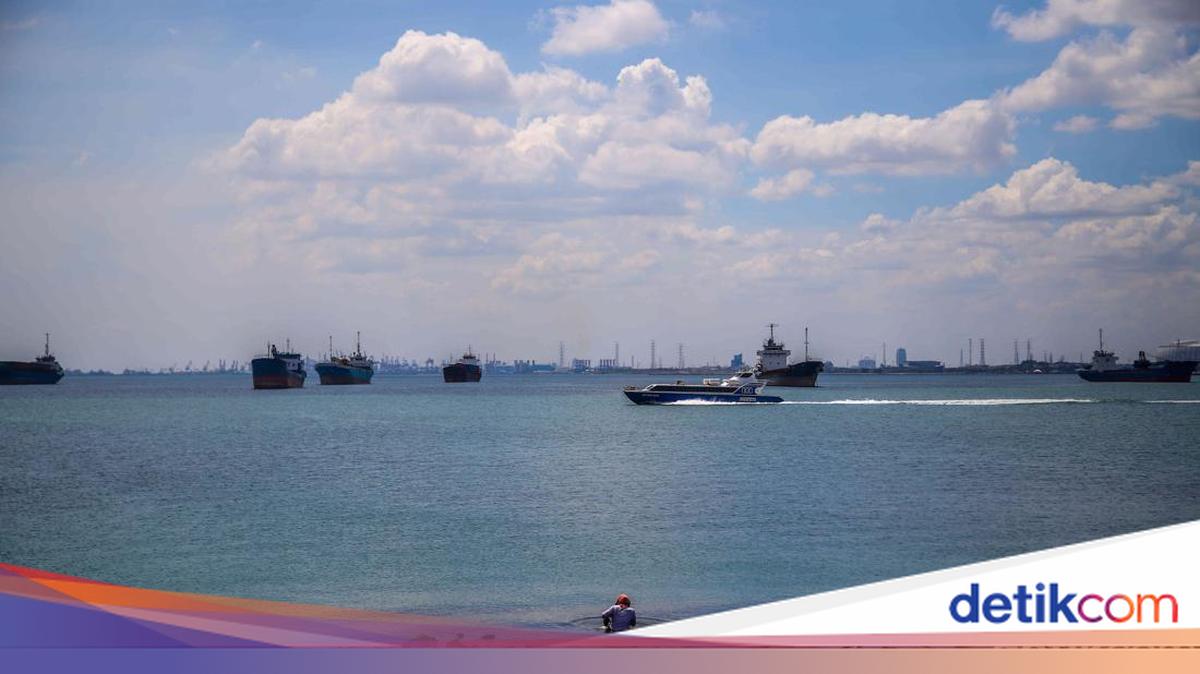
Prolonged dry seasons are triggering clean water difficulties in Jakarta. A proposal to convert seawater into fresh water has emerged.
As reported by detikcom on Friday (18/09/2026), the idea was initially presented by the Chairman of the Jakarta Regional House of Representatives (DPRD), Suhud Alynudin. He proposed that the Jakarta Provincial Government begin considering desalination technology—converting seawater into fresh water—to anticipate potential clean water shortages.
“Perhaps one of the steps that must be taken is to implement what is already being done in the Thousand Islands, where desalination is used to turn seawater into clean, fresh water,” Suahud said at the Jakarta DPRD Building on Thursday (17/09/2026).
He noted that desalination technology has already been applied in the Thousand Islands and suggested that this experience could serve as an option to face the threat of water shortages in Jakarta. Suhud emphasised that anticipatory measures are necessary because drought conditions can persist for quite a long time. Local authorities have been asked to prepare various options to ensure the community’s clean water needs continue to be met.
“It must be anticipated. Previously, there was an ‘alert’ level from the Regional Disaster Management Agency (BPBD). I believe this must be taken seriously because these droughts are unavoidable and long-lasting,” he explained.
Governor of Jakarta, Pramono Anung, responded to the proposal for seawater processing. He stated that processing seawater into usable water is linked to the construction of the Giant Sea Wall.
“To convert seawater into fresh water that can be used, one of the necessary steps is for the Giant Sea Wall to commence immediately,” Pramono said in the Kramat Raya area.
According to Pramono, the construction of the Giant Sea Wall would make it easier for PAM Jaya (the regional water utility) to convert brackish water into fresh water. He expressed hope that the Giant Sea Wall project would begin soon.
“For Jakarta, if that can be achieved, then the supply of brackish or fresh water can be processed into water that can be easily utilised by the community. Through PAM Jaya, the Jakarta Provincial Government is ready to undertake that,” he said.
In response from PAM Jaya, the Operational Director of PAM Jaya, Syahrul Hasan, stated that they have already implemented Sea Water Reverse Osmosis (SWRO) technology on nine islands in the Thousand Islands. He noted that this technology is used to process seawater to drinking water standards.
“Desalination, where we take raw water from the sea, is actually something we have already implemented on nine islands in the Thousand Islands. We call it SWRO, managing seawater into PAM water that meets drinking water standards,” Syahrul said at the PAM Jaya office in Jakarta on Friday (18/09/2026).
However, Syahrul noted that the application of seawater desalination for mainland Jakarta has not yet been implemented, as such processing requires significant effort.
PAM Jaya’s Technical Director, Santika, explained the primary obstacle to processing seawater into clean water: the high energy requirement in the SWRO process. He noted that seawater has high levels of Total Dissolved Solids (TDS) and salt content, meaning it cannot be processed using standard water treatment systems.
“The raw water is seawater, which has very high TDS and salt content. Therefore, we cannot process this using ordinary treatment systems,” Santika said.
SWRO processing is conducted through a filtration process using high pressure. This condition results in high energy demands and significant maintenance costs.
“This is a major challenge in the water treatment industry, which involves using filters. Imagine processing water through very fine filters that require immense effort,” he explained.
“In addition to the immense effort, high energy is also required because pressure is needed,” he added.
This high energy demand subsequently impacts the operational costs of the processing. He stated that the production cost of converting seawater into fresh water is very high.
“What is the impact? As a result, both operational and maintenance costs will be very high. Consequently, the production cost will automatically be high,” he said.
Santika suggested that one solution to assist in providing raw water sources for Jakarta is the construction of the Giant Sea Wall. He noted that the embankment could serve as part of a water catchment system.
“There are 13 rivers flowing through Jakarta, and we need to implement catchment areas,” he explained.
With catchment areas in place, the water source could be derived from rivers. Santika acknowledged that other challenges remain, specifically the high level of pollutants in river water.
“The problem is that pollutants are very high. However, with catchment basins, the separation of these pollutants can occur naturally through sedimentation,” he concluded.
Source: jawawa.id (https://jawawa.id/newsitem/proposal-emerges-to-convert-seawater-into-fresh-water-to-anticipate-jakarta-drought-1789786345)
Originally published by detikcom (https://news.detik.com/berita/d-8669580/muncul-usul-ubah-air-laut-jadi-tawar-demi-antisipasi-kekeringan-di-jakarta), translated from Indonesian