
Prophet Muhammad's Birthday at Jakarta Narcotics Prison Strengthens Religious Values
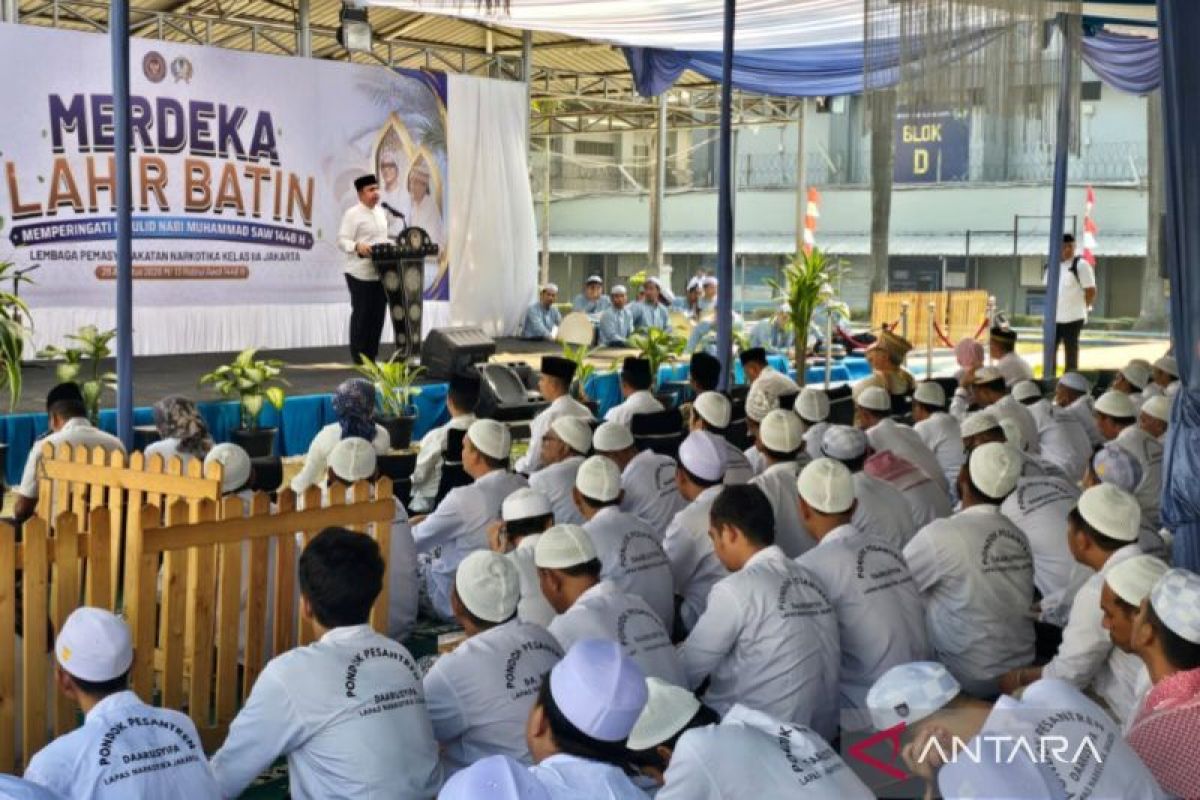
The Jakarta Class IIA Narcotics Correctional Facility (Lapas) held a commemoration of Prophet Muhammad’s birthday as a momentum to strengthen religious values among inmates.
“Alhamdulillah, this morning we have carried out the Prophet Muhammad’s birthday commemoration to provide life experience to the inmates,” said Head of the Jakarta Class IIA Narcotics Correctional Facility Aliandra Harahap at the facility on Wednesday.
The religious activity featured a sermon and a sharing session with motivator and artist Raden Rizki Mulyawan Kartanegara Hayang Denda Kusuma, better known as Dik Doank, and Ustaz Chavchay Syaifullah.
According to Aliandra, the Prophet Muhammad’s birthday commemoration also served as an opportunity for inmates to gain experience and motivation from figures with meaningful life journeys.
“To provide life experience to the inmates, such as the experience of Dik Doank when he transitioned from a celebrity life to a life closer to religious values,” Aliandra explained.
He expressed hope that the experience could serve as an illustration and inspiration for inmates currently serving their sentences at the Jakarta Class IIA Narcotics Correctional Facility.
“This is a routine activity in which we celebrate major religious events, coinciding with the Prophet Muhammad’s birthday commemoration,” said Aliandra.
The values taught by Prophet Muhammad are expected to become a life guide for inmates who are currently facing trials.
“At present they are preparing themselves to gain better provisions before they are released, and the future certainly still exists when they continue to strive to become better,” said Aliandra.
Meanwhile, Dik Doank said the event was a momentum for him to invite inmates to view the meaning of freedom from a broader perspective.
“We came here because we actually want to learn from them. Because they have already resolved their freedom, they do not take other people’s rights, do not steal prohibited goods, and do not sell them either,” said Dik Doank.
According to him, freedom can be interpreted as a person’s ability to understand rules, norms, and religious values and etiquette in daily life.
He expressed hope that the inmates’ transformation for the better would not only impact themselves but also provide a sense of safety and benefit to those around them.