
Property Sector Strategies Amid Turbulence
The escalation of the US-Israel-Iran war is serving as an external catalyst for rises in energy prices, inflation, and exchange rates, which will slow the property industry.
The impact of the war in the Middle East is affecting market sentiment and making Indonesia’s economic risks increasingly complex. The effects could spill over into the property industry, markets, and related sectors.
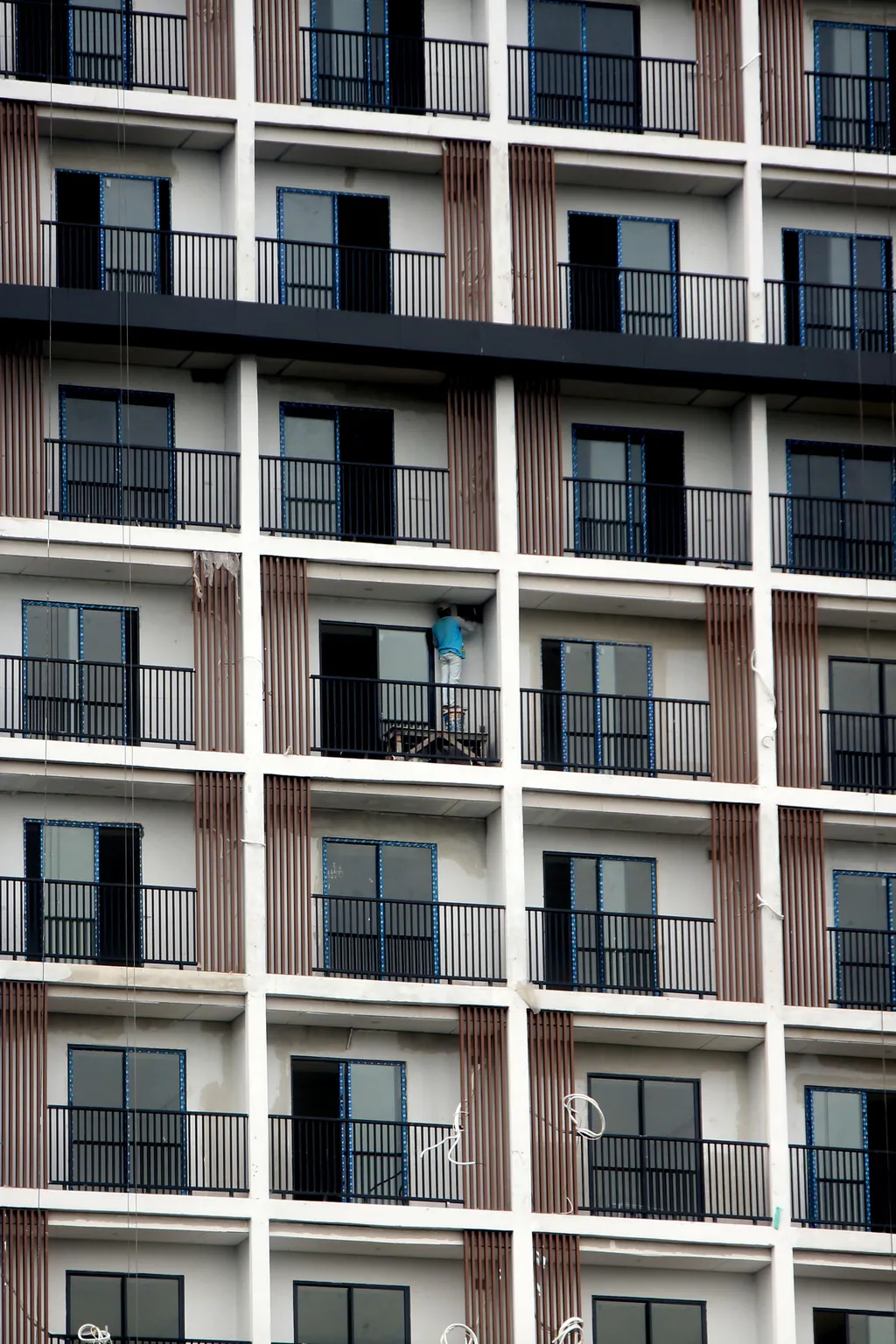
Market tightening is evident in the apartment sector, for instance. Developers are delaying expansions and prioritising the absorption of ready-to-occupy units. The market is more concentrated in the middle and upper-middle segments.
“Global geopolitical pressures and rising material prices will impact the prices of new projects going forward,” said Head of Research at Colliers Indonesia, Ferry Salanto, during a Q1 (January-March) 2026 media briefing last week.
Colliers Indonesia projects that only around 3,100 apartment units will enter Jakarta until 2029. This supply is down 80 percent compared to the 2020-2025 period. Apartments as an investment choice are increasingly declining. To stimulate the market, developers are offering price discounts, free furniture, and low-interest apartment ownership credit.
Pressure is also predicted to persist in the hospitality sector until mid-2026, influenced by global pressures. Amid weakening demand and rising operational costs, industry players are once again adopting efficiency strategies to maintain performance.
Secretary General of the Central Board of the Indonesian Real Estate Council, Raymond Arfandy, contacted separately, stated that the property industry has historically driven 185 related sectors, from building materials and furniture to household appliances. However, the property industry is also vulnerable to economic conditions and purchasing power.
The impact of the Israel-United States war with Iran and complex geopolitical situations could affect energy volatility. Uncertainty in fuel supply and oil prices must be watched, as it impacts logistics costs and production costs, thereby raising prices of products and materials from related industrial sectors.
“If raw material prices rise, the property sector is automatically disrupted. The effect is not only on the supply side but also on the demand side. Consumers and investors will delay purchases,” said Raymond when contacted on Tuesday (31/3/2026).
Raymond added that the commercial property market faces many challenges. Investment in the property sector is weakening because investors are still delaying while observing (wait and see) market conditions. Over the past ten years, property investment has been deemed no longer to generate significant business turnover and returns. Meanwhile, the market dominated by end-users is vulnerable to economic slowdowns.
“In the past, property value increases could reach 20 percent per year. The property world is no longer like it used to be, considered to produce promising business prospects and turnover. Buyers now seek according to needs and ability, not driven by investment,” said Raymond.
Colliers Indonesia property consultants predict that property segments dependent on business activities and investment will be more sensitive to economic turbulence impacts. Those segments include upper-middle-class apartments often bought by investors, properties with speculative purchases, and MICE-based hotels (meetings, incentives, conventions, and exhibitions) that depend on consumption and business activities.
Ferry Salanto stated that the Iran war with the US and Israel is not a direct factor determining the direction of Indonesia’s property market. However, the escalation of that tension has the potential to become an external catalyst through channels of rising energy prices, inflation, exchange rates, and credit interest rates.
“In a negative scenario, if the conflict escalates, there will be an oil price hike that triggers inflation, followed by interest rate increases, so the property market experiences deeper slowdown,” said Ferry last week.
The property world is no longer like it used to be, considered to produce promising business prospects and turnover.
Negative impacts could also be felt by developers with high leverage or using a larger proportion of debt compared to their own capital to finance projects. Vulnerability also affects the lower-middle housing sector, which is sensitive to rises in home ownership credit (KPR) interest rates and inflation in basic needs.
Conversely, in a positive scenario (bull case), if geopolitical tensions ease in a relatively short time, market sentiment has the potential to recover, and property activities could return to normal within the next few quarters.
Raymond added that the property market slowdown needs to be anticipated with several concrete and strategic breakthroughs. The government needs to open space for discussion with industry players to map needs and solutions to maintain supply and demand.
The government has rolled out fiscal incentives in the form of Government-Borne Value Added Tax (PPN DTP) for the housing sector. Other fiscal stimuli need to be considered to stimulate investment, such as tax amnesty for property investors.
In the people’s housing sector, the government needs to ensure that the energy crisis and economic slowdown do not erode people’s purchasing power. If consumer purchasing power is disrupted, the industry will be even harder to move and recover. “Government stimulus is needed to maintain people’s purchasing power,” he said.
Ferry believes that consumers and investors are deemed to need strategies to face market shocks and impacts on the property sector. For end-user consumers with real needs and adequate liquidity, the decision to buy a house can still be considered, especially if there are promotions and competitive KPR interest rate schemes available.
Meanwhile, property investors are advised to focus on strategic or premium locations with strong fundamentals. Potential returns