
PROPER Assessment Aspects Strengthened: Here Are the Requirements from the Ministry of Environment
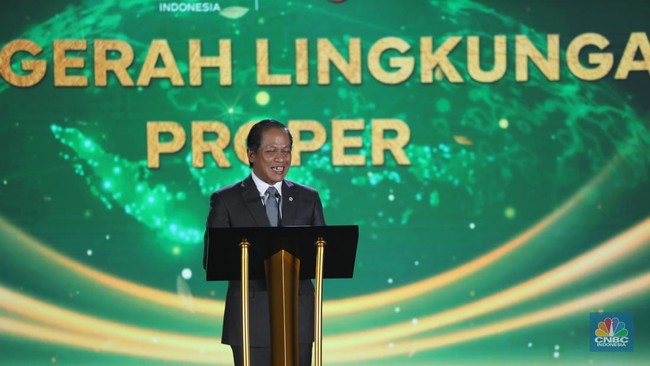
The Ministry of Environment and Forestry (KLHK) continues to strive to strengthen the assessment aspects for companies participating in the Company Performance Rating Programme in Environmental Management (PROPER). This is because KLHK hopes that PROPER 2025 will have a greater impact on environmental improvements.
“Not only impacting environmental improvements, but also affecting business performance, including economic performance for companies, and also benefiting society. Therefore, we are taking and focusing on three important steps for PROPER 2025,” stated the Deputy for Pollution Control and Environmental Damage (PPKL), Rasio Ridho Sani, some time ago, quoted on Monday (6/4/2026).
In detail, the first thing KLHK is doing is increasing the number of PROPER participant companies from 4,596 to 5,497. In addition, KLHK will also involve the assessment process for industrial zones, and industries located in priority river areas. Considering that industrial zones also have a significant contribution to air quality, water quality, and environmental quality.
It does not stop there; KLHK also ensures that industries around River Basins (DAS).
Next, said Rasio, the second thing KLHK is doing for the PROPER assessment is involving local governments (pemda). The next matter relates to issues concerning waste.
“For that, in the current PROPER, we are adding criteria, namely no longer just assessing performance in managing water pollution, air pollution management, B3 waste management, then B3 materials, then assessing environmental damage. But we are also including assessment of waste management performance, so there are several efforts that we are strengthening further,” he explained.
It should be noted that the PROPER assessment criteria consist of two categories: compliance assessment criteria and beyond-compliance assessment criteria. The compliance assessment criteria simply answer a simple question. For example, whether the company has complied with environmental management regulations.
The environmental regulations used as the basis for assessment currently relate to several requirements, namely:
- Environmental Documentation and Reporting Requirements
A company is considered to meet this criterion if all its activities are covered by environmental management documents, either in the form of an Environmental Impact Analysis (AMDAL) document, Environmental Quality Management and Monitoring Document (UKL/UPL), or other relevant management documents. Furthermore, assessment is conducted on the company’s compliance in reporting environmental management as required in the AMDAL and UKL/UPL.
- Water Pollution Control
In principle, compliance with water pollution control is assessed based on the provision that all wastewater discharges to the environment must have a permit. Wastewater discharged to the environment must go through designated compliance points. At those compliance points, the applicable wastewater quality standards permitted for discharge into the environment apply.
To ensure that discharged wastewater does not exceed standards at all times, the company is obliged to conduct monitoring with the frequency and parameters in accordance with the permit or applicable standards.
To guarantee data validity, monitoring must be carried out by an accredited laboratory. The company must also comply with technical requirements such as installing flow meters as regulated in the permit or applicable standards provisions.
- Air Pollution Control
Compliance with air pollution control is based on the principle that all emission sources must be identified and monitored to ensure emissions discharged into the environment do not exceed the set standards.
On the other hand, the frequency and parameters monitored must also meet the provisions in the regulations. To ensure that the monitoring process is conducted safely and scientifically valid, the sampling facilities must meet regulatory requirements.
- Management of Hazardous and Toxic Waste (B3)
Compliance with B3 waste management is assessed from the data collection stage of types and volumes. After data collection, further management is carried out. Further management must be equipped with a B3 waste management permit. Compliance with the B3 waste management permit provisions is a main component in assessing company compliance.
- Marine Water Pollution Control
In this aspect, primary compliance is viewed from the completeness of wastewater discharge permits and compliance with wastewater discharge implementation according to the provisions in the permit.
- Potential Land Damage
Land damage potential criteria are only used for mining activities. This criterion is essentially the implementation of best mining practices, such as alignment of activities with the mining plan to avoid unmanaged land openings. Regulating the height and slope of slopes/benches to ensure stability.
The reference is slope stability. Identifying potential acid mine drainage formation for each rock type and developing overburden rock management strategies. Creating and maintaining erosion control facilities. Creating a good drainage system so that wastewater quality meets standards. Selecting dump areas with the lowest disaster risk.
Beyond-compliance criteria are more dynamic as they are adjusted to technological developments, application of best environmental management practices, and global environmental issues. The development of criteria related to PROPER implementation is carried out by a technical team considering input from various parties, including the government.
Source: jawawa.id (https://jawawa.id/newsitem/proper-assessment-aspects-strengthened-here-are-the-requirements-from-the-ministry-of-environment-1775638359)
Originally published by CNBC Indonesia (https://www.cnbcindonesia.com/news/20260406132636-4-724187/aspek-penilaian-proper-diperkuat-begini-syarat-dari-klh), translated from Indonesian