
Promoting Inclusive and Sustainable Development in Papua: Deputy Home Affairs Minister Ribka Haluk Says People Want Peace
Deputy Home Affairs Minister Ribka Haluk has stressed the importance of geocultural, multi-stakeholder and co-determinative approaches to achieving peaceful, dignified and sustainable development in Papua.
She said development in Papua must take account of social and cultural characteristics, geographical conditions and people’s needs so that policies are appropriately targeted and deliver tangible benefits.
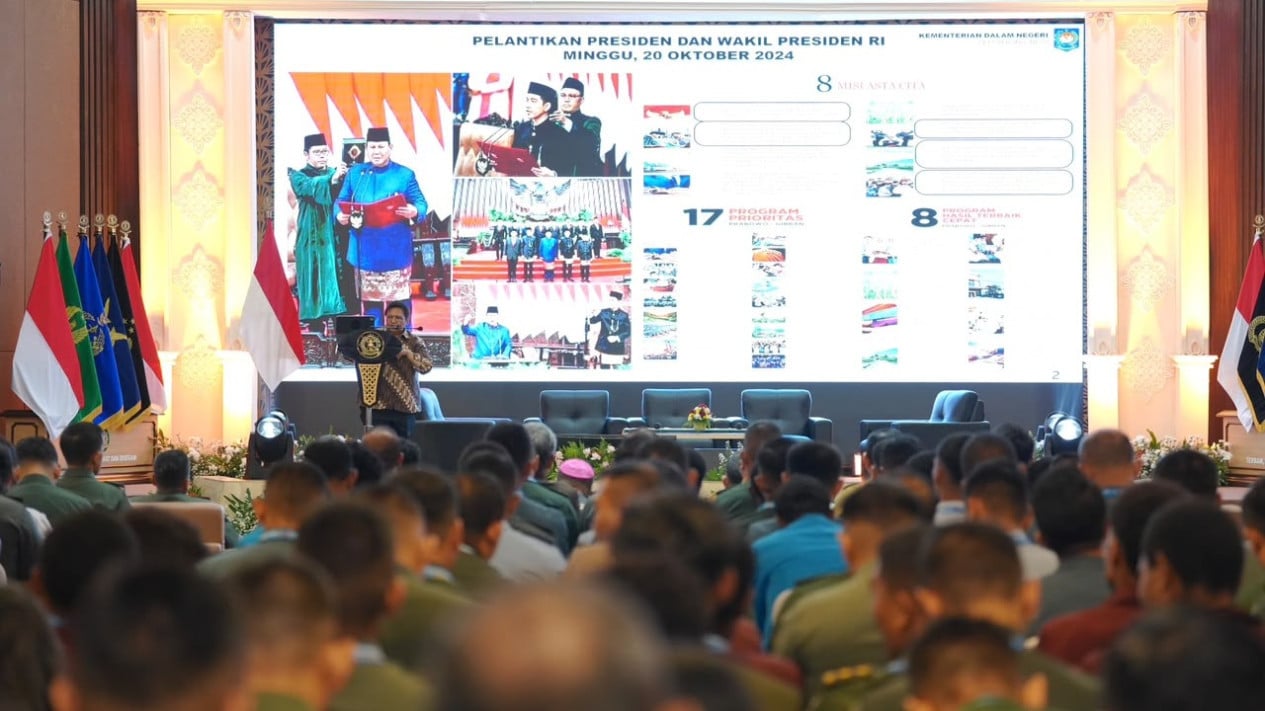
Ribka made the remarks at a national seminar for participants in the 68th regular education programme at the Army Staff and Command School (Seskoad), entitled “Geocultural, Multi-Stakeholder and Co-Determinative Approaches to Achieving Peaceful, Dignified and Sustainable Development in Papua”. The seminar was held at Seskoad in Bandung, West Java, on Tuesday (3 November 2026).
She said peace was the main hope of the people of Papua. “The people of Papua want peace,” she said.
Ribka explained that a geocultural approach was important because Papua has a diverse range of ethnic groups, languages, customs and social structures, all of which need to be understood in the conduct of government.
Understanding the characteristics of local communities is key to ensuring that policies and development programmes are accepted and respond to residents’ needs.
Papua’s geographical conditions also require development approaches to be adapted to the characteristics of each area, Ribka said.
Mountainous, coastal, island, urban and border regions face different challenges, particularly in transport, connectivity, logistics distribution and access to public services. Development policies therefore cannot be uniform without taking the conditions of each region into account.
She added that a multi-stakeholder approach should involve all parties, including central and local governments, the Indonesian National Armed Forces and National Police, customary leaders, academics, businesses and communities. Each group should have a complementary role and contribution in supporting development in Papua.
“If all of this happens, everyone will feel that they have been included, and that each sector or stakeholder has a role and makes a contribution,” she said.
Ribka also emphasised the importance of maintaining consistency between development planning and implementation. Community aspirations gathered during the planning process should continue to guide programmes when they are carried out.
This would ensure that policies do not veer off course and that their benefits are genuinely felt by the public.
Source: jawawa.id (https://jawawa.id/newsitem/promoting-inclusive-and-sustainable-development-in-papua-deputy-home-affairs-minister-ribka-haluk-says-people-1793706826)
Originally published by VIVA.co.id (https://www.viva.co.id/berita/nasional/1940763-dorong-pembangunan-yang-inklusif-dan-berkelanjutan-di-tanah-papua-wamendagri-ribka-haluk-masyarakat-ingin-perdamaian), translated from Indonesian