
Promises of Revolution! Will Kevin Warsh Become Trump's Man at the Fed?
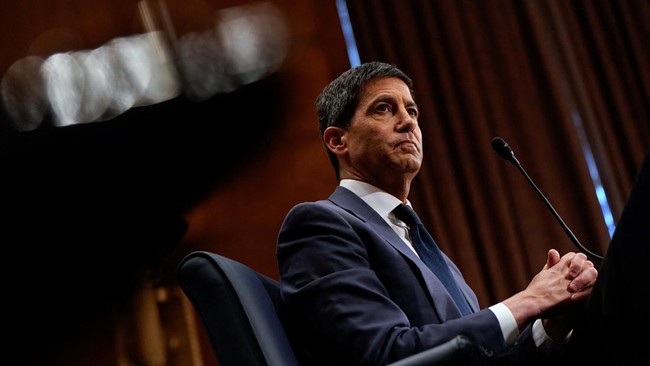
Kevin Warsh, the nominee for chair of the United States Federal Reserve (the Fed), arrives with a major message. He wants to bring about changes at the Fed. According to The Economist, major changes resembling a revolution at the US central bank are unlikely to occur easily. Historically, US politicians have allowed the Fed to operate independently. The reason is simple: few voters truly pay attention to monetary policy. Even if inflation rises and the public begins to complain, politicians can still blame others. However, Donald Trump is different. During his second term, the US President has continuously pressured the Fed, deeming interest rates still too high. Trump has attacked the central bank through legal lawsuits, criticised Fed Chair Jerome Powell on social media, and even pushed for unfounded criminal investigations against Powell to pressure his position. Yet, so far, the pressure from the White House has not yielded the results Trump desires. In fact, the attacks could backfire by solidifying defenders of the Fed’s independence. The US Supreme Court appears likely to reject Trump’s attempt to dismiss Lisa Cook, one of the Fed governors. Meanwhile, the manoeuvres of Thom Tillis, a Republican senator set to retire, to stall the confirmation process for Kevin Warsh as Powell’s replacement may have played a role in the US Department of Justice’s decision on 24 April to halt the case against the Fed Chair. Markets are now tending towards a more relaxed stance in facing Trump’s attacks on the Fed. In other words, Trump’s harsh criticism of the US central bank no longer causes markets to panic as before. The question is, can Warsh transform the Fed to be closer to Trump’s style? Warsh does appear more amenable to compromise than Powell, who is known for steadfastly guarding the central bank’s independence. He received the nomination after abandoning his formerly very cautious stance on inflation and adjusting his views to align with the White House’s preference for lower interest rates. In last week’s Senate confirmation hearing on Tuesday (21 April 2026), Warsh also passed the MAGA (Make America Great Again) political test, a Trump-style slogan. He refused to firmly state that Trump lost the 2020 election to Joe Biden. Warsh also used terminology that sounds appealing to Trump, namely the need for a regime change at the central bank. However, upon closer examination, Warsh’s agenda at the Fed is likely not as dramatic as it sounds. Many of his ideas are small, no longer very relevant, or beyond the authority of a Fed Chair if he acts alone. Warsh Claims He Only Wants to Change Policies The first thing to note is that Warsh does not appear to be planning a major overhaul of personnel within the Fed. Some within the Fed were once worried that the ‘regime change’ term Warsh used meant replacing central bank officials. Their biggest concern was that Warsh would try to dismiss the presidents of the regional Fed banks, including five who have voting rights on monetary policy, and replace them with Trump loyalists. However, those concerns eased after Warsh clarified his intent in the Senate hearing. When directly asked if regime change meant purging regional bank presidents, Warsh stated that he meant a change in policy regime. That explanation was quite relieving. Because, in policy matters, Warsh is often not a figure bringing major revolutions. He instead focuses more on technical issues. One thing he frequently criticises is the Fed officials’ habit of focusing too much on core inflation. Core inflation is a measure that excludes food and energy prices because these two components often fluctuate sharply. According to Warsh, the Fed should pay more attention to the trimmed-mean inflation measure. This is an inflation measure that excludes the most extreme price increases or decreases each month. The trimmed-mean measure can sometimes be lower than core inflation. If the figure is lower, it can be used as a reason to lower interest rates. However, in many periods, including the current one, the two indicators are actually not much different. Some of Warsh’s other ideas are also unlikely to significantly change the Fed because the issues have passed. He wants monetary policy to move away from political issues like climate change and social justice. The problem is, the Fed has essentially already shifted in that direction. He is also concerned that the Fed’s mandate to support employment is interpreted too broadly, as during the Covid-19 pandemic, to the detriment of its primary task of maintaining price stability. However, the Fed has also closed that chapter. Warsh’s Two Major Agendas Substantively, Warsh has two more important ideas. First, he wants to reduce the Fed’s balance sheet relatively quickly. Many observers agree that the Fed’s financial balance sheet, which reaches about US7trillionorequivalenttoRp120, 540trillion(assuminganexchangerateofRp17, 220/US), is indeed very large. Although Warsh signals he does not want to cut central bank bond holdings too aggressively, the direction of this policy still opposes the Fed’s recent decision to end quantitative tightening. Quantitative tightening is the process where the Fed’s balance sheet shrinks gradually because the central bank allows maturing bonds not to be replaced with new purchases. If the Fed sells bonds, bond prices could fall. Since bond prices and yields move in opposite directions, a drop in bond prices could cause yields to rise. An increase in yields is important because it can affect other interest rates in the economy.