
Prolonged Drought: Dompet Dhuafa Distributes Clean Water to 370 Residents in Boyolali and Grobogan
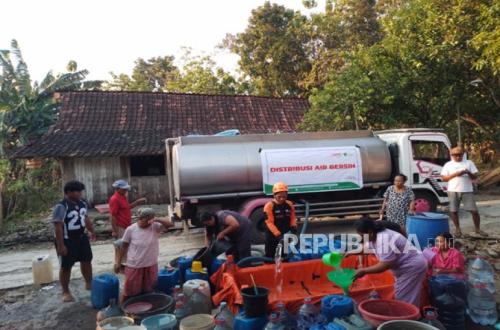
A prolonged drought has caused residents of Dukuh Joho, Sambeng Village, Juwangi District, Boyolali Regency, to experience a clean water crisis, affecting their daily needs and the surrounding ecosystem, including agriculture and livestock farming. As of Monday (10/8/2026), the drought has not only depleted water supplies but also worsened the community’s economic conditions. The livelihoods of Dukuh Joho residents are dominated by corn farming and sheep or cattle breeding. “Because of the drought in their fields, they cannot plant again. Then, the workers follow their wives to search for water, so the specific impact is on the residents’ economy due to the drought, while they also help their wives find water to meet daily needs,” said Nur Cholis, an Empowerment Preacher for Dompet Dhuafa Central Java. Farmers’ efforts to start the next planting season are also jeopardised during this lean period, as the majority of Dukuh Joho residents depend on corn farming on land owned by Perhutani, which they rent for approximately Rp 1.3 million per harvest season or per year. Similar conditions are also being experienced by residents in Grobogan Regency. In Dukuh Kedung Bunder, Kedungjati Village, Kedungjati District, 120 families have been facing drought since mid-July 2026. Residents have been digging small wells in the dried-up riverbed to obtain water. In Dukuh Brumbung, Panimbo Village, Kedungjati District, 80 families have been facing the same conditions since late July. As the dry season persists, water has become a daily struggle. Responding to these conditions, the Disaster Management Center (DMC) of Dompet Dhuafa distributed clean water aid to the affected communities. At the end of July, four tanker trucks, each with a capacity of 9,000 litres, were dispatched to the affected areas, delivering a total of 36,000 litres of clean water to meet the needs of around 370 residents. “There has been no rain since May. Residents have been searching for clean water in the dried-up rivers, digging small wells to meet their daily needs,” Nur Cholis stated. The dried-up river has become the only hope, as residents dig small holes resembling wells near the river until water seeps out. These wells have now become their source of life. To reach these wells, residents of Dukuh Joho must travel a considerable distance, ranging from 500 metres to one kilometre. Some use motorcycles, while others choose to walk while carrying jerrycans. “We are very grateful, because the clean water from DMC really helps us meet our daily needs for washing, bathing, and so on,” said one resident.