
Project Costs Could Rise 30%, Public Works Ministry Reveals Cause
The Ministry of Public Works has revealed that government construction project costs have risen by approximately 10% to 30%, driven by increases in the prices of several materials. However, a decision on contract value adjustments cannot yet be made as it awaits a policy directive from the National Public Procurement Agency (LKPP).
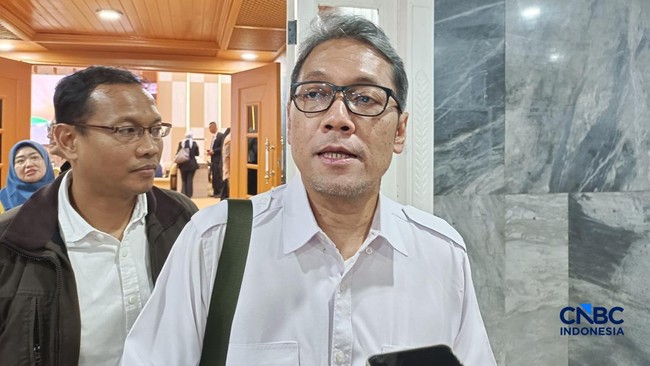
Acting Director General of Construction at the Ministry of Public Works, Indro Pantja Pramoda, stated that his team is currently collecting data on the impact of rising construction costs across all sectors within the ministry before submitting it to the LKPP. “We are still in the process of collecting data. There are many work packages, and the sectors include Highways, Human Settlements, Water Resources, and others. We need to know the details, such as which materials have increased in price and by how much, and which packages are affected,” Indro said during a meeting at the parliament complex in Jakarta on Tuesday.
While data collection is ongoing, Indro noted that contractors have generally reported a significant increase in construction costs. “Roughly, the increase is between 10% and 30%, depending on the sector,” he said.
Indro explained that the government cannot immediately implement contract adjustments despite the rising costs. The decision must refer to a national policy issued by the LKPP, as the impact is felt by other ministries and regional governments. “We are waiting for the LKPP, because the policy should be national. The impact is not only on the Ministry of Public Works; other ministries, central government, and regional governments are also affected. The treatment should be uniform,” he clarified.
He added that the implementation of contract adjustments will also depend on the government’s budget capacity, as changes in contract values could require additional funding. “This contract adjustment depends on budget availability. We don’t know yet if we have the budget for 2026. Ultimately, this will require additional contract costs. We also need to communicate internally with the Secretariat General,” Indro explained.
When asked about the target for completing the data collection, Indro said the process is being expedited as quickly as possible. If contract adjustments cannot be made this year, the government is preparing several mitigation options. One alternative refers to a scheme previously used during the energy price surge caused by the Russia-Ukraine war in 2022. “There are some past examples. I recall this happened around 2022 during the Russia-Ukraine war when diesel prices rose. There were alternatives, such as adjusting the contract value or sharing the risk 50-50 between the service user and the provider,” he concluded.