
Profits Soar! Unilever Indonesia's Earnings Rise 14.1% to Rp 1.3 Trillion in Q1 2026
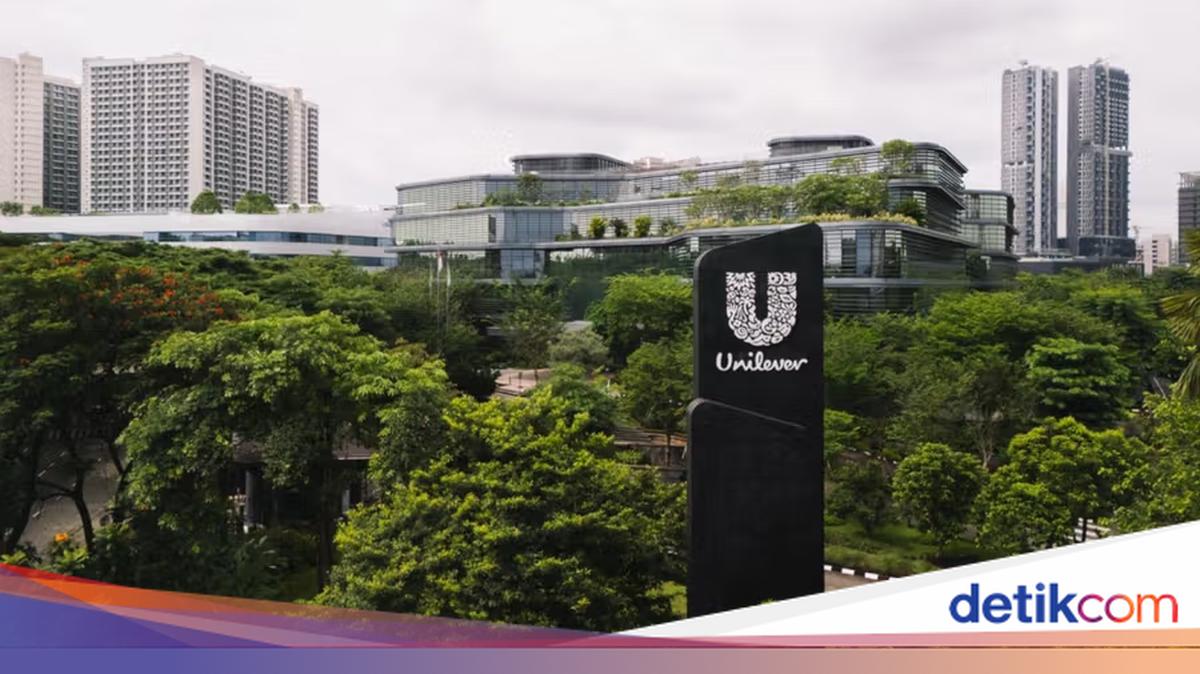
Domestic sales at Unilever Indonesia grew by 3.5%, supported by a 2.1% increase in underlying volume growth. Meanwhile, net sales from continuing operations reached Rp 8.4 trillion, marking a 2.8% rise compared to the same period last year.
On the profit front, the company recorded net profit from continuing operations of Rp 1.3 trillion, a 14.1% increase from the previous year. The gross margin from continuing operations stood at 48.2%, down 18 basis points year-on-year. However, excluding transformation costs, the gross margin remained at 48.8%.
Profit before tax from continuing operations also rose to 18.9%, up 167 basis points from last year. In the first quarter of 2026, Unilever Indonesia completed the divestiture of its SariWangi tea business.
Management States Performance Momentum Continues to Strengthen
President Director of Unilever Indonesia, Benjie Yap, stated that this first-quarter achievement represents an important step for the company to continue the growth momentum built throughout 2025.
“The first-quarter 2026 results mark an important step forward, reflecting the momentum established throughout 2025. Amid still challenging external conditions, the disciplined measures we have implemented over the past year are beginning to show progress in the quality of growth, market execution strength, and the resilience of the company’s financial performance,” said Benjie Yap in a written statement on Thursday (30/4/2026).
“These first-quarter performance results further strengthen our confidence that our business is on a positive advancement path, supported by continuously improving fundamentals and increasingly strengthening momentum,” he added.
Focus on Categories, Sales Channels, and Costs
Unilever Indonesia stated that the company’s business strategy is centred on three main pillars: categories, sales channels, and costs. These three pillars are directed to support more quality long-term growth.
On the category pillar, the company focuses on building broader consumer interest through optimisation of the portfolio in faster-growing segments. Unilever is also accelerating its social-first demand creation strategy to ensure that product innovations remain relevant and strongly appealing to consumers.
The company continues to enhance product affordability through the launch of value-priced packaging. Additionally, brand activations are expanded to reach more consumers, accompanied by innovations tailored to the needs of each channel.
To strengthen core brands, Unilever Indonesia applies a 6P approach, namely Product, Packaging, Proposition, Promotion, Place, and Pricing. Portfolio transformation is also ongoing towards higher-growth segments. The contribution from these segments increased from 8.3% in Q1 2025 to 10.0% in Q1 2026.
Strengthen General Trade, Modern Trade, to Digital Commerce
On the sales channel side, Unilever Indonesia continues to strengthen market infrastructure and execution. Domestic sales growth of 3.5% was supported by momentum in General Trade and Modern Trade channels, as well as contributions from Health and Beauty and Digital Commerce.
The company views this achievement as reflecting improvements in field execution quality, including alignment between demand creation and product availability in stores.
In addition to General Trade and Modern Trade, Unilever is driving growth in future channels, particularly Health and Beauty. This strategy is pursued through portfolio development aligned with consumer needs, strengthening strategic partnerships, and category growth. The exclusive launch of TRESemmé Silk Press and partnership with AS Watson are part of these steps.
Digital Commerce is also one of the company’s priorities. Unilever Indonesia leverages relevant momentum and conversations, strengthens search visibility, and collaborates with affiliate communities to expand market reach.
Costs
From the cost side, the company continues to strive to improve gross margins through productivity across all business lines and acceleration of digital transformation. Cost discipline and the transformation agenda are said to enhance the resilience of the company’s margins.
Along with the recovery in sales volume, the impact of operational leverage is starting to show in the profit and loss performance. This helps support gross margins even as the company still faces pressures from rising input costs and foreign exchange fluctuations.
Future Targets
Looking ahead, Unilever Indonesia will remain focused on driving growth that outperforms the market and anticipating external pressures. The company also forecasts moderate margin increases throughout 2026.
“Although market conditions continue to change, we still expect moderate margin improvements for 2026 overall. Our priorities remain the same: strengthening the business foundation, achieving consistent growth, and creating sustainable value for shareholders,” Benjie concluded.