
Profits and Thuggery Allegations at the Ampera Level Crossing in East Bekasi
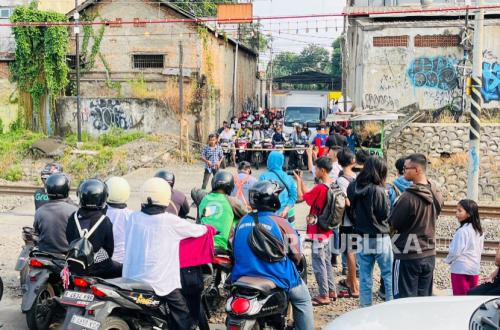
Motor vehicles were still bustling at the level crossing on Jalan Ampera in East Bekasi on Tuesday afternoon (28/4/2026). Two-wheeled motorcycles, box trucks, and even pedestrians jostled on that narrow strip of road.
A long-distance train passed through, with only one side’s dilapidated bamboo portal lowered. On the other side, there was no barrier between the crowded vehicles and the passing train.
Only the shouts of the guards stopped the drivers. “Watch out, back up,” the gate guards yelled. As the train passed, the flow of vehicles resumed, surging across the tracks towards the opposite side from Jalan Ir H Juanda to Durenjaya and vice versa.
There were hardly any signs that, at that location on Monday night, an incident had occurred that ultimately led to the deaths of more than a dozen female passengers on the KRL commuter line at East Bekasi Station, as their carriages were rammed by a long-distance train from Jakarta.
Around 8:50 PM that night, a Green MS taxi stopped in the middle of the crossing. The car was hit by the KRL coming from Cikarang towards Jakarta. The pile-up of vehicles appeared crumpled about 50 metres from the level crossing towards the station.
That collision caused the KRL from Jakarta at Bekasi Biru Station to be unable to proceed and was ultimately rear-ended by a long-distance train from behind. The two rear carriages were pierced by the long-distance train, passengers were crushed, and 14 died.
The level crossing on Jalan Ampera then became the focus of attention. Why has it been allowed to continue like this, even though the location is considered dangerous?
Even after the incident on Monday night, the crossing still relied on manual guarding. There were no warning signal sounds when a train was about to pass. Only two guards on each side held back the public.
One of the guards explained that they took turns guarding for 24 hours. This was because not only the KRL, which stops operating around 1:00 AM, passed through. Long-distance trains passed without stopping.
One person could guard for several hours before being replaced by the next guard. “Here, there’s always someone on duty, 24 hours. It’s never empty; there’s always someone standing by,” he said at the location on Tuesday (28/4/2026).
He explained that the shift scheduling was flexible. In the morning, guarding usually started from 5:00-7:00 AM WIB, then continued by another guard until midday. After that, the next guard took over until evening and night.
The guard claimed that this system was a form of community self-help to maintain safety at the crossing. “We just take turns, from morning, midday, to night. If someone can’t make it, just call, and they’ll be replaced,” he said.