
Profiles of the 19 Figures Awarded National Hero Titles in 2026
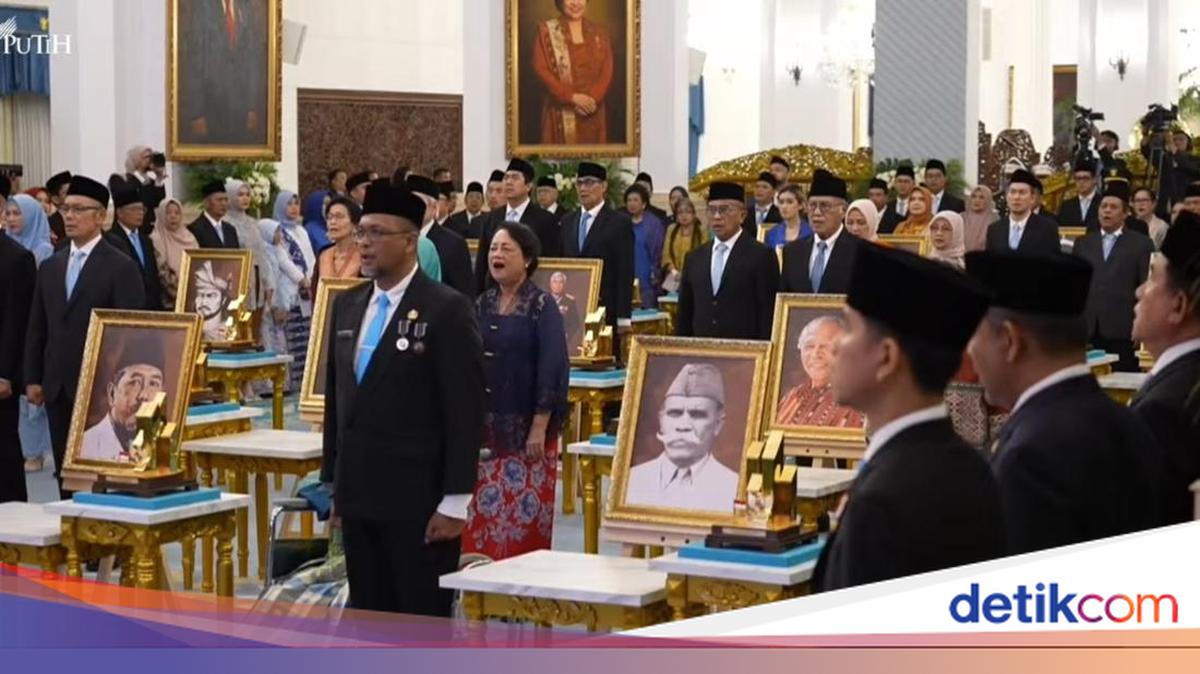
President Prabowo Subianto awarded National Hero titles to 19 figures at the Presidential Palace in Jakarta. One of the recipients was former National Police Chief General (Ret.) Hoegeng Iman Santoso.
The awards ceremony took place at the State Palace at 4pm local time on Tuesday, 10 November 2026. The following are profiles of the figures named National Heroes in 2026.
- General Police (Ret.) Drs Hoegeng Iman Santoso
According to the Indonesian National Police Education and Training Institute website, the fifth Chief of the Indonesian National Police, General Police (Ret.) Drs Hoegeng Iman Santoso (14 October 1921–14 July 2004), led the force from 1968 to 1971. He is historically regarded as one of the police officials most known for his courage and honesty.
He was renowned for his continued efforts to eradicate corruption and abuse of power within the Indonesian police, and to promote equality in criminal justice. Hoegeng was among the chiefs of the Indonesian National Police with the shortest terms in office.
- R.M. Margono Djojohadikusumo
According to the Banyumas Regency Regional Archives and Library Service, Raden Mas Margono Djojohadikoesoemo, born on 16 May 1894 and died on 25 July 1978, founded Bank Negara Indonesia. He was the father of Indonesia’s leading economist, Prof. Dr Soemitro Djojohadikoesoemo.
A building at Gadjah Mada University is named after R.M. Margono Djojohadikusumo, as is a road in Jakarta.
- Ali Sastroamidjojo
According to the National Library’s Presidential Library, Ali Sastroamidjojo, SH, was born in Grabag, Central Java, on 21 May 1903 and died in Jakarta on 13 March 1976. He was a political and government figure as well as a nationalist. Ali was Indonesia’s eighth prime minister, serving twice: from 1953 to 1955 in the first Ali Sastroamidjojo Cabinet, and from 1956 to 1957 in the second.
He also served as deputy minister of information in the Presidential Cabinet; minister of education in the first and second Amir Sjarifuddin Cabinets and the first Hatta Cabinet; and deputy chair of the Provisional People’s Consultative Assembly (MPRS) under the third and fourth Working Cabinets and the first and second Dwikora Cabinets.
- Abdoel Moethalib Sangadji
Abdoel Moethalib Sangadji, also known as A.M. Sangadji, was born in Rohomoni on Haruku Island, Central Maluku, on 3 June 1889. The Naval Regional Command IX Information Service describes him as a national movement figure and Sarekat Islam orator from 1912 onwards. He later founded the Partai Penyadar and was active in mobilising the people’s struggle.
Sangadji also played a role in the 1928 Second Youth Congress, pioneered public education in Samarinda and campaigned for the raising of the Indonesian Red and White flag in Kalimantan. He was killed while leading the Hizbullah militia in Yogyakarta on 8 May 1949 and was awarded the National Hero title on 10 November 2026.
- Franciscus Xaverius Seda
Dr Franciscus Xaverius Seda, known as Frans Seda, was born in Flores, East Nusa Tenggara, on 4 October 1926. The National Library’s Presidential Library describes him as a politician, entrepreneur and national figure who was active in KRIS, led the Catholic Party and served as a member of the Provisional People’s Consultative Assembly and the Gotong Royong House of Representatives (DPR-GR).
In government, Frans Seda served as minister of plantations, minister of agriculture, minister of finance, and minister of transport and tourism. He was also Indonesia’s ambassador to Belgium, Luxembourg and the European Economic Community, and a member of the Supreme Advisory Council.
- Sutan Takdir Alisjahbana
According to the Ministry of Primary and Secondary Education’s Encyclopaedia, Sutan Takdir Alisjahbana was an Indonesian writer. He was born in Natal, Tapanuli, North Sumatra, on 11 February 1908 and died on 31 July 1993.
Alisjahbana trained as a teacher and received honorary doctorates in linguistics from the University of Indonesia and in literature from Universiti Sains Malaysia. He produced many literary works during his lifetime.
- General Marine Corps (Ret.) Ali Sadikin
According to the Jakarta Library and Archives Service, Ali Sadikin was born in Sumedang on 7 July 1927 and died in Singapore on 20 May 2008, aged 80. A lieutenant general in the Indonesian Navy’s Marine Corps, he was appointed Governor of Jakarta by President Sukarno in 1966. He was paired with another Sundanese figure, Air Vice-Marshal Raden H. Atje Wiriadinata, to develop the capital of the Republic.
Before that, he had served as deputy chief of staff of the Navy and as minister of maritime transport in the Dwikora Cabinet and its enlarged version under President Sukarno.
- Sultan Muhammad Ali Abdul Jalil Muazzam Syah (Marhum Pekan)
According to the official Pekanbaru city website, Marhum Pekan was the fifth Sultan of Siak Sri Indrapura and the son of Sultan Abdul Jalil Alamuddin Syah, or Marhum Bukit, the fourth Sultan of Siak. He continued his father’s development of the Senapelan area, which grew into a trading centre and the forerunner of Pekanbaru.
Alongside his reputation as Pekanbaru’s founder, Marhum Pekan is remembered for fighting the Dutch on Guntung Island. His development of the pekan, or market, helped lay the foundations for the growth of the city, now the capital of Riau Province.
- General TNI (Ret.) Maraden Panggabean
According to the National Library, General TNI (Ret.) Maraden Panggabean was born in Tarutung, North Sumatra, on 29 June 1922 and was a prominent Indonesian military figure. He became deputy chief of army staff in 1966 and chief of army staff in 1969, and was appointed commander of the Operational Command for the Restoration of Security and Order (Kopkamtib) that year.
Panggabean was then appointed minister of defence and security and commander-in-chief of the Armed Forces in the Second Development Cabinet (1974–1978). He served as coordinating minister for political and security affairs in the Third Development Cabinet (1978–1983), and as chair of the Supreme Advisory Council from 1983 to 1988.
He died aged 78 on Sunday, 28 May 2000, and was buried at the Kalibata Heroes Cemetery in South Jakarta.
- Major General TNI (Ret.) Soengkono
Major General TNI Soengkono was a military figure who played an important role in the struggle to defend Indonesia’s independence, particularly in East Java. According to the official website of Military Regional Command V/Brawijaya, his leadership helped safeguard Indonesia’s sovereignty during the war of independence.
In recognition of his service, Military Regional Command V/Brawijaya held an academic seminar involving the military, government and academics. The event formed part of efforts to nominate Soengkono for National Hero status.
- Air Chief Marshal TNI (Ret.) R. Suryadi Suryadarma
According to the official Indonesian Air Force website, Soerjadi Soerjadarma, also known as Suryadi Suryadarma, was born in Banyuwangi, East Java, on 6 December 1912. He was the son of R. Suryaka Soerjadarma and descended from the Kanoman Palace in Cirebon.
The establishment of the Indonesian Air Force was a manifestation of Soerjadarma’s service to the country. He spent 17 years as its first chief, building and developing the Air Force of the Republic of Indonesia.
In 2000, Air Chief Marshal Hanafie Asnan formally recognised Suryadarma as the Father of the Indonesian Air Force, under Air Force Chief of Staff Decree No. SKEP/68/VI/2000, dated 20 June 2000. In recognition of his contribution, Kalijati Air Force Base was renamed after him on 7 September 2001.
- K.H.M. Yusuf Hasyim
KH Yusuf Hasyim, known as Pak Ud, was born at Tebuireng Islamic boarding school in Jombang on 3 August 1929. According to the Nahdlatul Ulama website, the youngest son of KH M Hasyim Asy’ari joined the Hizbullah militia at the age of 16 and became commander of its Jombang company. When Hizbullah was incorporated into the Indonesian military in 1947, he continued his service as an active soldier.
Alongside his military service, Pak Ud was active in GP Ansor, the Nahdlatul Ulama executive board and politics, and became a member of the DPR-GR. He also helped secure NU’s return to the 1926 Khittah, or founding principles, in 1984. Pak Ud died on 14 January 2007 and was buried at Tebuireng. The Indonesian Veterans Legion subsequently recognised him as a national hero in March 2007.
- K.H. Wasyid
According to the official Banten Province website, K.H. Wasyid, a figure from Banten, was a leader of resistance against colonial rule during the 1888 Geger Cilegon uprising. His struggle ended when he was killed during the uprising on 30 July 1888.
- Muslim Muhammad Khalifah (Kiai Modjo)
Muslim Muhammad Khalifah, known as Kiai Modjo, was born around 1792 in Mojo, Central Java. According to the detikcom editorial records, he was a religious scholar related to Prince Diponegoro and a prominent cleric and fighter in the Java War (1825–1830).
Kiai Modjo was Diponegoro’s spiritual adviser and trusted military commander. After the Dutch captured him on 17 November 1828, he was exiled to Tondano, Minahasa. There, he founded Kampung Jawa Tondano (Jaton) and continued preaching until his death on 20 December 1849.
- Mohamad Roem
Mohamad Roem was born in Parakan, Central Java, on 1 May 1908. According to the National Library’s Presidential Library, after studying law at the Rechts School in Jakarta, he became active in the national movement through the Jong Islamieten Bond and Sarekat Islam.
Roem was a diplomat involved in the Linggarjati and Renville negotiations, and led Indonesia’s delegation at the Roem–Royen negotiations in 1949. He also served as minister of home affairs, minister of foreign affairs, minister of state in the Republic of the United States of Indonesia, and first deputy prime minister.
- K.H. Abbas Abdul Jamil
According to the Ministry of Religious Affairs, Kiai Abbas Abdul Jamil, head of the Buntet Islamic boarding school in Cirebon, not only trained generations of santri, but also took part directly in the armed struggle during the 10 November 1945 revolution in Surabaya.
As well as being an educator, Kiai Abbas was known for opposing diplomacy when Dutch rule threatened Indonesia’s independence again after the proclamation. During the 10 November 1945 events, he firmly rejected negotiations with the colonial power and instead rallied the people to resist.
- General TNI (Ret.) M. Jusuf
General TNI (Ret.) Andi Muhammad Jusuf Amir, known as M. Jusuf, was a senior military figure from South Sulawesi. According to information reported by Antara, he had a long record of service to the Indonesian Armed Forces and the state.
The South Sulawesi provincial government had proposed him for National Hero status in 2018. The proposal was ultimately recognised when he was posthumously awarded the title on 10 November 2026.
- Sultan Ibrahim Chaliluddin
Sultan Ibrahim Chaliluddin was a leader of the Paser Sultanate who strongly opposed Dutch colonialism. Antara reported that his defence of the region’s sovereignty led the colonial government to regard him as a rebel.
The Dutch later arrested and exiled him to Cianjur, West Java, where he died and was buried. In 2026, the East Kalimantan provincial government proposed his name to the Ministry of Social Affairs for National Hero status.
- Lieutenant Colonel Moch. Sroedji
Lieutenant Colonel Mochammad Sroedji was born in Bangkalan on 1 February 1915. According to detikcom’s editorial records, he began his career as a malaria health officer before joining the PETA military organisation in 1943. He later helped establish the People’s Security Agency (BKR) and the Indonesian National Armed Forces (TKR) in the Besuki Residency, and became commander of the Damarwoelan Brigade III of the First Division of the East Java Army.
In the struggle to defend independence, Sroedji led the Wingate Action, a 500-kilometre journey from Blitar to Jember through territory behind enemy lines. He was killed in a battle against the Dutch in Karang Kedawung village, Jember, on 8 February 1949. In recognition of his service, he received several decorations, including the Guerrilla Star and the Mahaputera Star.
Source: jawawa.id (https://jawawa.id/newsitem/profiles-of-the-19-figures-awarded-national-hero-titles-in-2026-1794307895)
Originally published by detikcom (https://news.detik.com/berita/d-8746993/profil-19-tokoh-yang-diberi-gelar-pahlawan-nasional-2026), translated from Indonesian