
Profile of China's Reform Architect Zhu Rongji, Dies at 97
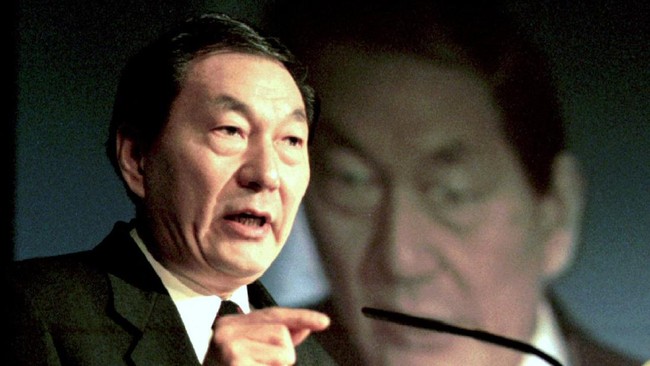
Former Chinese Premier Zhu Rongji has died at the age of 97. The figure known for being firm and outspoken is remembered as one of the architects of China’s economic reform that brought the country into the World Trade Organization (WTO).
State news agency Xinhua reported that Zhu died of illness in Beijing on Wednesday (12/8/2026) at around 11.00 local time.
During his tenure as premier from 1998 to 2003, Zhu pushed for major changes to state-owned enterprises, cracked down on corruption, and forced government business entities to become more efficient and profit-oriented.
His tough leadership style earned Zhu the nicknames “Boss” and Zhu Fengzi, or “Crazy Zhu”. He was also known for daring to criticise incompetent officials and openly acknowledging government mistakes.
“I have prepared 100 coffins here, 99 for corrupt officials and one for myself,” Zhu said in 1998, as quoted by People’s Daily.
The reforms carried out by Zhu continued the economic opening policy pioneered by Deng Xiaoping since 1979. One of his biggest agendas was restructuring state-owned enterprises, which affected millions of workers due to layoffs, but at the same time boosted the efficiency and competitiveness of Chinese industry.
Zhu also played an important role in China’s long struggle to join the WTO. After years of negotiations, he even travelled to Washington in 1999 offering market-opening concessions to secure United States support.
The effort nearly failed after the Bill Clinton administration judged China’s offer to be inadequate. Domestically, Zhu also faced criticism for being seen as giving too many concessions. However, he persevered until China officially became a WTO member in December 2001.
WTO membership subsequently became one of the important milestones in China’s economic transformation. Trade and exports grew rapidly, while China’s economic growth remained above 8% per year throughout 2000-2010 and reached 14.2% in 2007.
Before becoming premier, Zhu built his reputation as deputy premier in the early 1990s by tackling inflation. He implemented price controls and halted credit disbursement to loss-making state companies, even though the policy met resistance from a number of local governments.
Zhu also played a role in reforming the taxation system, which required local governments to remit more revenue to the central government. In 1998, his administration pushed for the sale of state-owned company apartments to the public, which subsequently triggered a surge in home ownership in urban China.
Even so, Zhu did not push for wholesale economic privatisation. He helped design changes in the banking, aviation, oil and various other business sectors so that they operated like profit-seeking corporations, but government ownership was retained.
Zhu was born in Hunan on 23 October 1928. His career as an economic planner was halted for around 22 years after he was labelled a “rightist” in 1957 for praising reforms in Hungary and Yugoslavia.
During the Cultural Revolution of 1966-1976, Zhu was exiled to the countryside and performed manual labour. His name was later rehabilitated in 1979, before his political career soared again until he became deputy party secretary in Shanghai in 1987 and mayor in 1988.
While leading Shanghai in 1989, Zhu was known as a moderate figure because he succeeded in defusing tensions amid demonstrations without deploying the military. Australian diplomat Shelley Warner even assessed that Zhu succeeded in calming a political situation that had the potential to develop into local violence.
After that, Zhu was appointed deputy premier in 1991 and joined the Politburo Standing Committee in 1993. He then became premier at the age of 69 and occupied the third position in China’s leadership hierarchy, below President Jiang Zemin and Li Peng.
Zhu was also known for his willingness to take responsibility for government failures. After the great floods of 1998 that killed around 4,150 people, he condemned the poor quality of a number of dykes. Three years later, Zhu apologised on national television after an explosion at a school building in southern China killed at least 42 people, most of them children.
Zhu Rongji’s legacy is chiefly attached to his courage in pushing through unpopular reforms, restructuring state enterprises, fiscal consolidation, and the success in bringing China into the WTO. These policies became an important part of the foundation that helped transform China into one of the world’s largest economic powers and exporters.
Source: jawawa.id (https://jawawa.id/newsitem/profile-of-chinas-reform-architect-zhu-rongji-dies-at-97-1786578644)
Originally published by CNBC Indonesia (https://www.cnbcindonesia.com/news/20260813005105-4-758743/profil-bapak-reformasi-china-zhu-rongji-meninggal-usia-97-tahun), translated from Indonesian