
Professor Jiang Predicts US Will Send Ground Troops to Iran by December or March
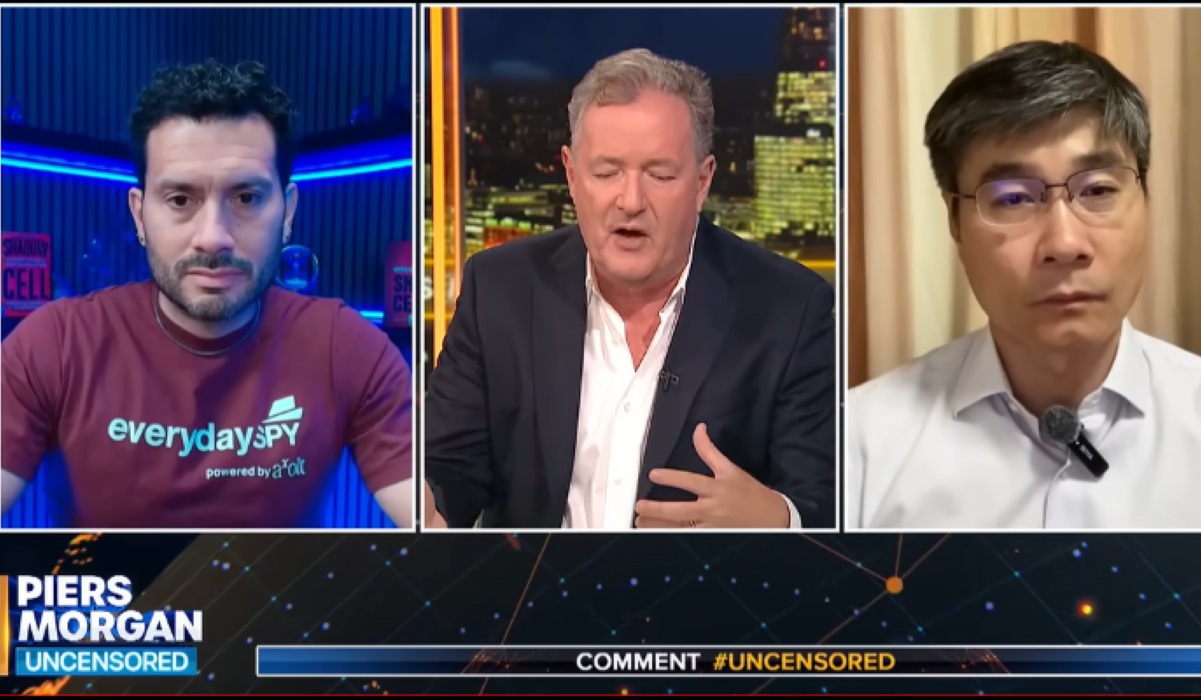
In the latest episode of Piers Morgan Uncensored on Tuesday (30/6), two experts from different backgrounds, Professor Jiang Xueqin (a game theory expert) and Andrew Bustamante (a former CIA undercover officer), provided a sharp analysis regarding the developments of the conflict between the United States, Israel, and Iran. The discussion highlighted whether this war will end with diplomacy or rather a larger military escalation.
Professor Jiang maintained his prediction that the United States will ultimately be forced to send ground troops (boots on the ground) to Iran. According to him, although Donald Trump currently appears hesitant, the US remains trapped in a situation where withdrawal would grant full control of the Middle East to Iran.
Jiang predicted that the involvement of ground troops could occur as early as December or as late as next March. He argued that the US is currently just biding its time because the hot weather conditions in Iran are not conducive to a ground invasion. “There are 660,000 American soldiers ready to depart. The current MOU is merely a way to stall for time,” Jiang claimed.
Conversely, Andrew Bustamante disagreed with this view. He assessed that Trump is only seeking a quick and short-lived political victory. According to Bustamante, sending ground troops would be a political, military, and legislative burden that is too heavy for the Trump administration, especially if the composition of Congress changes after the mid-term elections.
Bustamante highlighted what he termed a fundamental intelligence failure. He criticised the US reliance on Israeli intelligence infrastructure in assessing the situation in Iran. “We enter Iran essentially following Israel’s guidance, following their target package, instead of our own independent intelligence assessment,” said Bustamante.
He likened the US position to a pitbull dog leashed by someone else. Israel’s failure to predict the collapse of the Islamic Revolutionary Guard Corps (IRGC) from within following the assassination of its top leader serves as evidence that such assessments are inaccurate.
The discussion also touched upon Iran’s nuclear ambitions. Professor Jiang argued that Iran does not actually want to build nuclear weapons because of a religious fatwa. However, he quoted an MIT expert stating that Iran only needs six weeks to build one if they have the will.
However, Bustamante argued that Iran’s control over the Strait of Hormuz is far more effective than any nuclear deterrent. By controlling the route through which 20% of the world’s energy passes, Iran is capable of holding the global economy hostage.
“By merely surviving, Iran has shown that a small nation can be strong and the United States can be overcome, perhaps even defeated,” said Bustamante.
Professor Jiang offered a controversial view regarding the motives behind Israel’s actions. He suspected there is a radical element within the Israeli government that wishes to realise the ‘Greater Israel’ project, stretching from the Nile to the Euphrates. This, according to him, explains why Israel appears to be provoking conflict on various fronts, including threats to Turkey and Egypt.
Piers Morgan concluded the discussion by noting that Israel’s popularity in the eyes of the world continues to decline due to extreme statements from cabinet members such as Ben-Gvir and Smotrich, who openly call for harsh actions in Lebanon and the Gaza Strip without regard for international law or proportionality.