
Professor Highlights Single-Window Commodity Export Policy and Its Implications for Competitiveness
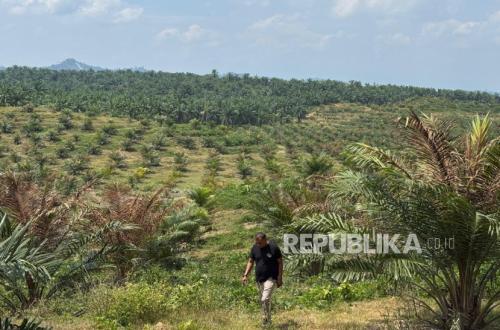
The government’s plan to implement a centralised policy for exporting strategic commodities, including palm oil, has drawn scrutiny from academics. Professor Sudarsono Soedomo of the IPB University Faculty of Forestry and Environment warned against implementing the policy in a hurry. This is because, beyond the potential to create market uncertainty, it could disrupt the investment climate and weaken Indonesia’s competitiveness in the global market if the governance framework is not fully prepared. Sudarsono acknowledged that the government’s aim is to strengthen export oversight, enhance foreign exchange controls, and prevent under-invoicing and transfer pricing practices. However, the main problem of Indonesia’s export trade is not merely a lack of state authority. The state has in fact long been strong through customs, taxation, the banking system, Export Proceeds (DHE) obligations, licensing, and various other supervisory instruments, he said in a press statement in Jakarta on Thursday, 21 May 2026. Therefore, he added, the fundamental question the government needs to answer is whether the core problem lies in a lack of authority or in the weakness of the capacity and credibility of the existing institutions. Sudarsono cautioned that creating new agencies will not automatically resolve the root of the problem if the main issue lies in governance quality and the enforcement of the law. According to him, centralising large-scale trade also carries significant risks for the national palm oil industry. Global palm oil trade, he said, depends heavily on speed, flexibility, buyer networks, trading reputation, and international market confidence. If all transactions are centralised into a single entity, it would give rise to risks of inefficiency, delays in decision-making, economic rents, conflicts of interest, and excessive discretionary power, he said.