
Prof Rycko Amelza: BPS Data Shows Indonesia Imported Corn Since 1973, Stopped in 2026, Polri Made History
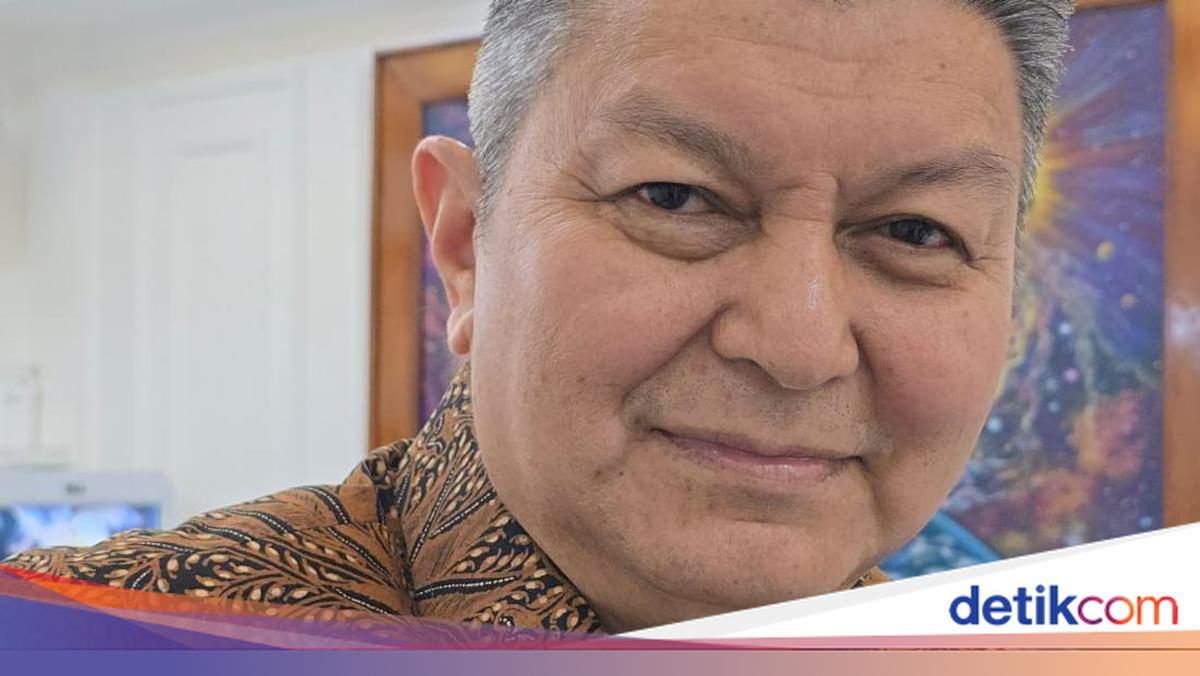
Retired Inspector General Professor Mohammed Rycko Amelza Dahniel stated that Indonesia had been importing corn for 53 years. However, this year, Indonesia has halted corn imports and has instead begun exporting it.
He believes this progress is inseparable from the role of the National Police (Polri), which, since the beginning of President Prabowo Subianto’s administration, has been tasked with helping to oversee the corn production sector. He noted that the police’s involvement in accelerating corn production has made history for Indonesia.
“BPS data shows that Indonesia has always imported corn since 1973, and only in 2026 are we declaring that we will not import, and are even exporting. This means that for 53 years we were importing, and now history is being changed. Why was history changed? Because of a presidential policy for food self-sufficiency, coupled with the assignment of the National Police,” said Rycko at the Centre for Police Science Studies, STIK-PTIK Complex, South Jakarta, on Wednesday (24/6/202ng).
“Therefore, the National Police are not only capable of performing their primary duties, but are also capable of making history in Indonesia’s food security. This is truly making history,” he continued.
Critical Analysis of the Agricultural Sector
In addition to highlighting the role of the National Police in accelerating national corn production, Rycko also invited all parties to evaluate or conduct a critical review regarding the 53 years of Indonesian corn imports. “What can be learned from the success of the National Police? How could they change a 53-year history of importing in just two years?” asked Rycko.
Rycko then discussed government policy in the food sector, which includes four factors: availability, access, utilisation, and stability.
“Let us dissect the government’s food policies one by one. The policies involve availability, access, utilisation, and finally, stability. Why are these programmes not running optimally within society? Does the problem lie with the government, the community, or is it that the programmes cannot be implemented?” said Rycko.
Through critical analysis, Rycko stated that the government could learn valuable lessons so that corn production could remain optimal in the future.
“Where must we optimise? Is it the government policy alongside ministries and agencies? Is it the community sector? Or is it the food commodity itself?” he asked.
He then quoted the explanation from the Assistant Chief of the Indonesian National Police for Human Resources, Inspector General Anwar, acting as the Head of the Police Food Task Force. From this, Rycko suspected that capital remains one of the primary obstacles for farmers.
“Mr Anwar explained that regarding availability, for instance, the community needs funds just to clear land. Clearing even good land—flat, without large trees, swamps, or peat—costs around Rp 2 million. If the land is peat or swamp, clearing large areas will cost much more. This is about capital. The key is capital. Capital for farmers to clear land. Where will this capital come from? This must be discussed. Should the government take over, or should our banking sector take over?” asked Rycko.
Furthermore, Rycko addressed the issue of seed availability. He noted that farmers require high-quality variety seeds, but in reality, farmers often use seeds from their previous harvests.
“Secondly, there is the availability of seeds. Farmers pass down seeds from previous crops. Can we, the government, provide superior seeds? Seeds resulting from research that are high-quality varieties—fast-growing, pest-resistant, and hardy—that is what we need,” Rycko emphasised.
Next, Rycko discussed the issues of fertiliser availability and access. He admitted that through his involvement in agricultural activities, he has observed that the cost of fertiliser and other supporting components is uneconomical, meaning the profits from harvests cannot be felt.
“This is another critical input: fertiliser. Based on paper data, our fertiliser supply is sufficient. However, the reality on the ground is different. I am also a farmer. I plant paddy; in a three-season harvest cycle, only the first tree is profitable, while the second and third are not enough to cover costs. Because prices are high, the money from the harvest cannot be used for anything else,” he explained.
He finally spoke about market access. He stated that if agricultural products and their prices are still controlled by middlemen, farmers will never prosper.
“Then, there is access. If it is still controlled by middlemen, farmers will not be able to thrive. Especially for our farmers, from the time they prepare the soil until harvest, it takes at least three months. What do they eat during those three months? This will be critically reviewed,” he concluded.