
Prof Hariyadi: Burning Oil Palm Plantations Is tantamount to Destroying Investment
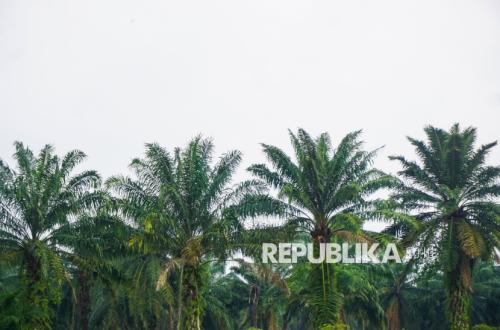
JAKARTA — Land fires are not only an environmental threat but can also cause major economic losses for the oil palm plantation industry. Crops that require investment, care and years of growth before yielding produce can lose their productive value to fire. Burning a plantation that is already in production therefore runs counter to the business interests of companies that depend on sustainable harvests.
Professor Hariyadi of IPB University’s Faculty of Agriculture said oil palm plantations are long-term productive assets that must be protected from various risks, including forest and land fires. He said discussions of such fires need to take a comprehensive approach, taking into account agronomy, land characteristics, environmental factors, human activity and spatial planning. This is necessary to ensure that the causes of fires and measures to prevent them are not inferred solely from the presence of oil palm in an area.
From a business perspective, fires could wipe out investments made over many years and disrupt the continuity of production. Companies face the risk of crop damage, lost potential income, higher restoration costs and operational disruption. However, the scale of the economic losses does not in itself rule out deliberate burning. Each fire incident still requires an evidence-based investigation to establish its cause and determine who is responsible.
For plantation businesses, protecting estates from fire is part of safeguarding investment. Oil palms take years after planting to reach productive maturity. Once they begin yielding, they still require fertilisation, maintenance, pest and disease control, and labour to sustain productivity.
Fires can damage crops, disrupt harvesting, reduce output and increase restoration costs. Losses can also extend to plantation infrastructure, production roads, drainage networks and the ecosystems that support crop growth.
The risks are greater on peatland. Fire can spread beneath the soil surface and persist even when flames above ground appear to have been extinguished. This means fires can recur, are difficult to tackle and require substantial restoration costs.
Companies also face legal and reputational risks if they are found to have carried out burning. Breaches may lead to sanctions under applicable regulations, operational disruption and a loss of confidence among buyers and business partners. As global markets increasingly demand responsible production practices, fire-related problems can jeopardise market access and supply chains.
Fire prevention is therefore not merely an environmental obligation, but a direct business interest for companies seeking to protect their assets and ensure continuity.
Hariyadi explained that fire does not only burn crops; it can also damage soil microorganisms, disrupt nutrient balance and destroy flora and fauna that support land productivity. Ash from fires does not automatically make soil more fertile, as vegetation fires can remove organic matter and damage life in the soil.
Protecting land must therefore be an important part of sustainable plantation management.
Hariyadi highlighted seven principles for plantation management: legality, productivity, quality, sustainability, traceability, humanity and profitability.
Legality covers certainty of land rights, permits and compliance with regulations. Productivity and quality concern the optimisation of yields and product standards, including oil extraction rates and free fatty acid (FFA) levels in palm oil. Sustainability requires environmental protection and fire prevention.
Traceability ensures that the origins of land and raw materials can be tracked. Humanity makes the protection of workers and communities an important part of business, while profitability ensures economic viability so companies can fund crop maintenance, technology adoption and environmental protection.
Source: jawawa.id (https://jawawa.id/newsitem/prof-hariyadi-burning-oil-palm-plantations-is-tantamount-to-destroying-investment-1793191891)
Originally published by Republika (https://ekonomi.republika.co.id/berita/tnm6p0451/prof-hariyadi-membakar-kebun-sawit-sama-dengan-menghancurkan-investasi), translated from Indonesian