
Production Costs Rise Due to Weakening Rupiah, Industry Faces Difficult Situation
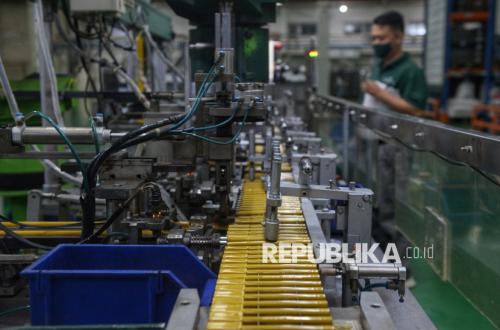
The weakening of the Rupiah against the US Dollar is exerting significant pressure on the national manufacturing industry, especially sectors that remain dependent on imported raw materials. Business players are reportedly making continuous adjustments to maintain production sustainability amidst exchange rate volatility.
The Chairman of the Indonesian Exporters Association (GPEments), Benny Soetrisno, stated that the business community is striving to adjust to exchange rate fluctuations to ensure industrial operations continue. “The business world always makes adjustments to exchange rate changes. In addition to changes in production costs, this also impacts the industrial financing structure,” Benny said when contacted in Jakarta on Monday.
According to Benny, the greatest pressure is felt by the manufacturing industry that still relies on imported raw materials and auxiliary materials. The rise in the Dollar exchange rate directly increases production costs, thereby squeezing business margins. He added that the manufacturing industry’s dependence on imported raw materials remains high; nationally, approximately 70 per cent of manufacturing raw materials are imported, meaning the Rupiah’s weakness significantly affects production costs. “Raw materials account for about 60 per cent of the total production cost structure,” Benny noted.
The Head of the Centre of Macroeconomics and Finance at the Institute for Development of Economics and Finance (INDEF), Rizal Taufikurrahman, assessed that the Rupiah’s weakness, which has breached the Rp17,500 per US Dollar range, is placing immense pressure on the national manufacturing industry. Rizal noted that many sectors still depend on imported raw materials, machinery, and components.
“The automotive, electronics, pharmaceutical, textile, and food and beverage industries are the most vulnerable because the depreciation of the Rupiah directly raises production, logistics, and energy costs,” said Rizal. He further explained that the industry is also facing pressure from weakening domestic demand due to pressured consumer purchasing power, creating a double burden on the manufacturing sector.
External factors, such as the strengthening US Dollar, high global interest rates, trade wars, and geopolitical uncertainty, are driving capital outflows from developing nations. Domestically, high import dependency and a weak upstream industrial structure make manufacturing sensitive to currency fluctuations. “If this persists, the condition risks halting industrial expansion, suppressing factory utilisation, and accelerating premature deindustrialisation,” Rizal concluded.