
Procurement Efficiency Seen as Key to Eradicating Corruption
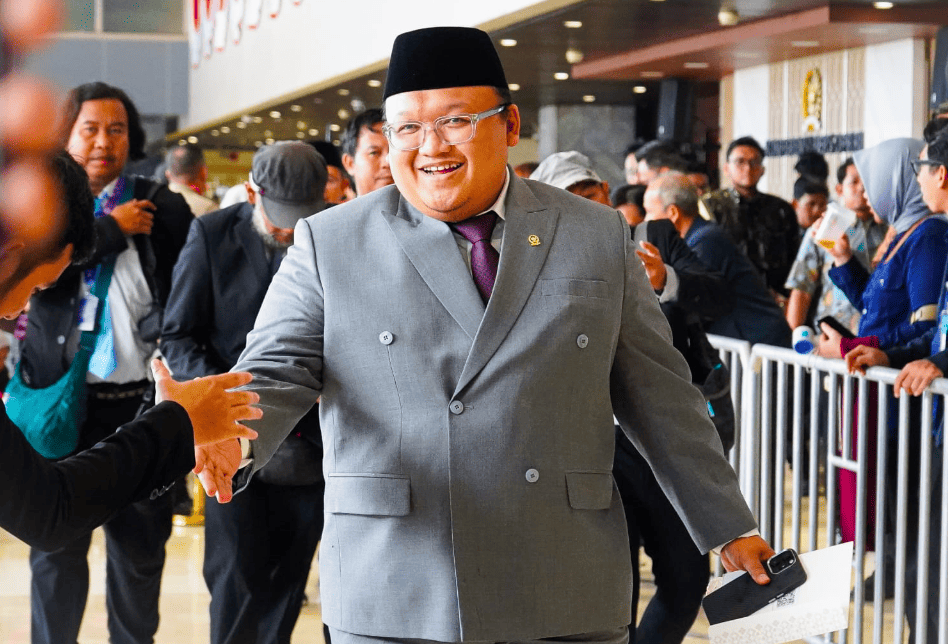
Member of Commission XI of the Indonesian House of Representatives (DPR RI) and Secretary General of the Central Executive Board of the Prosperous Justice Party (PKS), Muhammad Kholid, has expressed support for President Prabowo Subianto’s plan to elevate the institutional status of the National Public Procurement Agency (LKPP) into a Government Procurement Agency. The plan was announced by the President in his speech on the submission of the 2027 State Budget Bill and Financial Note at the Plenary Session opening the first sitting period of the DPR RI on Friday (14/8/2026), with the aim of consolidating the procurement of goods and services across all ministries, agencies, and central and regional governments.
“We support the President’s move to consolidate government procurement of goods and services, both in the regions, at the centre, and in ministries and agencies. So far they have been buying the same goods at different prices because of a lack of coordination, and that is a waste of state budget that should have been prevented,” Kholid said in an official statement in Jakarta on Monday (17/8).
Kholid stressed that efficiency in government procurement cannot be separated from good governance. For him, procurement carried out transparently and efficiently is essentially the most direct form of corruption mitigation, given that the procurement of goods and services has long been known as one of the most vulnerable points for the misuse of state funds.
“Efficient procurement governance is the key to corruption mitigation itself. The more transparent and standardised the procurement process, the smaller the room for price manipulation and budget misuse. We fully support this policy direction,” said Kholid, an alumnus of the Faculty of Economics and Business at the University of Indonesia.
In his speech, the President also explained that procurement consolidation already implemented at the regional government level has proven to produce spending efficiency, with savings of 20.86 percent in 2025 and an increase to 25.43 percent in 2026. Thus, the implementation of electronic catalogues, data-based planning, and stronger and more disciplined standardisation of procurement processes has the potential to generate far greater state budget savings than those achieved so far.
“The results of procurement consolidation that have been running so far show that this policy direction is already correct. Strengthening LKPP into a Government Procurement Agency should reinforce the functions that have been its duties all along, from formulating procurement policy, managing electronic procurement systems such as electronic catalogues, to monitoring and evaluation,” concluded Kholid, a DPR RI member from the West Java VI electoral district covering Depok and Bekasi cities.