
Processing Waste, Caring for the Environment Together
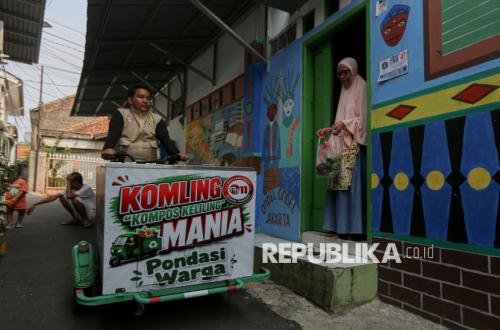
In the midst of rising urban waste issues, residents of RT 11/RW 07 Gandaria Utara, South Jakarta, are demonstrating that change can begin at the smallest local level. Through the Kompos Keliling (KOMLING) programme, household organic waste no longer ends up in landfills but is instead processed into useful compost. This community-based initiative also serves as an educational platform for residents to manage waste starting from their own homes.
Every morning, the KOMLING electric carts navigate the narrow alleys of RT 11/RW 07 Gandaria Utara. Residents, who have already sorted organic waste from their homes, wait for its arrival. In this neighbourhood, waste management begins not at the final disposal site, but in individual backyards.
One by one, residents hand over vegetable scraps, fruit peels, and kitchen waste to the officers. For them, sorting waste is no longer an extra chore, but a daily habit believed to be capable of reducing the environmental burden.
Unlike conventional waste carts, the KOMLting electric vehicle is specifically designed to transport organic waste to a processing site. This simple innovation serves as a symbol that waste management can be conducted in a more environmentally friendly manner.
Upon reaching the processing site, organic waste is sorted again before entering the composting process. What was previously considered useless slowly transforms into material that will fertilise plants.
The KOMLING programme is not merely about transporting waste, but also about educating residents on the importance of waste management from the source. This awareness serves as the foundation for change within residential areas.
In addition to processing organic waste into compost, residents also utilise ‘Smart Geprek’ machines to recycle plastic waste. This step expands efforts to reduce the amount of waste that ends up in landfills.
This programme operates thanks to the active involvement of residents. From sorting waste and handing over organic waste to processing it into compost, everything is carried out through the spirit of ‘gotong royong’ (mutual cooperation) that grows from within the community.
The resulting piles of compost serve as a sign that change does not always require massive technology or complex policies. Starting with a single electric cart and the habit of sorting waste, the residents of Gandaria Utara demonstrate that a cleaner environment can be built through simple, collective steps.