
Problematic Decile Data: DIY Senator Says Many Policies Are Shock-Based
The change in welfare rankings in the National Socio-Economic Single Data (DTSEN) has come under scrutiny after a number of residents in the Special Region of Yogyakarta (DIY) experienced drastic increases in their decile classification. Residents who were previously in decile 1 were even reported to have moved to decile 6 to 10, meaning they no longer qualify as recipients of various social assistance programmes (bansos).
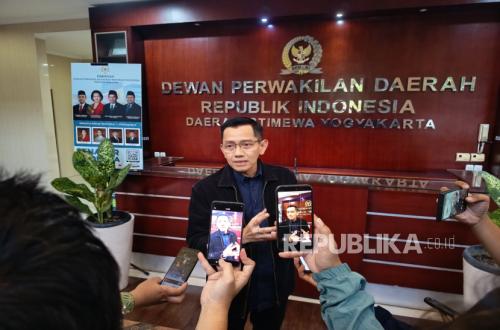
Responding to this, DPD RI member for DIY, Dr Ahmad Syauqi Soeratno, said the root of the problem is that many government policies are shock-based in nature. “The socialisation and implementation of the policy (welfare decile classification in DTSEN) should have been prepared well in advance. Do not give the impression that this policy lacks a planning function,” Syauqi said during a media discussion at the DPD RI DIY Office on Sunday (30/8/2026).
Syauqi also strongly criticised the statement by the Head of BPS RI, who asserted that decile figures are a depiction of relative position in welfare ranking, not a single measure of a family’s economic condition. According to Syauqi, if something is still relative, it should not be made into a policy in the first place.
“If it is still relative, then do not make it a policy yet. When someone goes to hospital for dialysis, there is no such thing as relative,” said the Deputy Chair of Committee III of DPD RI.
This gives the impression that the government is not ready for change management. “It is as if there is no orchestration,” he added.
Syauqi explained that the process of making public policy must go through the proper stages, starting from agenda setting, policy formulation, policy adoption, policy implementation, and policy evaluation.
“Because conditions on the ground are not as written on paper,” said Syauqi, who recently completed his Doctoral Programme in Leadership and Policy Innovation at Gadjah Mada University (UGM).
Syauqi also appreciated the DIY Provincial Government, through Regional Secretary Ni Made Dwipanti Indrayanti, for asking BPS to provide an explanation regarding the change in decile classification in DTSEN.
“A formal protest from a regional head directly to BPS, as done by the DIY Regional Secretary, is relatively rare in other provinces. The more common pattern outside DIY is protest from grassroots communities through independent rebuttals or social media, which are then forwarded or voiced by the local DPRD, with the local Social Service/BPS playing a role in explaining the mechanism, rather than direct executive-to-BPS confrontation as seen in DIY,” he said.
He also appreciated the Yogyakarta City Government’s steps in preparing the Regional Health Insurance (Jamkesda) as a safety net so that affected residents continue to receive health services, opening complaint services at the Public Service Mall and through the Jogja Smart Service (JSS) application, as well as increasing the capacity of state junior high schools to ease the burden of education costs for affected residents.
“The most concrete response actually came from the city government, not from the data authority itself. Jamkesda, the JSS complaint service, and the increase in state junior high school capacity from the Yogyakarta City Government are real budgetary and service commitments, in contrast to BPS DIY/BPS RI and the Ministry of Social Affairs, which so far have only offered re-verification channels, not automatic protection guarantees for affected residents,” said Syauqi.