
Pro-Iran Militias Destabilise This Oil-Rich Muslim Country, Arabs Enraged
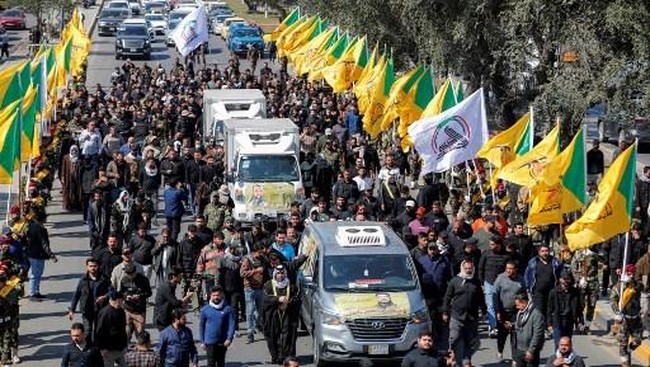
Relations in the Middle East are now on a knife-edge following a series of drone and missile attacks launched from Iraqi territory targeting Gulf countries. This escalation has provoked immense anger from neighbouring Arab states, which are losing patience with Baghdad’s inability to rein in pro-Iran militias on its own soil.
Citing Arab News, the tensions peaked after representatives from the US and Iraqi governments met in Irbil on Wednesday, 26 March 2026. The meeting was the inaugural session of the new US-Iraq Joint High Coordination Committee, established at Washington’s urging to keep Iraq out of the ongoing regional conflict.
The day after the meeting, on Thursday, the US Embassy in Baghdad issued an official statement announcing that both sides had decided to intensify cooperation. This step aims to prevent terrorist attacks and ensure that Iraqi territory is not used as a launchpad for any aggression against the Iraqi people, Iraqi security forces, US personnel, or neighbouring and regional countries.
However, several longstanding wounds remain a major issue in this agreement. Previously, on 14 March 2026, an airstrike hit a house in Baghdad’s Karrada district, believed to have been carried out by the US in a failed attempt to kill Ahmad Al-Hamidawi. Al-Hamidawi is the leader of Kataib Hezbollah, a powerful Iraqi militia backed by Iran.
The US government has offered a reward of US$10 million, equivalent to Rp157.4 billion, for information leading to Al-Hamidawi’s whereabouts. The US State Department, through its Rewards for Justice programme, stated that the group led by the man has repeatedly targeted US personnel and facilities in Iraq using IEDs, rockets, and drone systems, abducted US citizens, and killed innocent Iraqi civilians.
Following the airstrike that killed three Kataib Hezbollah members, the US Embassy in Baghdad was immediately hit by a drone in retaliation. The embassy then issued an emergency warning urging US citizens to leave Iraq immediately and avoid approaching the embassy or consulate in Irbil.
Threat of Becoming a Pariah State and Pressure from Arab Countries
Iraq’s chaotic political situation is further complicating matters, particularly regarding the selection of a new prime minister. The Coordination Framework, the largest Shia party bloc controlling more than half of the parliamentary seats, has yet to agree on a candidate to nominate. Whoever leads will face the daunting task of balancing relations between Washington and Tehran.
Since the US-Israel war with Iran broke out on 28 February, attacks by pro-Iran factions in Iraq against Gulf Cooperation Council (GCC) countries have intensified. This has triggered a fierce reaction from Saudi Arabia, which summoned the Iraqi ambassador on 12 April to protest drone attacks originating from Iraqi territory.
Saudi Deputy Minister for Political Affairs, Saud Al-Sati, issued a stern warning to Iraq to immediately bring the situation under control.
“If Iraq does not take action, Saudi Arabia will take all necessary measures to defend its security and protect its territory,” Al-Sati stated firmly.
A similar message was conveyed by Bahrain’s Ministry of Foreign Affairs the following day. In protesting the ongoing drone attacks, Bahrain told the Iraqi chargé d’affaires that it too reserves the right to take all necessary steps to protect itself. The United Arab Emirates (UAE) followed suit on 15 April, issuing a strong note of protest condemning the unprovoked terrorist attacks from Iraqi territory by militias affiliated with the Islamic Republic of Iran.
An analysis from the Atlantic Council published on 2 April states that these Iran-backed militias are tearing Iraq apart from within. Victoria J. Taylor, Director of the Iraq Initiative at the Atlantic Council, said that the power of these militias is a mistake of successive Iraqi governments that have allowed them to infiltrate the country’s security, political, and economic institutions.
“Although Iraq’s prime minister has recently made progress in improving relations with Gulf and regional partners, militia attacks on the Gulf and Jordan risk making Iraq a pariah state once again,” Taylor said.
Taylor added that confronting these militias is as dangerous as facing the Sicilian mafia, as the groups are ruthless and have infiltrated every layer of society, to the point that security apparatus and judges feel their lives are threatened. However, she emphasised that Iraq has no choice but to regain control over its future.
In agreement, David Schenker, a senior fellow at the Washington Institute and former US Assistant Secretary of State, assessed that Iraq is beginning to resemble Lebanon and is in danger of becoming a failed state. He highlighted the extensive Iranian interference, money laundering, and criminality occurring there.
“The real problem is the six or seven factions within Hashd (Popular Mobilisation Forces) that are terrorist organisations on the government payroll, control Hashd, are not accountable to the government, and in fact are independent actors that often serve Iran’s interests,” Schenker explained.
Schenker concluded that although Gulf countries have worked hard to reintegrate Iraq into the Arab system, Baghdad’s funding of these militia organisations will lead the Gulf states to halt their aid policies. In his view, Iraq needs a nationalist leader who seeks prosperity and sovereignty, but