
Private-Sector Bloc Targets $9.5 Trillion Halal Market by 2030
Private-Sector Bloc Targets $9.5 Trillion Halal Market by 2030
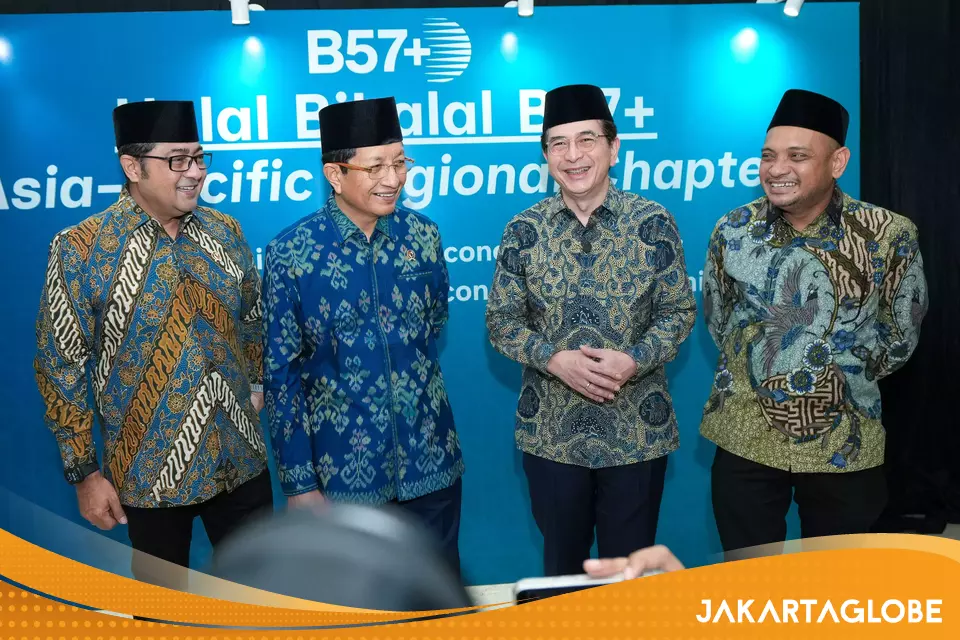
Jakarta. A private-sector alliance linking Muslim-majority economies is stepping up efforts to tap the fast-growing global halal industry, targeting a market projected to reach $9.5 trillion (Rp 163 quadrillion) by 2030, as B57+ Asia Pacific Regional Chapter positions Indonesia at the center of that push.
The initiative, backed by business leaders and policymakers, aims to strengthen trade, investment, and cross-border collaboration among the 57 member states of the Organisation of Islamic Cooperation and beyond, amid rising geopolitical fragmentation.
Speaking at a business forum in Jakarta on Wednesday, Religious Affairs Minister Nasaruddin Umar said the launch of the Asia-Pacific chapter earlier this year marked a key milestone in building a private-sector platform capable of connecting Islamic economies.
“I am optimistic that this form of Islamic economic multilateralism can respond to global challenges, drawing from past crisis experience,” he said.
The halal economy, once largely associated with religious compliance, is increasingly being viewed as a mainstream global industry spanning food, finance, cosmetics, and lifestyle sectors. Its value is estimated to exceed $3 trillion in 2026, indicating strong demand across both Muslim and non-Muslim markets.
Arsjad Rasjid, chairman of the B57+ Asia Pacific Regional Chapter, said the bloc aims to translate that potential into tangible economic gains through structured collaboration.
“In a world of uncertainties, building trust and economic cooperation is more important than ever. The halal economy is one of the most ready and promising markets,” he said.
Arsjad added that while the sector’s growth cuts across religion, culture and geography, unlocking its full value will require stronger institutional frameworks and more integrated supply chains.
“Our mission is simple but ambitious: to turn collective strength into shared prosperity through trade, investment and real business connectivity,” he said.
As part of its regional strategy, the group plans to expand its footprint beyond OIC countries by establishing representative offices in non-member markets, including Southeast Asian economies such as Vietnam, as well as Australia and New Zealand. The move signals a broader push to position halal standards as a global benchmark for quality and integrity.
Indonesia, home to the world’s largest Muslim population, is seeking to leverage its domestic market and policy support to become a leading hub for halal production and trade. Officials say the country’s role will be critical in driving productivity and scaling up the sector globally.
Eka Sastra, secretary-general of B57+ Indonesia, said achieving that ambition will require coordinated efforts across governments, businesses and international partners.
“This is not something we can do alone. Collaboration is essential to turn this potential into real economic benefits,” he said.
The B57+ platform operates under the Islamic Chamber of Commerce and Development and is designed to bridge policy and business, focusing on boosting intra-OIC trade, expanding cross-border investment and developing practical economic frameworks.
Tags: Keywords: