
Prisons Reform: Tackling Drugs, Teaching Inmates Skills and Opening Up to the Public
The role of prisons and detention centres as places where people serve their sentences is evolving as the Directorate General of Corrections comes under the Ministry of Immigration and Corrections. Alongside tight security, several facilities are developing skills programmes for inmates and opening educational activities to the public.
These efforts can be seen in activities in several regions, ranging from preventing drug smuggling and developing skills that help former inmates earn an income to using prison facilities as learning resources for the community.
At the Class IIA Women’s Prison in Bandung, West Java, officers searched inmates’ residential blocks and conducted urine tests on staff and inmates on Thursday (22 October 2026). The operation involved the Bandung City Military District Command (Kodim 0618), the Bandung Police narcotics unit and the Bandung City National Narcotics Agency.
‘Officers searched the residential rooms, checking all areas and belongings inside. We then conducted urine tests on staff and 10 inmates,’ Bandung Women’s Prison head Rika Aprianti said, as quoted by detikcom from a post on the prison’s official Instagram account on Friday (23 October 2026).
Similar checks have been carried out elsewhere. Three days earlier, on Monday (19 October), officers at Medan Class I Detention Centre foiled an attempt by a visitor identified by the initials ES to smuggle in methamphetamine and ecstasy. The facility then co-ordinated with the police on further action.
‘During the inspection, officers found contraband hidden in a wallet. The attempt took advantage of the busy flow of visitors,’ said Yoslan Josua Husurungan Doloksaribu, head of security at Medan Class I Detention Centre, in a written statement on Monday (19 October).
Meanwhile, officers at Surabaya Class I Prison foiled an attempt to smuggle 17.11 grams gross of methamphetamine hidden inside fried chicken on Tuesday (6 October). The drugs were brought by a visitor identified as AM for an inmate identified as BSN, 21, who is serving a sentence for a narcotics offence.
‘The evidence and the inmate suspected of involvement will be handed over to Sidoarjo Police for further processing. This success was made possible by co-operation with other stakeholders. That co-operation must continue to be strengthened so that efforts to eradicate narcotics can be carried out as effectively and sustainably as possible,’ said the head of Surabaya Class I Prison through its security chief, Anak Agung Gde Joni.
Tighter controls on drugs and illegal mobile phones are among the policies emphasised by Immigration and Corrections Minister Agus Andrianto. In a statement on 29 May 2025, Agus said there would be no tolerance for such violations.
‘I reiterate: there will be no mercy for anyone who still dares to play games with drugs and mobile phones. The reputation of the corrections system must not be damaged by a group of troublemakers and defiant people. Zero drugs and mobile phones is non-negotiable,’ Agus said.
Skills training helps inmates become productive
Alongside tighter security and enforcement, corrections reform is also focused on strengthening rehabilitation programmes. The aim is to give inmates skills they can use to earn an income after completing their sentences.
One example is Garut Class IIA Prison in West Java. Asep Supriatna, head of its work activities section, described his 21 years as a corrections officer when speaking to detikcom in August 2026.
Garut Prison currently runs 24 self-reliance training activities, Asep said, adding that almost all of them deliver economic benefits for inmates.
‘What I have particularly noticed in the transition from the Ministry of Law and Human Rights to the Ministry of Immigration and Corrections is the improvement in work-training activities. The programmes currently being implemented are having a significant impact,’ he said.
Jajang, a former inmate at Garut Prison, has benefited from the training. While serving his sentence, he learned how to process feed for poultry.
After his release, Jajang started a small-scale chicken and duck feed business, using a feed-making machine lent to him by the prison.
Speaking to detikcom in Garut on Thursday (20 August), the 48-year-old said his business had generated around Rp12 million in turnover.
‘I had only been out of prison for a month, and in that first month of starting the business I already received orders for as much as 25 tonnes,’ Jajang said.
A similar experience is that of Miftahul Bowo Saputera, a former inmate who now works at a fish farm on Nusakambangan Island, Central Java, raising milkfish, tilapia and vannamei prawns.
Bowo said he had struggled to find work after his release. He then decided to return to Nusakambangan, where he had received aquaculture training while serving his sentence.
‘I took part in the training programme at the fish farm. I learned to farm prawns, milkfish and tilapia. After I was released, the contractor entrusted me with managing the farm,’ Bowo said. The contractor is a private-sector partner working with the prison on aquaculture activities.
Bowo’s decision to return to work on Nusakambangan was initially questioned by his family. But he had his reasons for choosing the job.
‘I thought it would be hard to find work outside, and I might relapse [into crime] and end up in prison again. It was better to work here on Nusakambangan,’ he said.
Prisons and detention centres begin opening up
The corrections reforms promoted by Minister Agus involve more than security and inmate rehabilitation. Several prisons and detention centres are also using productive activities to benefit nearby communities.
The approach follows Minister Agus Andrianto’s direction for correctional facilities to be more open to their surrounding communities. The aim is not only to reduce the institutions’ intimidating image, but also to expand their contribution to the public.
At Karawang Class IIA Prison, for example, a food-security programme involving inmates has been developed into an educational-tourism initiative at the prison’s Assimilation and Education Facility (SAE).
The programme gives members of the public an opportunity to learn about farming, livestock and aquaculture activities at LASKAR Farm.
On Tuesday (6 October 2026), 65 pupils from Years 3 and 4 at SDS Al Mumtaaz Karawang took part in an educational visit. They watched eggs being incubated, picked chillies, planted seedlings, and fed livestock and farmed fish.
‘This educational activity was launched to give pupils first-hand exposure to farming, livestock and aquaculture, while fostering care for the environment and food security from an early age,’ Karawang Class IIA Prison head Ma’ruf Prasetyo Hadianto said on Wednesday (7 October).
Ma’ruf said 20 inmates were involved in managing the three-hectare LASKAR Farm. The work is part of the self-reliance training programme as well as an educational resource for visitors.
He said the educational visits had received pupils from two primary schools, one orphanage, one vocational secondary school and four universities.
Sumenep Class IIB Detention Centre in East Java has also opened its doors. It hosted pupils from Almanah Campor Barat Kindergarten for a batik-making lesson with officers and inmates skilled in hand-drawn batik.
Sumenep Class IIB Detention Centre head Aditya Wahyu Rahmadani said the batik programme for the public had been running since he took up his post on 2 January 2026.
The activity is funded by the detention centre, together with some of the proceeds from sales of batik made by inmates, to cover the cost of tools and materials.
‘Sumenep Class IIB Detention Centre hopes it will no longer be seen as a frightening place, but also as an enjoyable educational resource for the community through the positive and productive activities of inmates,’ Aditya told detikcom on Saturday (10 October).
Aditya said he hoped the programme would help the public understand that the corrections system is intended to rehabilitate people, not merely to punish them.
‘Sumenep Detention Centre must be open, so that people understand that corrections facilities are no longer places of suffering, but places of rehabilitation,’ he said.
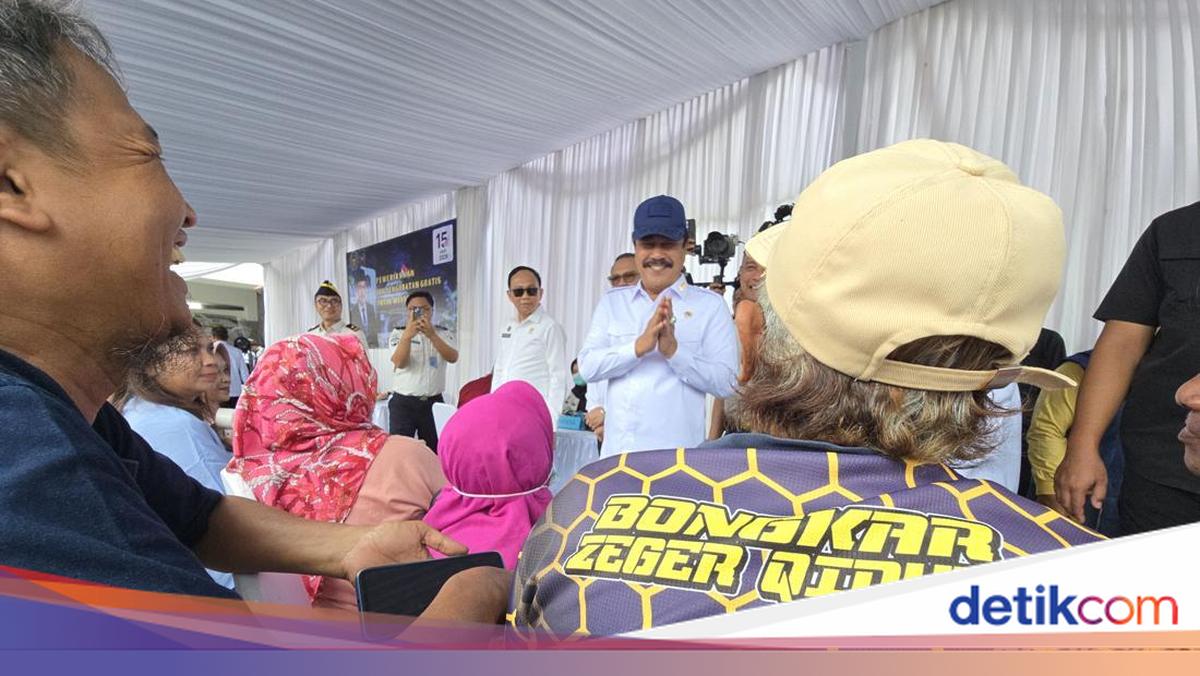
The effort to extend the benefits of the corrections system to the community also includes healthcare services. Co-operation between the Ministry of Immigration and Corrections and the Ministry of Health has included free health checks and cataract surgery for members of the public, officers and inmates.
One such event was held at Cipinang General Hospital in East Jakarta on Monday (10 August 2026), as part of the 81st anniversary of Indonesia’s independence. Deputy Health Minister Benyamin Paulus Octavianus praised the Immigration and Corrections Ministry’s involvement in supporting the health services.
‘The Ministry of Health warmly welcomes this activity. The Ministry of Immigration and Corrections is holding an initiative that supports the Ministry of Health,’ Benyamin said while attending the event.
Source: jawawa.id (https://jawawa.id/newsitem/prisons-reform-tackling-drugs-teaching-inmates-skills-and-opening-up-to-the-public-1792731188)
Originally published by detikcom (https://news.detik.com/berita/d-8720301/melihat-upaya-lapas-berbenah-berantas-narkoba-keterampilan-napi-keterbukaan), translated from Indonesian