
Prisoners Become BPJS Participants, Minister Agus: Rehabilitation Based on Humanity
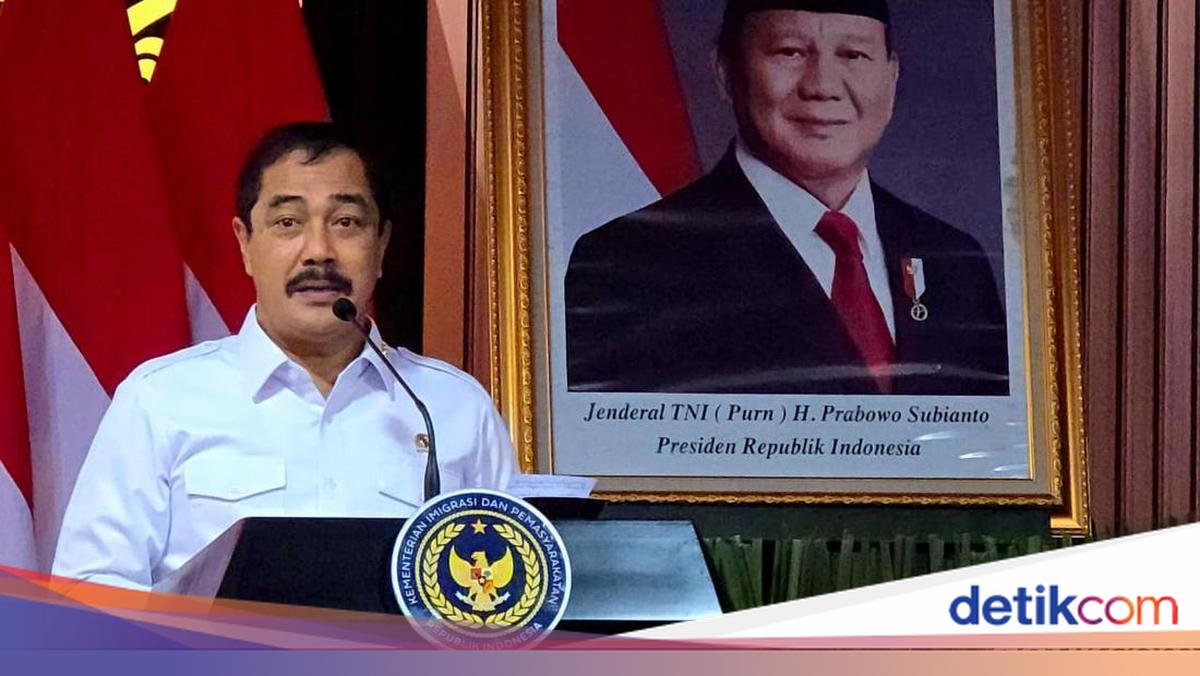
Minister Agus then explained that rehabilitation is a manifestation of the nation’s commitment to nurturing, providing hope, building human identity, and delivering justice to society. “Many changes have been made, both in terms of perspectives on inmates and the management system, which is now more humanity-based,” said Minister Agus in a statement on Wednesday (29 April 2026). This was conveyed by Minister Agus during the 2026 Rehabilitation Service Day commemoration at the IMIPAS Polytechnic Campus in Tangerang, Banten, on Monday (27 April). He invited all parties to reflect on achievements and unachieved targets. In particular, to his subordinates in the Ministry of IMIPAS, Minister Agus hoped for growing awareness among each to build the nation. “Today, I invite us all to conduct deep reflection on what has been achieved, what has not, and what we must do together as an integral part of national development,” he said. Regarding BPJS Health for detainees and inmates, Minister Agus emphasised that strengthening synergy and cross-sectoral collaboration is the main key in driving rehabilitation transformation. However, he reminded that collaboration would be meaningless without strong integrity at every level of implementation. “I encourage the entire apparatus to focus on real actions in the field that impact inmates and the wider community. Unite steps from the centre to the implementation level to realise productive, integrity-based, and modern rehabilitation,” he stressed. Returning to BPJS Health for detainees and inmates, through a joint ministerial decree, regulations on strengthening the division of roles and authorities across ministries and agencies are set, covering the Ministry of IMIPAS, Ministry of Home Affairs, Ministry of Health, Ministry of Social Affairs, and BPJS Health to ensure every detainee and inmate is registered as an active JKN participant. This includes as Penerima Bantuan Iuran (PBI) for those unable to afford it. This arrangement covers certainty of participation, provision of basic and referral health services in detention centres, prisons, and child correctional institutions, as well as funding sourced from the state budget (APBN), regional budget (APBD), and other legitimate sources in accordance with legal provisions. In addition, the Memorandum of Understanding between the Ministry of IMIPAS and BPJS Health serves as a strategic cooperation umbrella to optimise the implementation of each party’s tasks and functions. This MoU aims to enhance commitment, coordination, and effectiveness of cooperation in organising the JKN programme within the Ministry of IMIPAS environment. Furthermore, the scope of the MoU includes optimising active JKN participation for civil servants and non-civil servant employees, support for JKN participation activation, policy support for JKN participation in public services, implementation of interoperability for data exchange and utilisation, support for health facility cooperation, and other forms of cooperation agreed by the parties. This joint decree was established and signed by the Minister of Immigration and Rehabilitation, Minister of Home Affairs, Minister of Health, Minister of Social Affairs, and the President Director of BPJS Health. Meanwhile, the Memorandum of Understanding on Synergy in Implementing the National Health Insurance Programme in the Ministry of Immigration and Rehabilitation (IMIPAS) was signed by Minister Agus Andrianto and the President Director of BPJS Health, Prihati Pujowaskito. “BPJS Health currently manages more than 285 million participants, or nearly the entire Indonesian population. Such an achievement must be supported by cross-ministerial policy synergy so that its implementation remains on target, administratively orderly, and sustainable, including ensuring that inmate data registered as BPJS Health participants is accurate and up-to-date,” said Pujo in his statement on Tuesday (28 April 2026). This policy is also said to align with the government’s steps in conducting socio-economic data collection and verification of rehabilitation inmates for PBI-JK participation, carried out by the Ministry of Social Affairs based on the National Single Social and Economic Data (DTSEN) with support for population data matching. “Data accuracy greatly determines service accuracy as well as financial control. Therefore, synergy through this joint decree and MoU becomes a strong umbrella to encourage interoperable, secure, and accountable data exchange and utilisation between agencies,” said Pujo.