
Principles of Economic Policy and Exchange Rate Stability
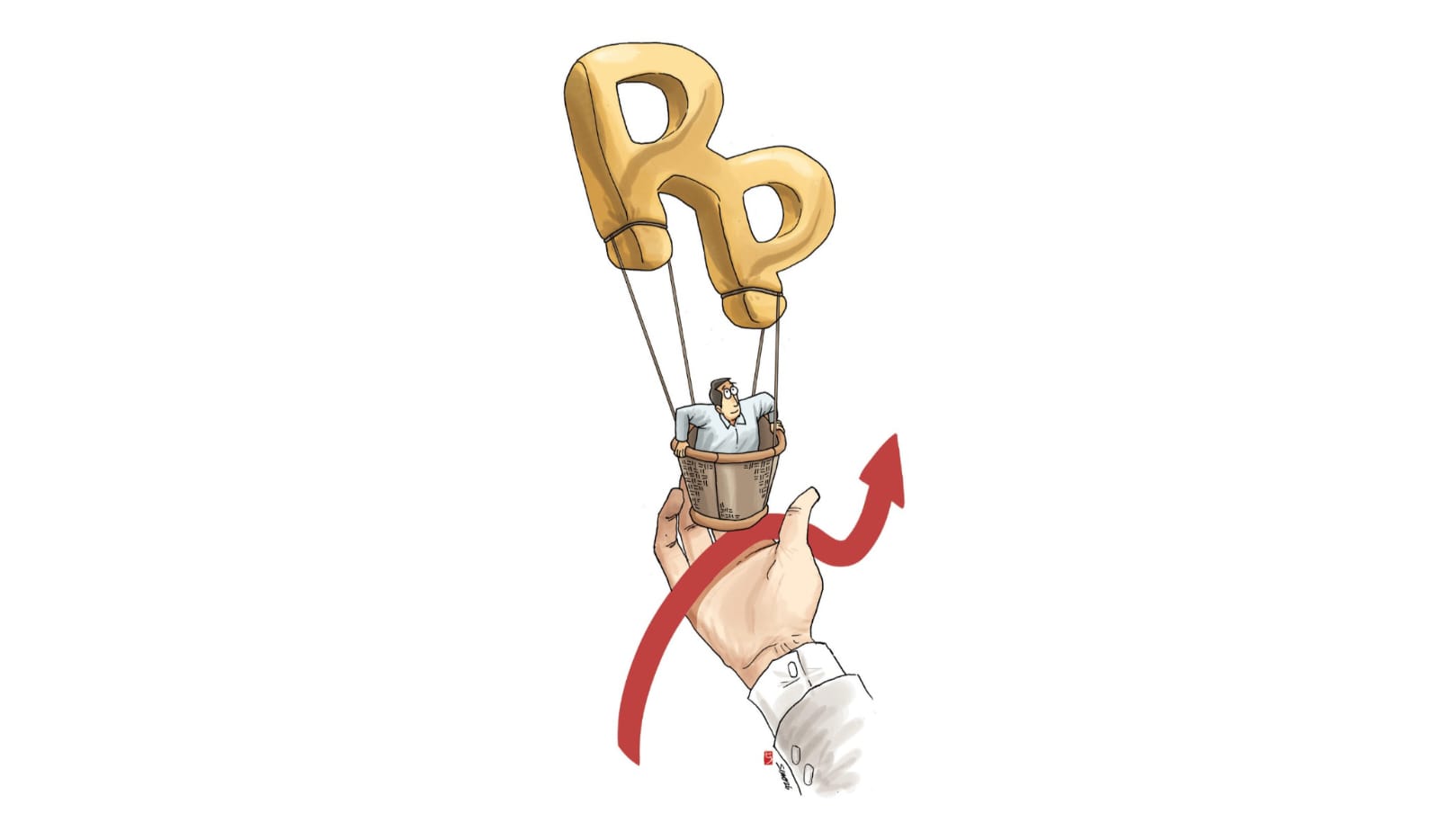
Macroeconomic policies are designed once planners thoroughly understand how natural economic mechanisms function. Because these policies are measured against international parameters, this understanding must be global. This is why geopolitical and geo-economic factors, such as exchange rates and crude oil prices, influence the formulation of economic policy.
In the ten basic principles of economics, policy is placed seventh, following natural market mechanisms (sixth) and trade (fifth). This placement is philosophical, conveying the message that economic policy exists to ‘maintain the market’ in its natural operation, rather than causing it to cease (crowable out).
FISCAL DISCIPLINE
At a macro level, the role of economic policy is seen through its ability to maintain two variables: physical investment and international trade, or the current account balance (CAB). Economic policy must encourage physical investment and the CAB, as these variables are sources of formal job creation, tax revenue, community savings, and foreign exchange reserves. Strengthening upstream physical investment will drive downstream consumer consumption.
Consequently, economic growth is a reflection of increased foreign exchange, tax revenue, community savings, and bank business credit. From a monetary perspective, the goal of economic policy is to increase value-added while maintaining stable inflation and exchange rates. This stability is essential for sustaining manufacturing production, infrastructure development, and strengthening public purchasing power.
Economic stability also requires fiscal discipline. Indonesia adopts the Stability and Growth Pact (SGP) standard, where the annual budget deficit and the proportion of government debt are kept no higher than 3% and 60% of GDP, respectively. Once these proportions are maintained, the government must ensure that the budget works effectively and efficiently to produce policies with a broad impact on the economy and public welfare.
The quality of policy is determined by the quality of technocratic formulation based on theory, data, and comprehensive feasibility studies, especially for policies that have no precedent in previous development planning. Every policy aims to produce a high economic multiplier, in terms of output, value-added, state revenue, and job absorption.
In the long term, the quality of economic policy is determined by the quality of institutions, including laws and regulations. From a macro perspective, a fundamental metric is ‘investment efficiency’, which is the ratio between the investment made and the output produced. This indicator is known as the Incremental Capital Output Ratio (ICORD). The higher the ICOR, the less efficient the investment.
Efforts to lower the ICOR are synonymous with efforts to produce the best economic policy. Currently, Indonesia’s ICOR remains quite high, with the proportion of manufacturing value-added to GDP declining. Over the last 40 years, the highest proportion was 32% in 2002, and it has now fallen to 19%.
The government must produce policies that do not merely ‘avoid burdening investors’ but also offer appropriate incentive packages tailored to specific products and timing. Investment incentive packages must be ‘competitive’ with similar packages from competing nations, particularly in Southeast Asia. An example is ‘set-jetting’ investment incentives, which encourage foreign film producers to film in a country to indirectly promote filming locations as tourist destinations; Indonesia must be able to compete with Thailand, Malaysia, and the Philippines.
MAINTAINING DOMESTIC INFLATION RATES
Regarding exchange rates, there are three primary indicators: Real Exchange Rate (RER), Real Effective Exchange Rate (REER), and Nominal Exchange Rate (NER). RER is heavily influenced by domestic inflation, making it vital to manage domestic inflation rates to prevent excessive currency depreciation.
REER is the comparison between RER and NER. When the RER in Rupiah per US Dollar is stronger than the NER, the Rupiah is considered undervalued; conversely, it is overvalued when the RER is weaker than the NER. Under normal conditions, the undervalued and overvalued positions of the Rupiah are determined by the position of the CAB. When the CAB is in surplus, the REER is overvalued and the Rupiah strengthens.
Data on the Real Broad Effective Exchange Rate (RBEER) shows the Rupiah’s exchange rate declining from an overvalued position of 100.8 in December 2024 to an undervalued position of 93.5 in March 2026. Nominal exchange rate expectations have also weakened over the last three months, meaning Indonesia needs to maintain domestic inflation rates to keep the Rupiah’s REER stable.
Data indicates that Indonesia’s CAB has been in deficit since 2023, while nominal FDI in Indonesia has remained around the US$50 billion mark. However, due to the Rupiah’s depreciation against the US Dollar, Indonesia’s FDI decreased slightly in 2025, with a similar trend observed in the first quarter of 2026. The undervalued position of the Rupiah over the last three years appears identical to the CAB deficit.
An undervalued position actually lowers national export prices, making them more competitive in the global market. Unfortunately, this local currency depreciation does not automatically increase export volumes, as this depends on national production capacity and product types. This phenomenon is known as the ‘J-curve’, where depreciation is followed by an export-import deficit before eventually resulting in a surplus.
Furthermore, national exports, which are dominated by natural resources (SDA), are not very sensitive to undervaluation because the demand for natural resources is price-inelastic, unlike manufactured products, which are sensitive to changes in exchange rates or prices.