
Primary, secondary, tertiary steps to prevent health risks from forest fire haze
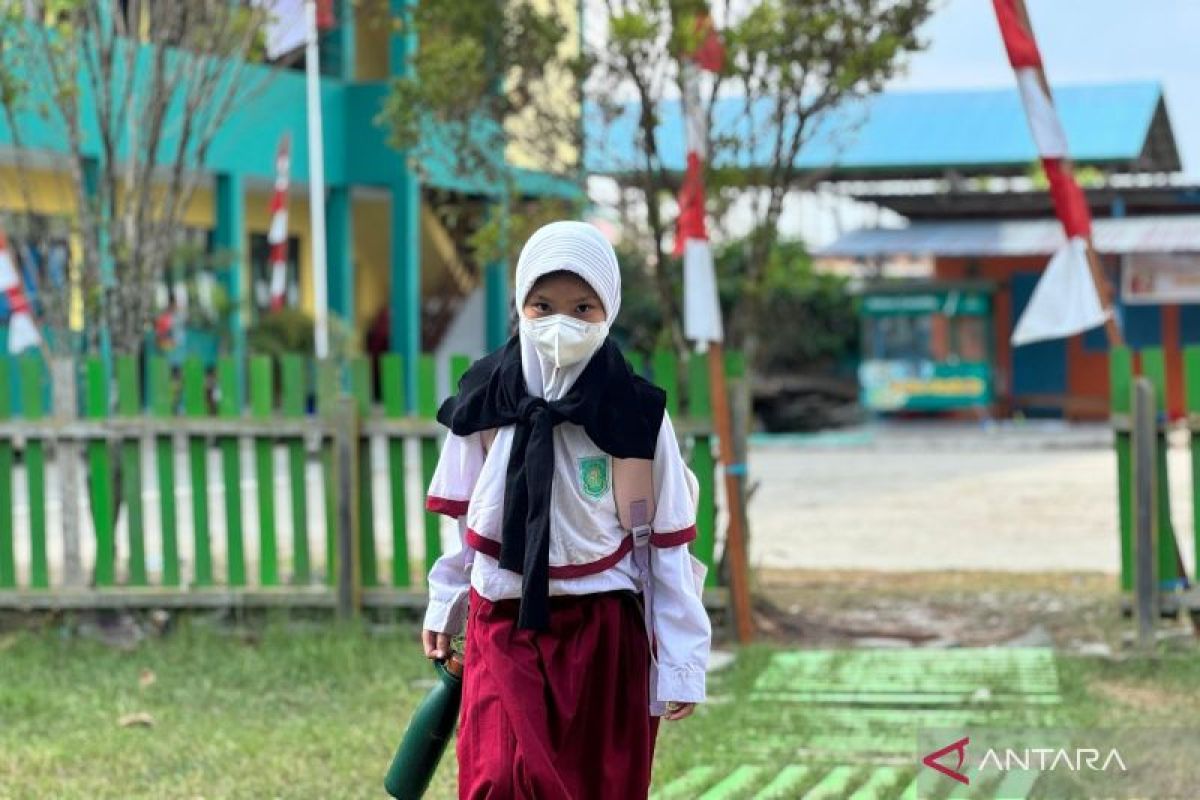
Jakarta (ANTARA) - Respiratory and pulmonary specialist Dr. dr. Feni Fitriani Taufik, Sp.P(K), M.Pd.Ked has outlined primary, secondary and tertiary prevention measures that can help reduce the risk of illness from exposure to forest and land fire haze (karhutla).
According to Feni, primary prevention means preventing exposure to forest fire haze from occurring in the first place, primarily by ensuring the source of the fires is addressed immediately, while communities near the affected areas need to minimise the risk of exposure to fire smoke.
“How can this be done? Avoid outdoor activities because pollution from fire smoke will certainly be more concentrated outside the home. If you must go outside, use a mask of any type, as it still provides a protective factor compared with not wearing a mask at all,” Feni told ANTARA in Jakarta on Wednesday.
The lecturer at the Department of Pulmonology and Respiratory Medicine, Faculty of Medicine, University of Indonesia, advised that if outdoor activities are unavoidable, they should be undertaken with proper planning, for the shortest possible time, and with maximum protection.
Meanwhile, when at home, windows and doors should be kept tightly closed so that fire smoke does not enter and become indoor air pollution.
“Inside the home, do not add to air pollution, for example by not smoking indoors and not lighting candles or mosquito coils indoors, because the concentration of indoor air pollution will increase with these activities,” Feni said.
For secondary prevention, Feni continued, the aim is to prevent those who have been exposed from becoming ill, particularly if the forest fire smoke cannot yet be fully controlled. In this regard, the public needs to pay attention to symptoms that indicate deterioration and to prepare first-aid medication at home.
“See a doctor or visit a health facility immediately if symptoms do not improve,” she said.
As for tertiary prevention, Feni advised that those already affected by forest fire haze exposure should receive treatment or additional medication as recommended by a doctor. Affected patients must also pay close attention to their treatment and health.
Feni stressed that the main thing the public needs to do is maintain a clean and healthy lifestyle. These efforts include getting adequate rest, managing stress that arises during the forest fire situation, drinking more water, and eating nutritious food as much as possible.
“This means that by maintaining a clean and healthy lifestyle, hopefully the body’s immune system can still be optimised so that people are not too severely affected by the effects of the forest fires,” said Dr Feni, who practises at Persahabatan General Hospital in East Jakarta.
Feni also added that synergistic efforts to prevent the health risks of forest fires are needed, such as stopping the individual habit of burning rubbish and providing shelters that guarantee cleaner air, which can also be a solution to protect affected residents.
Previously, the Ministry of Health reported that as of Friday (21/8), forest and land fires had affected 87 districts/cities in the provinces of Jambi, Riau, South Sumatra, West Kalimantan, Central Kalimantan, South Kalimantan and East Kalimantan.
As a result, around three million residents in 37 districts/cities have been exposed to haze from forest and land fires.
Exposure to fine particulate matter PM2.5 in forest fire haze can enter the respiratory tract and increase the risk of acute respiratory infections (ISPA).