
Price Difference Opens Opportunity for Vendors to Use Plecostomus in Siomay
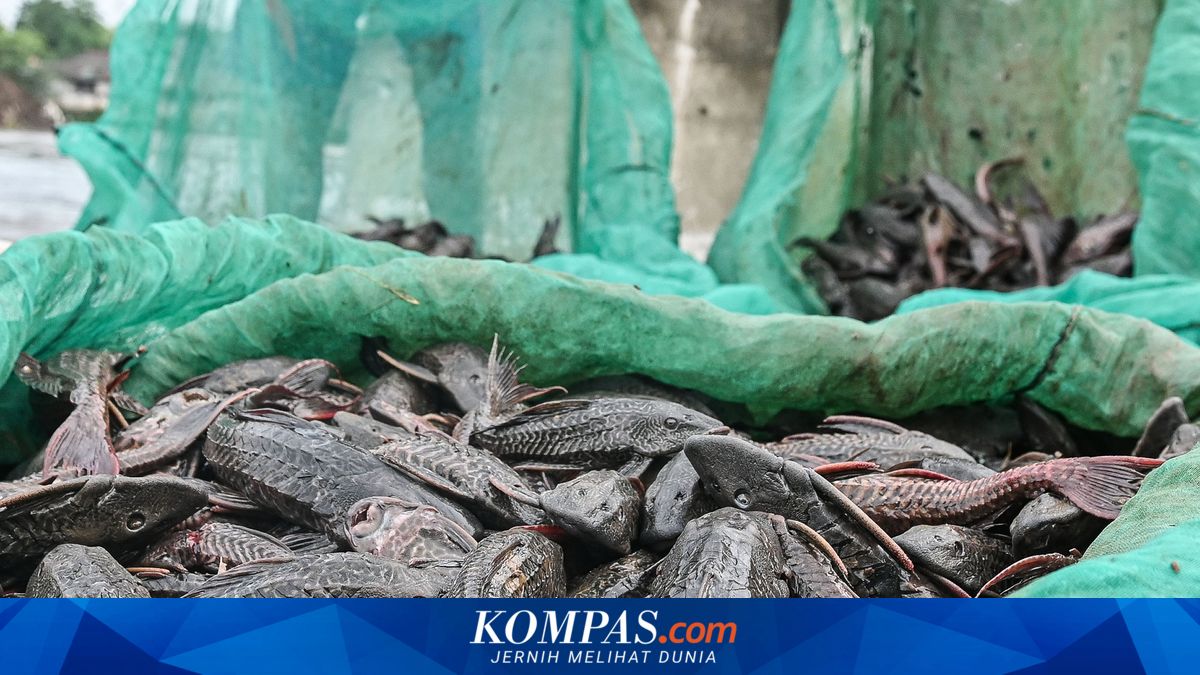
JAKARTA, KOMPAS.com — The price difference in raw fish ingredients is said to create an opportunity for some siomay vendors to use plecostomus fish as an alternative.
This practice has come to light amid river cleanup operations in Jakarta that have removed tens of thousands of plecostomus fish from various areas.
Although not all vendors engage in it, the price disparity for fish is cited as the main factor fuelling suspicions of using such material in siomay preparations.
“If using plecostomus, I’ve known some who sell it for around Rp25,000 to Rp35,000 per kilogram. Mackerel can reach nearly Rp100,000 per kilogram. That’s a considerable difference,” said Wandi (56), a siomay vendor in Cengkareng, West Jakarta, when met by Kompas.com on Monday (20/4/2026).
However, he stressed that he has never used plecostomus in his products.
He admitted that from the start, he has used mackerel as the main ingredient for siomay, though now he has to adjust the composition due to continuously rising raw material prices.
“It’s not 100 percent mackerel either. It’s mixed with flour, and I’ve even tried mixing in chicken meat. But using plecostomus, thank God, I’ve never done it,” he said.
In agreement, Angga (25), a siomay vendor in Palmerah, West Jakarta, also affirmed that he does not use plecostomus.
“For me, I work too, with a boss in PIK, we use mackerel and tuna, the meat is bright-coloured, somewhat white, tender, guaranteed,” said Angga.
He explained that mixing mackerel and tuna is done to cut costs without sacrificing taste.
Visually, siomay made with low-quality fish, including suspected plecostomus, can be identified by the darker colour of the meat.
However, he admitted he has never directly encountered such a practice.
On the other hand, an internal medicine expert from the University of Indonesia (UI), Prof. Dr. dr. H. Ari Fahrial Syam, SpPD-KGEH, MMB, FINASIM, FACP, warned that plecostomus fish poses a risk if consumed, especially if sourced from polluted waters.