
Preventing Youth Violence: Experts Say Strong Family Foundations and Continuous Education Are Key
JAKARTA — The threat of vigilantism among young people is a serious issue requiring collective attention. Recent acts of anarchy in public spaces have been fuelled in part by the rapid flow of digital information. Acts of violence are now easily exposed and quickly go viral on social media.
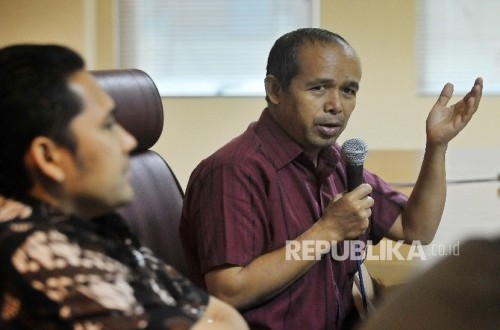
Education expert Ki Darmaningtyas says the problem stems from fragile social foundations within the family, and that vigilant behaviour is shaped in part by the home environment.
“Children who grow up in disharmonious families are more likely to lose their direction or sense of purpose. They may become unsettled in their attitudes and actions, indirectly affecting their behaviour. When they suffer from a lack of affection, they tend to vent their emotions through unilateral acts of violence against others,” Darmaningtyas said on Tuesday (3 November 2026).
He said 50 per cent of a child’s character is formed by the family, 30 per cent by school and 20 per cent by their social circle. When the family foundation is fragile, children are more likely to experience psychological problems.
“From my own experience, and that of friends who manage large human-resources teams, there is psychological vulnerability among millennials and Generation Z, and even more so among Generation Alpha. Their challenges are growing, while the foundations laid by families are becoming weaker. This affects vigilant behaviour,” he said.
In his view, the spread of violent ideas in the digital era is also exacerbated by young people’s obsession with gaining instant attention on social media. When destructive acts receive widespread attention, they are often mistaken for achievements or a way to establish one’s identity.
“Vigilantism or extremism is seen as a way for perpetrators to make themselves go viral or become famous. It has become popular among perpetrators because they feel they may not receive a punishment commensurate with their actions. They may even be happy, treating their wrongdoing as a means of fulfilling an obsession with attracting public attention,” he said.
The display of deviant behaviour in digital spaces, he added, can leave perpetrators feeling free of guilt because their psychological aim of receiving public attention has been achieved instantly.
Ki Darmaningtyas stressed that efforts to counter radicalism and terrorism cannot be left to the state alone; they require a strong education ecosystem. Asked about the government’s role, particularly that of the National Counterterrorism Agency (BNPT), he said public education must be continuous rather than limited to occasional outreach.
“Outreach activities must be carried out continuously through public education, not just once or twice, so that people are regularly reminded and can build resilience against narrow-minded views,” he said.
He also emphasised the importance of dialogue in curbing religiously framed radicalism, which can spread easily among young people.
“When it comes to narrow religious views, outreach must be continuous and use education, dialogue and debate until people recognise that they are mistaken, even though this takes considerable time, energy and money,” he said.
As a long-term preventive measure, family resilience is the main line of defence. Parents are urged to resume a direct educational role and limit children’s dependence on gadgets, which can weaken emotional relationships at home.
He said restrictions on gadget use have been widely adopted in developed countries because of the link between the intensity of use and tendencies towards violence among children and adolescents. The family should be the primary source of validation for children, not their gadgets.
“A child’s character is 50 per cent formed within the family, so families must preserve their integrity and avoid parenting practices that leave children’s education entirely to mobile phones. This not only damages relationships and children’s nervous systems, but also creates a generation vulnerable to radical ideas in the future,” he said.
Source: jawawa.id (https://jawawa.id/newsitem/preventing-youth-violence-experts-say-strong-family-foundations-and-continuous-education-are-key-1793951452)
Originally published by Republika (https://rejogja.republika.co.id/berita/to2jfg291/cegah-kekerasan-remaja-pakar-kuncinya-fondasi-keluarga-dan-edukasi-kesinambungan), translated from Indonesian