
Preventing the ‘Thinking Laziness’ Syndrome in the Age of Agentic AI
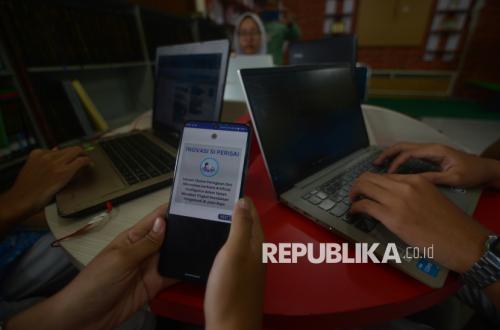
AI is advancing at an extraordinary pace. It is already being used across many areas of life to boost productivity and competitiveness in business, industry, social affairs, the economy, defence, security and education. Yet this intelligent machine, created by humans, carries hidden dangers if used carelessly, without rules or proper ethical standards.
Those dangers will become more pronounced with the emergence of a new AI innovation: Agentic AI, comprising a “team” of AI agents, each capable of thinking and acting autonomously. Unlike conventional AI, which needs detailed instructions, Agentic AI can be given an objective and devise and carry out the steps needed to achieve it independently. This is a remarkable advance in AI.
In the past, people had to read, discuss, analyse and think hard to find answers and solutions at work and in everyday life. Now, artificial intelligence can provide answers and complete tasks in seconds. Writing articles, preparing reports, analysing data and making decisions have all become much easier with the help of intelligent digital technology.
AI’s progress is a major achievement in human civilisation. But it raises an important question: does technology make people more intelligent, or does it make them increasingly reluctant to think? This question brings us to a new phenomenon that we call the “Thinking Laziness Syndrome” (PMB). The authors previously discussed the threat of PMB in an article entitled “Preparing Excellent Human Resources” in Republika on 21 August 2019. In the age of Agentic AI, preventing PMB has become even more important and urgent.
PMB is neither a medical diagnosis nor a recognised psychological disorder. The term describes the habit of avoiding intellectual effort after becoming accustomed to instant answers from technology. The problem lies in a change of habit: people who once searched for answers by thinking now simply ask for answers or decisions without understanding the process behind them.
Such people essentially become couriers, passing answers or decisions from intelligent machines on to others. If we allow ourselves to become too dependent on this technology, not only school-age generations but all of us risk losing an essential human ability: the capacity to think.
AI use is growing rapidly. Microsoft and LinkedIn’s 2024 Work Trend Index found that 92 per cent of knowledge workers in Indonesia were already using generative AI at work, exceeding the global average of 75 per cent. In education, the Digital Education Council’s Global AI Student Survey 2024, reported in 2025, found that 86 per cent of 3,839 students across 16 countries used AI for learning, with 54 per cent using it at least once a week.
A similar pattern can be seen among school pupils. The Pew Research Center reported in 2024 that 54 per cent of US teenagers aged 13 to 17 had used AI chatbots for schoolwork. Ten per cent said chatbots helped with most or all of their assignments.
These figures show that AI is already part of everyday life, rather than merely a technology of the future. High usage does not automatically improve understanding or diminish people’s ability to think. What matters is how people use the technology.
Why do people often become reluctant to think?
Cognitive psychology uses the term “cognitive miser” to describe the tendency to conserve mental effort by choosing an easier approach. This is normal and can often help people work faster and more productively. But when answers are readily available, people may become increasingly unwilling to analyse matters in depth.
This is related to “cognitive offloading”: transferring some thinking tasks to external tools such as intelligent machines. Risko and Gilbert (2016) noted that people use technology to reduce the brain’s workload. Examples include using a calculator, storing notes digitally or asking AI to summarise a document. This is not always harmful. Offloading routine tasks can sometimes free the mind to tackle more complex problems.
The problem arises when people hand over not only routine tasks but also the processes of understanding, questioning, evaluating and drawing conclusions. Dual-process theory holds that people think both quickly and intuitively, and slowly and analytically.
When people can easily obtain answers or solutions from AI, they sometimes accept information without thinking critically. As a result, someone may give an answer that sounds intelligent while not knowing the reasoning behind it.
Neuroscience offers the concept of neuroplasticity: the nervous system can adapt through experience, learning and practice. Physical skills need to be maintained through appropriate activity. Cognitive skills likewise require the brain to practise reading, remembering, analysing and solving problems. AI does not directly damage or weaken the brain. But people who frequently avoid intellectual challenges give their minds less opportunity to exercise.
In educational psychology, Robert and Elizabeth Bjork introduced the concept of “desirable difficulties”: some challenges during learning can help students remember and understand material for longer. Research by Dunlosky and colleagues (2013) also highlights the importance of retrieval practice and gradual learning. Technology, therefore, need not remove every difficulty.
Students who try to solve a problem themselves before using AI can exercise their thinking. Those who simply copy an answer may finish an assignment more quickly, but miss the most important part of the learning process. Completing work easily does not necessarily mean understanding it.
Lee and colleagues (2025) studied 319 knowledge workers in academia, professional services, management, technology and education, recording 936 examples of generative AI use. Respondents reported using critical thinking in 555 cases, or about 59.3 per cent.
In the remaining 40.7 per cent of cases, they did not report critical-thinking activity. The study also found that users who had greater confidence in AI’s capabilities tended to report less critical-thinking effort. By contrast, those more confident in their own abilities tended to think more critically. The findings point to the need for continued independent and critical evaluation.
An initial study by Kosmyna and colleagues (2025) used electroencephalography (EEG), which records the brain’s electrical activity. The researchers observed different patterns of neural connectivity among participants who wrote essays with AI assistance and those who wrote without technology. This suggests differences in cognitive processes, although further research is needed.
Another concern is automation bias: the tendency to place too much trust in automated systems’ recommendations, even when they are wrong. AI can help produce information, but people must still check whether it is accurate and relevant, and consider its implications.
PMB can be seen in habits such as not reading original sources, asking AI questions without first trying to understand the problem, accepting answers without checking them, and struggling to explain one’s own work. These are observable behaviours, not a medical diagnosis. In education, the problem arises when learning is reduced to producing documents without building understanding.
The Pew Research Center found in 2026 that 59 per cent of US teenagers felt AI was being used more often to cheat at their schools. This figure reflects respondents’ opinions, not the actual prevalence of cheating. In the workplace, too, people may accept AI-generated analyses and recommendations because they sound convincing, rather than because they have been logically examined. If this continues, people could lose their independence of thought and make less accurate decisions.
Preventing PMB through the 5B Model
Preventing PMB does not mean rejecting AI or returning to manual methods. Technology remains important for raising productivity and accelerating innovation. We need to think clearly so that AI becomes a partner in thought rather than a replacement for human reasoning. To that end, the authors propose the 5B Model: Think (Berpikir), Question (Bertanya), Compare (Bandingkan), Verify (Buktikan) and Take Responsibility (Bertanggung Jawab).
First, think. Before using AI, define the problem and develop an initial answer yourself. This helps develop metacognition and reasoning. Second, question. Use AI to explore other perspectives, test arguments and find alternatives. Ask it to critique your thinking, rather than merely provide a final answer. Third, compare. Check AI’s responses against literature, empirical data, work experience and other perspectives. Fourth, verify. Check facts and the credibility of sources, revisit assumptions and ensure the logic is consistent. An answer that sounds convincing may still be wrong. Fifth, take responsibility. People must understand and remain accountable for decisions and work produced with AI assistance.
This approach is consistent with Deci and Ryan’s Self-Determination Theory, which emphasises the importance of autonomy and competence in the development of human motivation. The central principle is: think first, use AI afterwards, and let people make the final decision.
Preventing PMB requires cooperation. Educational institutions should assess not only final results but also students’ reasoning, their ability to defend arguments and the accuracy of their evidence. Families can encourage children to read, ask questions, discuss issues and try to solve problems independently. Organisations should ensure that people continue to evaluate AI recommendations, particularly for high-risk decisions. Digital transformation succeeds not merely when tasks are completed quickly, but when understanding is sound and decisions are good.
Protecting Intellectual Sovereignty
AI is one of the great technological achievements in human history, and we should use its capabilities wisely. We should not fear or reject AI. But technological convenience must not make us stop thinking, become afraid to ask questions or grow reluctant to seek the truth. Preventing PMB means continuing to think for ourselves rather than simply accepting the answers and decisions of intelligent machines.
The greatest threat from artificial intelligence does not arise when machines “think” and work faster and more accurately than humans. It arises when people rarely or no longer exercise their own thinking because they believe machines can do it for them.
AI and Agentic AI will continue to develop, eventually giving rise to even more spectacular Quantum AI. To avoid being displaced or even becoming obsolete, people must become better thinkers and respond to technological change with wisdom.
Source: jawawa.id (https://jawawa.id/newsitem/preventing-the-thinking-laziness-syndrome-in-the-age-of-agentic-ai-1794286276)
Originally published by Republika (https://opini.republika.co.id/berita/to9krx393/mencegah-penyakit-malas-berpikir-di-era-agentic-ai), translated from Indonesian