
Preventing HIV-AIDS Among Cirebon Junior High School Adolescents Through the Youth Care Campaign
Efforts to prevent HIV-AIDS and sexually transmitted infections (STIs) among adolescents have entered a new phase by utilising digital technology. Early education and risk detection that are adaptive to the characteristics of today’s generation are key to building health protection for adolescents, particularly at the junior high school (SMP/MTs) level.
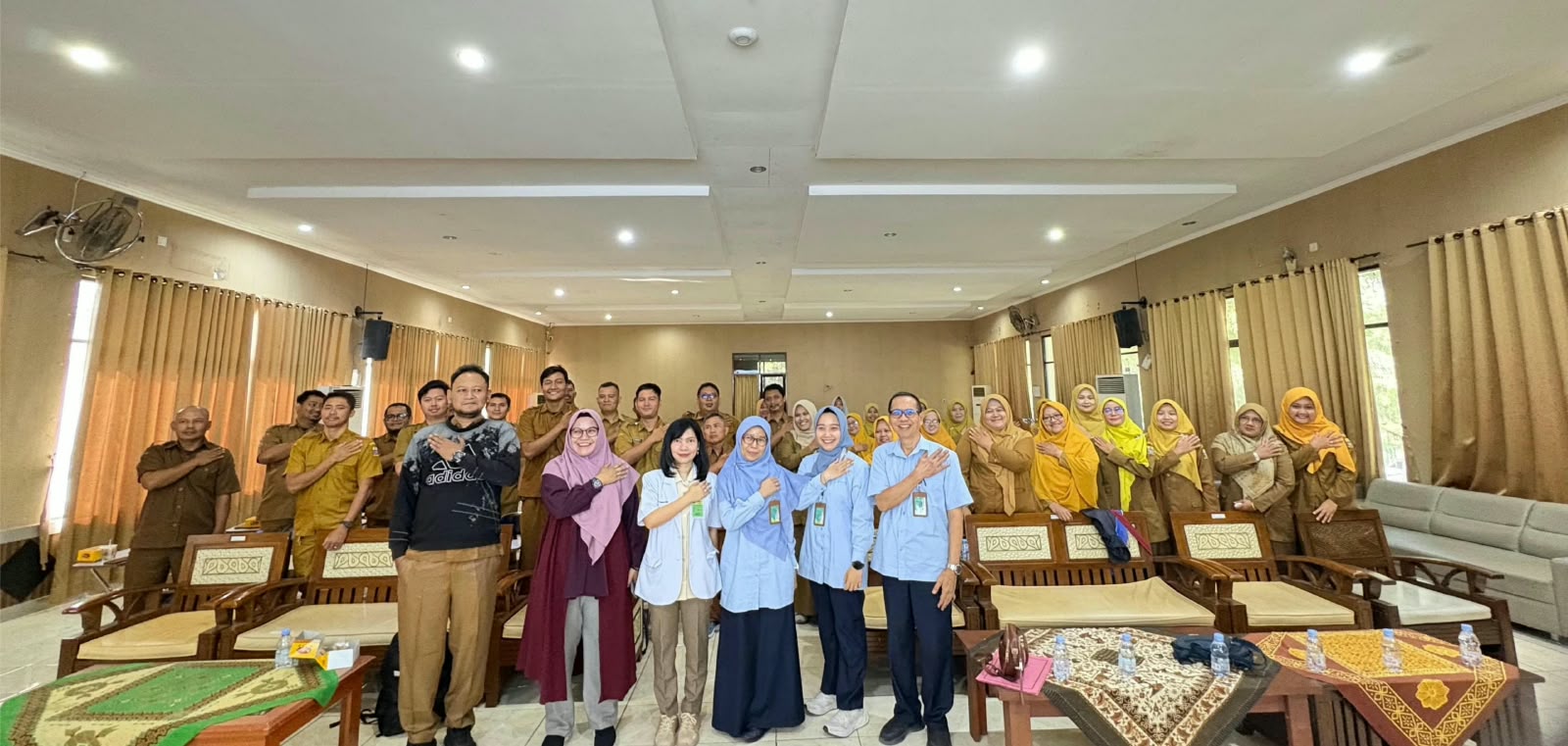
Addressing adolescent sexual and reproductive health issues requires cross-institutional collaboration. This underpins the research team from Poltekkes Kemenkes Tasikmalaya’s collaboration with the Cirebon City Government, the AIDS Commission (KPA), health workers, psychologists, and school teachers in an education programme titled “Youth Care: Digital Provisions for Junior High School Students in Cirebon City to Recognise HIV-AIDS and STIs Early”.
Elfi, Head of the Research Team at Poltekkes Kemenkes Tasikmalaya’s DIII RMIK Cirebon programme, revealed that the urgency of this education is driven by fluctuating HIV-AIDS case data in Cirebon City over the past three years. According to KPA Cirebon City data, new HIV cases were recorded at 335 cases in 2023, 173 cases in 2024, and 125 cases in 2025. Meanwhile, new AIDS cases were recorded at 105 cases in 2023, 35 cases in 2024, and rose again to 55 cases in 2025.
“This data serves as a reminder that prevention needs to be carried out continuously, including among the adolescent age group,” said Elfi at the Ki Hajar Dewantara Hall of the Cirebon City Education Office on Wednesday (12/8).
In their research, the Poltekkes Kemenkes Tasikmalaya team found that the early detection process for risky behaviour at KPA Cirebon City previously still used printed questionnaires. This manual method has its own challenges, ranging from lengthy recapitulation times to potential recording errors.
As a solution, Youth Care was developed, a digital screening instrument website. The platform is specifically designed for adolescents with features that include risk screening, educational materials, and referral information.
“Technology should not only be used for entertainment, but also as a tool that helps adolescents make healthier decisions,” Elfi emphasised. She added that user data confidentiality is a top priority in the development of this website so that adolescents feel safe when accessing it.
The activity also involved science and physical education (IPA and PJOK) teachers from junior high schools across Cirebon City. Schools are considered the front line in building health literacy. Through age-appropriate educational approaches, HIV-AIDS material is no longer taboo or frightening for students.
Elfi stressed that teachers act as a bridge between classroom theory and everyday health realities. Adolescents are equipped with the ability to recognise correct information, understand risks, and know when and where to seek professional help.
Although digitalisation is a step forward, Elfi reminded that technology is merely a tool. Digital screening results must still be followed by concrete actions in the form of counselling, mentoring, and appropriate medical referrals. Going forward, the Youth Care innovation will continue to be evaluated to assess its contribution to long-term behavioural change among adolescents.
This collaborative step is expected to form a more adaptive and responsive adolescent health ecosystem in Cirebon City. By equipping adolescents with knowledge and appropriate digital access, it is hoped that they will be able to protect their future from the threat of HIV-AIDS and STIs from an early age.
This activity is part of the Community Service Programme (PkM) implemented through collaboration with Monash University and the University of Nottingham.
Source: jawawa.id (https://jawawa.id/newsitem/preventing-hiv-aids-among-cirebon-junior-high-school-adolescents-through-the-youth-care-campaign-1786539090)
Originally published by Media Indonesia (https://mediaindonesia.com/nusantara/921086/cegah-hiv-aids-remaja-smp-kota-cirebon-melalui-kampanye-youth-care), translated from Indonesian