
Preventing Corruption in Regions, Deputy Minister of Home Affairs Emphasises Importance of Strengthening APIP
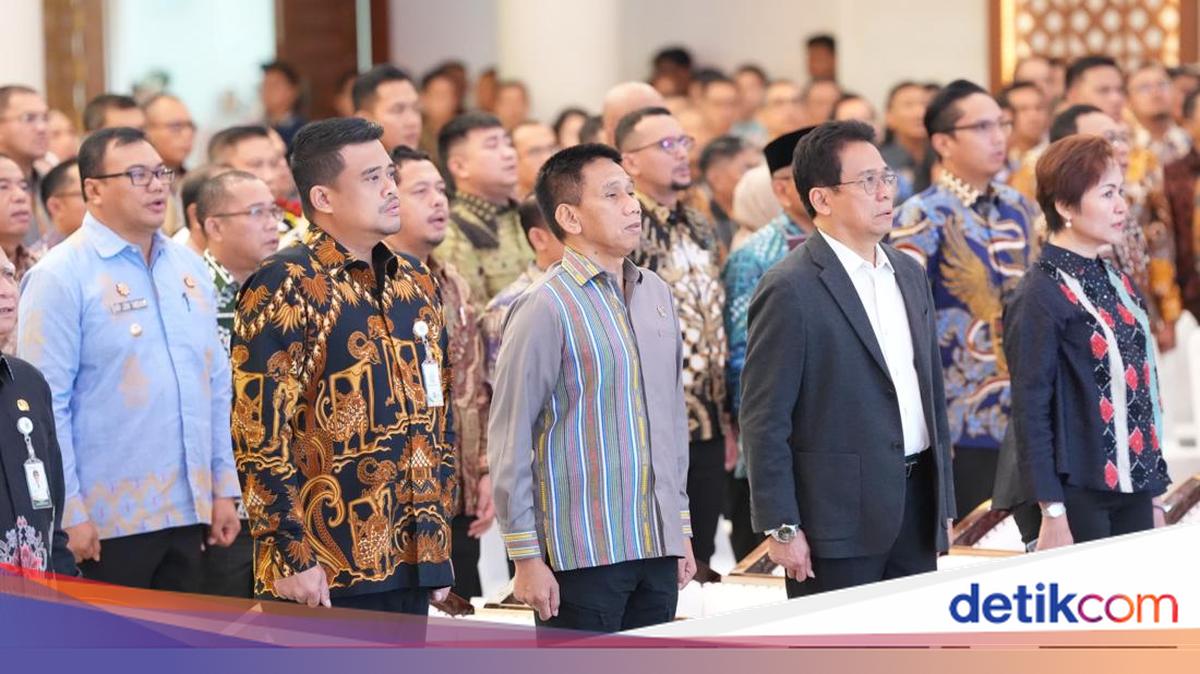
The Deputy Minister of Home Affairs, Akhmad Wiyagus, has emphasised the importance of strengthening the Government Internal Supervisory Apparatus (APIP) to prevent corruption in the administration of regional governments. According to him, APIP serves as a tool for regional heads that can provide reminders whenever errors occur in government governance.
This emphasis was delivered by Wiyagus during the Coordination Meeting on Strengthening Regional Government Governance and Corruption Prevention in Regional Government Administration, held at the Raja Inal Siregar Hall, North Sumatra Governor’s Office, Medan, on Thursday (17/09).
“APIP is a partner to regional heads. Therefore, I urge you not to treat them as enemies. In fact, they are the ones who serve as our reminders when there are mistakes,” Wiyagus stated in his remarks on Thursday.
In line with this, Wiyagus emphasised the need to strengthen APIP so that it can perform its supervisory functions optimally. If deviations or errors in government governance occur, APIP should be given the trust to handle them first before the matter proceeds to the law enforcement stage.
“APIP must be able to provide assurance; if there are deviations and errors in government governance, law enforcement agencies (APH) should grant full trust to APIP first, before involving APH,” he explained.
In addition to strengthening APIP, Wiyagus reminded officials of the importance of integrity in the management and supervision of regional finances. He noted that supervisory institutions should be positioned as partners to regional governments (Pemda) to prevent irregularities.
“Treat the Audit Board of Indonesia (BPK) as a partner, the Corruption Eradication Commission (KPK) as a partner, and the Inspectorate as a partner. This is precisely what will help us avoid the deviations that occur,” he said.
To strengthen regional government governance, Wiyagus requested that regional governments map risks across eight priority areas for improvement, including planning and budgeting, procurement of goods and services, public services, APIP supervision, Civil Servant (ASN) management, management of Regional Owned Enterprises (BUMD), and the optimisation of regional taxes.
Regional governments also need to strengthen controls starting from the planning and budgeting stages, as well as improving data connectivity and quality.
He also requested that the results of these activities be followed up through measurable action plans by identifying problems to be solved, improvement steps, responsible parties, deadlines, and evidence of completion. Regular monitoring must be conducted to ensure that follow-ups result in improvements and prevent the same issues from recurring.
Furthermore, Wiyagus reminded that regional government administration requires synchronisation and collaboration between regional governments and the Regional House of Representatives (DPRD), including in planning and budgeting. Both elements must work together to oversee regional governance and finances.
“Ultimately, this corruption prevention is once again heavily determined by the quality of leadership in regional governments, whether at the provincial, regency, or city level,” he concluded.
Source: jawawa.id (https://jawawa.id/newsitem/preventing-corruption-in-regions-deputy-minister-of-home-affairs-emphasises-importance-of-strengthening-apip-1789644616)
Originally published by detikcom (https://news.detik.com/berita/d-8667276/cegah-korupsi-di-daerah-wamendagri-tekankan-pentingnya-penguatan-apip), translated from Indonesian