
Preventing BPGMN from Repeating BRGM’s Mistakes
The BPGMN must have real authority and be backed by political commitment to avoid repeating the weaknesses of its predecessor.
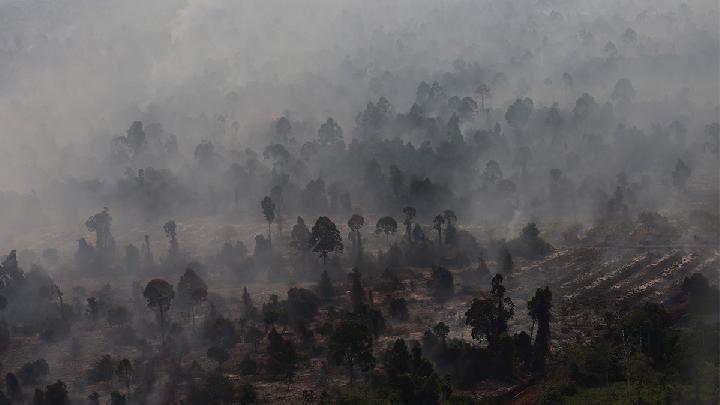
THE establishment of the National Peatland and Mangrove Management Agency (BPGMN) should be an important step toward preventing forest and land fires. But its success will depend on strong authority and consistent political commitment toward this new institution.
The experience of the Peatland and Mangrove Restoration Agency, or BRGM (2020-2024), shows that a specialized agency can work even with limited authority. The BRGM was itself a transformation of the Peatland Restoration Agency (BRG), which operated from 2016 to 2020. By late 2024, the BRGM claimed to have restored 1.6 million hectares of peatlands and rehabilitated 84,000 hectares of mangroves. These achievements show that establishing a dedicated body is far from futile, particularly if its mandate and authority are strengthened.
Therefore, the BPGMN should not merely be a new agency with a new name. A new agency will only be effective if backed by resolute, unwavering political commitment. Without it, its authority will quickly wane, its budget will shift with changing priorities, and coordination will be paralyzed by sectoral interests.
In the past, the BRGM operated under the Ministry of Environment and Forestry, leaving its budget subject to ministerial whims. Its jurisdiction frequently overlapped with the ministry, particularly regarding peatland restoration within forest zones. Later, mangrove restoration efforts similarly collided with the authority of the Ministry of Maritime Affairs and Fisheries.
Recurring peatland fires must be viewed through the lens of ecosystem management. Fires are not merely about flames, they are fundamentally about water loss. Prevention requires integrated water management, land oversight, area monitoring, and comprehensive ecosystem restoration. The BPGMN’s mandate to protect peatlands and mangroves will lack teeth if it is reduced to pleading for coordination from ministries and regional governments while final decision-making power remains in the hands of each institution.
At least three critical steps must be taken. First, the BPGMN must be independent and vested with strong authority. To avoid repeating the BRGM’s shortcomings, the BPGMN requires a clear mandate to restore both ecosystems so that its protective measures are not hemmed in by sectoral agendas.
Second, the government must break down jurisdictional silos. The Ministry of Forestry states that 74 percent of the nation’s 20.7 million hectares of peatlands lie within forest zones. Around 80 percent of Indonesia’s 3.44 million hectares of mangroves are similarly located in forest areas, with the remainder scattered across other-use areas that fall under the purview of the Maritime Affairs Ministry and local authorities. Such fragmented division severely undermines the management of interconnected ecosystems.
Third, strengthening the BPGMN must not rely on a security-heavy approach involving the military and police. Ecological restoration needs experts in hydrology, ecology, forestry, marine science, spatial planning, remote sensing, and social science. Security personnel are needed only for emergencies and law enforcement, not as the backbone of ecosystem management.
The BPGMN is planned to be under the President. However, this positioning alone does not guarantee political backing falters over time. That commitment will be put to the test when the agency must restrict land use, clamp down on violations, or require other ministries to align their policies. If political support recedes at those crucial moments, no institution—however formidable it appears on paper—can retain its operational effectiveness.
An institution as important as the BPGMN needs a clear mandate, firm authority, adequate funding, strong oversight, and mechanisms for resolving intersectoral conflicts. The Prabowo Subianto administration must also maintain policy consistency so that peatland and mangrove management does not depend on short-term shifts in priorities.
Ultimately, the BPGMN should serve as an opportunity to rectify the BRGM’s flaws, not merely to replace it. Without the government’s resolve to grant real power and the consistency to uphold it, the BPGMN will find itself perpetually consumed by fire control after the peatlands burn—rather than preventing fires in the first place.
Source: jawawa.id (https://jawawa.id/newsitem/preventing-bpgmn-from-repeating-brgms-mistakes-1791521420)
Originally published by Tempo (English) (https://en.tempo.co/read/2121228/preventing-bpgmn-from-repeating-brgms-mistakes)