
Press Council Urges ASEAN Journalists to Show Solidarity in the Digital Platform Era
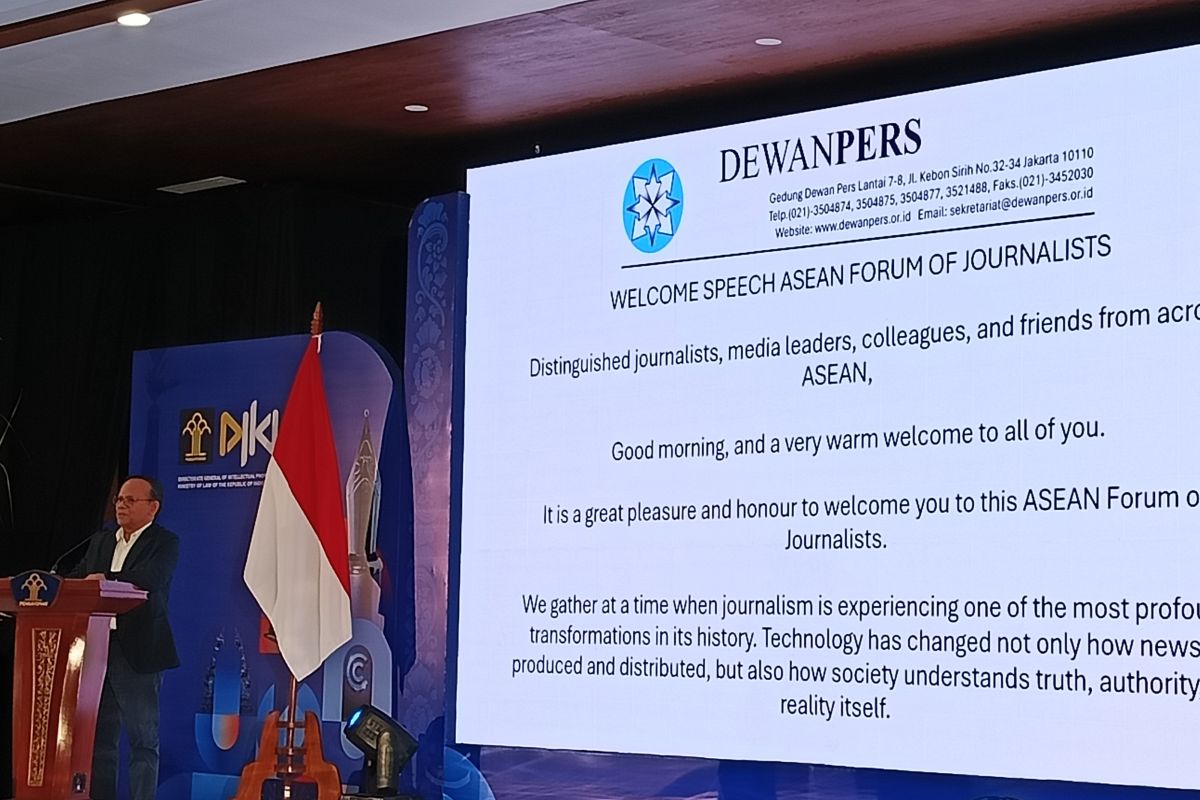
Badung, Bali (ANTARA) – Indonesian Press Council Chair Komaruddin Hidayat has called for stronger solidarity among journalists in Southeast Asia to address the challenges posed by technological change and the dominance of digital platforms in the information ecosystem.
In remarks at the ASEAN Forum on the Protection of Journalistic Works in the Copyright Regime in the Digital Era in Tuban, Badung Regency, Bali, on Saturday, Komaruddin said ASEAN countries had diverse languages, cultures, political systems, histories and traditions.
Despite these differences, countries in the region face a shared challenge in preserving journalism’s public value amid technological change.
“Asian journalists should not merely be consumers of technological change; we must take part in shaping its role. We need a digital ecosystem in which innovation and journalism can coexist, digital platforms can thrive, but creators are not exploited,” he said.
The development of digital platforms and artificial intelligence (AI), he said, had changed how people access information while raising concerns about the economic sustainability of the press industry.
Komaruddin said it was not enough for journalists simply to consume technological change. They also needed to help shape the direction of technological development so that it continued to serve the public interest and strengthen democracy.
“Journalists go into the field, verify facts, investigate power, tell stories and give a voice to those who might otherwise not be heard. Journalism is not merely a profession. It is a public service and, at its best, a pillar of democracy,” he said.
He said digital platforms enabled journalistic works to reach a wide audience. The issue had become increasingly pertinent with the development of AI, which can use human intellectual work, including journalistic content, to develop services and generate new information.
Komaruddin asked whether journalists whose work is used to train AI systems should receive a share of the economic value generated by the technology.
He said the issue concerned not only the economic interests of the media industry, but also the ethics and sustainability of journalism as a pillar of democracy.
He therefore called for a digital ecosystem that allows information to circulate freely while respecting the intellectual work of its creators. Technology, he said, should strengthen democracy, not weaken the institutions that support it.
Komaruddin stressed that journalists across Asia needed to strengthen cooperation and exchange experiences to respond to changes in the media landscape. Regional solidarity was important to ensure that journalism’s interests were considered as global technology developed.
“The principle we must uphold is simple: those who create public value should receive a fair share of the value they create. That is why this forum has significance beyond journalism itself. It is a conversation about democracy, technology, the economy, ethics and the future of our societies,” he said.
He said the ASEAN Forum on the Protection of Journalistic Works in the Copyright Regime in the Digital Era had significance beyond discussing the future of the press industry. It also provided a space to discuss democracy, technology, the economy, ethics and the future of society.
Komaruddin hoped the forum would strengthen solidarity among ASEAN journalists and provide a venue to shape a future in which technology serves journalism, rather than the other way round.
He urged participants not only to discuss journalism’s future, but also to take an active part in shaping it.
Source: jawawa.id (https://jawawa.id/newsitem/press-council-urges-asean-journalists-to-show-solidarity-in-the-digital-platform-era-1791618678)
Originally published by Antara (Indonesian) (https://www.antaranews.com/berita/5779820/dewan-pers-dorong-solidaritas-jurnalis-asean-di-era-platform-digital), translated from Indonesian