
Press Council Reveals AI Companies Never Pay for Journalistic Works
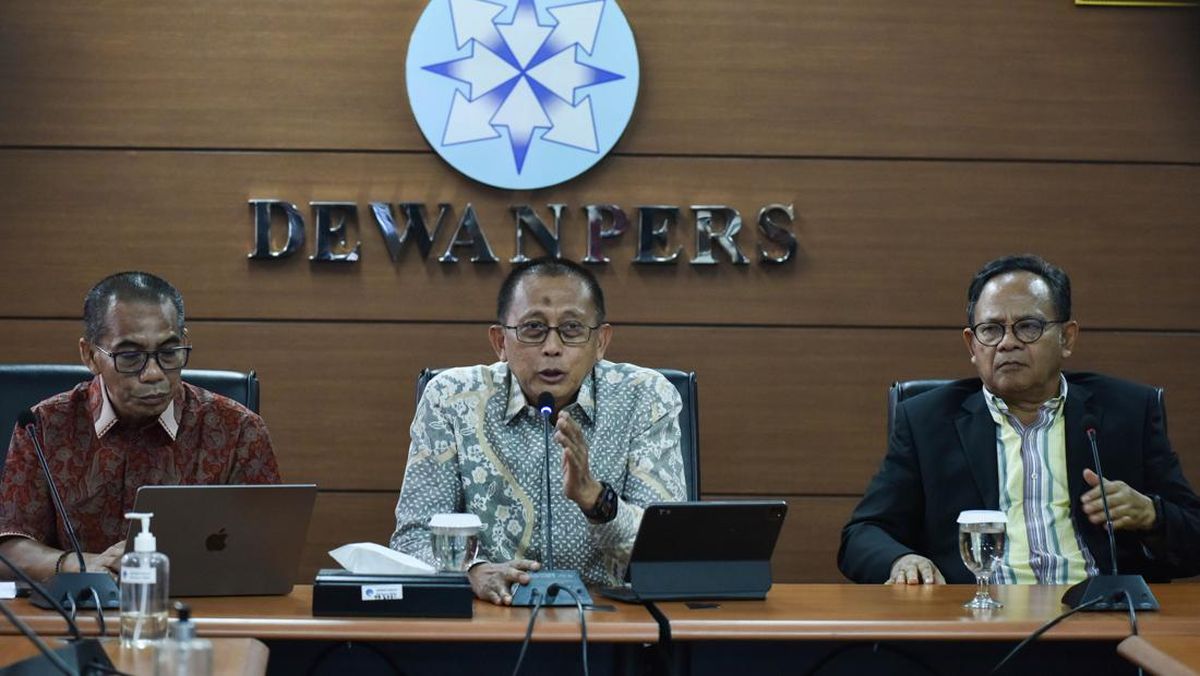
The Press Council has revealed that artificial intelligence (AI) companies have never paid for journalistic works, as it seeks support for revisions to Law Number 28 of 2014 on Copyright.
Dahlan Dahi, Chairman of the Press Council’s Digital and Sustainability Commission, stated that the revision of the Copyright Law aims to ensure journalistic products receive economic rights amidst the ongoing digital disruption.
“Currently, journalistic works are used as the basis for algorithms to distribute information and news by artificial intelligence without any compensation,” Dahlan said during a press conference in Jakarta, as quoted by Antara on Monday (15/6).
He explained that journalists produce news, sometimes risking their lives and incurring significant costs borne by press companies, yet technology firms provide no compensation whatsoever.
Dahlan described this as a very negative trend that threatens journalism and the institutions’ ability to verify information delivered to the public.
This situation has prompted the Ministry of Law to revise the Copyright Law. The Press Council and the Ministry have been communicating intensively to formulate provisions for journalistic works within the revised law, as an instrument to strengthen the press in Indonesia.
Dahlan outlined several key points in the revision concerning journalistic products, including a provision that journalistic works carry inherent economic rights belonging to the press company. Consequently, any commercial use of journalistic works must obtain a licence and pay royalties, including technology companies that aggregate news through AI.
“So, there will be no more free journalistic works,” he stated.
Regarding the public’s right to information, Dahlan affirmed that this will still be accommodated through provisions allowing non-commercial use of journalistic works. Works may still be used for social, educational, and research purposes.
He stressed, however, that the collection of royalties for journalistic products is not intended to remove technology from the news or information dissemination ecosystem, but rather to encourage technology platforms that promote the quality of public information.
“Because if the public only receives unverified information, generative AI machines will process information that contains misinformation and disinformation,” Dahlan said.
He emphasised that technology platforms also have an interest in ensuring the press produces quality news and the public receives quality information. Ultimately, Dahlan stressed, quality news will strengthen the function of the press in safeguarding press freedom, which is an important instrument for democracy.
“Democracy is a system of state that we believe is better than all other systems. This is not just about the press, but about the public, about the nation and the state,” Dahlan concluded.