
Press Council Highlights Economic Imbalance in the Media in the AI Era
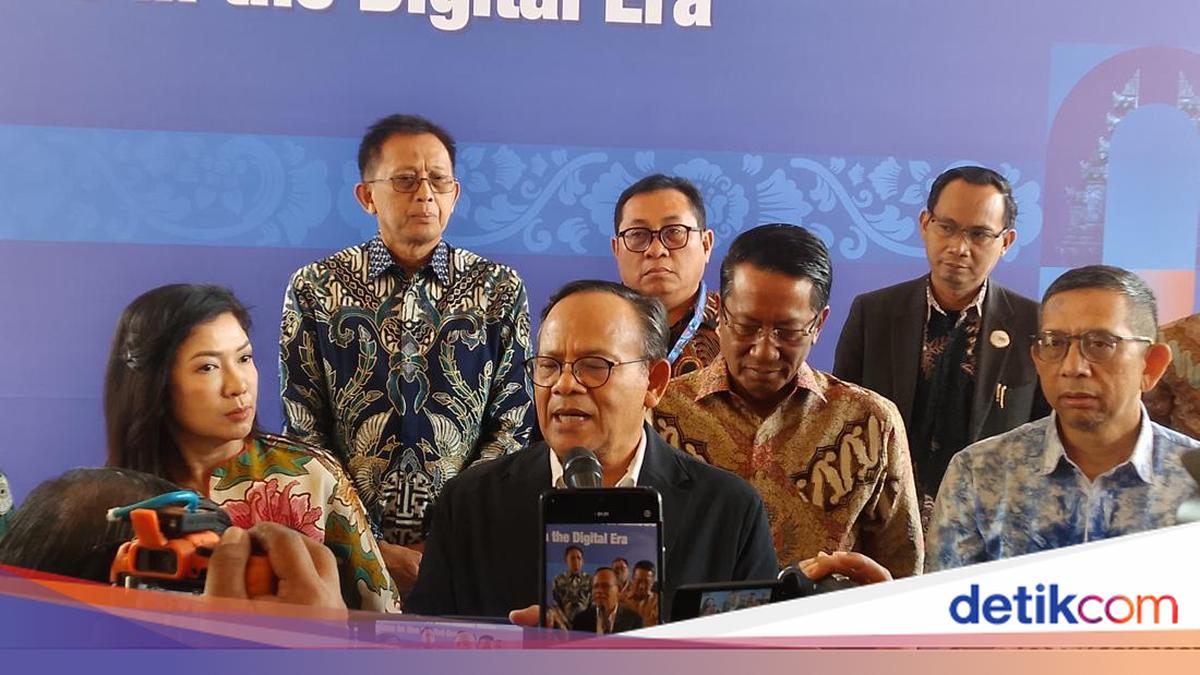
Artificial intelligence (AI) platforms make use of information from news websites, but the media organisations producing journalistic work have yet to receive clear compensation. The imbalance has drawn the Press Council’s attention amid mounting pressure on the sustainability of media businesses.
Press Council chairman Komaruddin Hidayat said protecting copyright in journalistic works had become increasingly urgent amid the development of AI and the dominance of global digital platforms.
“Quality journalism is not cheap. It involves intellectual investment, time, safety risks and ethical responsibility,” Komaruddin said at a forum on protecting journalistic works in Bali on Saturday (10 October 2026).
According to Komaruddin, the press industry’s problems are not simply a matter of technological change, but also involve the use of journalistic work without permission or fair compensation. Producing news requires resources for reporting, research, verification and editing.
Media organisations continue to bear the costs of producing information. Yet when journalistic work is used to distribute content or develop AI systems, digital platforms may gain economic value without a clear payment mechanism for publishers.
The situation could undermine the sustainability of media businesses as well as newsroom capacity to produce quality information.
Komaruddin highlighted the use of journalistic work, including as training material for generative AI systems. He said technological advances needed to be matched by legal protections that provide certainty for rights holders.
The Press Council is calling for stronger protection of journalistic works through a revision of the Copyright Act. The proposed rules are expected to clarify the economic rights attached to such works and enable licensing and royalty payments for commercial use.
AMSI calls for royalties for journalistic works
Wahyu Dhyatmika, chairman of the Indonesian Cyber Media Association (AMSI), said AI platforms use the latest information from news websites, but there is no clear compensation mechanism for publishers.
“AI platforms use the latest information sourced from news websites, but there has been no communication with, or compensation for, news publishers,” Wahyu said.
According to Wahyu, AI platforms’ use of news also affects media business models. Users who obtain summaries directly from AI without visiting news websites may reduce media traffic, which has traditionally been one source of advertising revenue.
He hopes a revision of the Copyright Act will create new business models through compensation or royalty payments for the use of journalistic work.
AMSI also plans to push for the establishment of a Collective Management Organisation to administer royalties. The organisation is expected to help media companies, particularly small and local press outlets, assert their economic rights over work used by digital platforms.
AMSI has also proposed creating a database assigning a unique identifier to each journalistic work. The system is expected to help track the use of works and provide a basis for calculating royalties.
However, how royalties should be divided between media companies and journalists still needs to be worked out. Recognising journalistic work under copyright law would not automatically ensure that every journalist receives royalties directly.
The rules to be adopted will determine who holds the economic rights, who receives payments and how royalties are distributed.
Copyright Act revision seen as one solution
The Press Council has previously called for stronger protection of journalistic work in the revision of the Copyright Act. Council chairman Komaruddin Hidayat said such protection was expected to be one possible solution for a press industry under pressure from digital change.
“Hopefully, protection for journalistic works in the Copyright Bill can be one of the solutions,” Komaruddin said at a Press Council forum in June 2026.
For the Press Council, protecting economic rights does not mean rejecting technological progress. The issue is to ensure that the use of technology remains compatible with the sustainability of the industry that produces information.
Komaruddin said the next challenge was to define the limits on digital platforms’ and AI’s use of journalistic work, licensing mechanisms and fair payment arrangements. The rules also need to clarify the relationship between journalists, as creators, and press companies, as publishers.
Without adequate protection, technological development could widen the gap between those who produce information and those who use it. Revising the Copyright Act is therefore one effort to sustain the press industry while preserving the public’s access to quality information.