
President's Visit to Japan and South Korea Yields Rp 574 Trillion in Investments
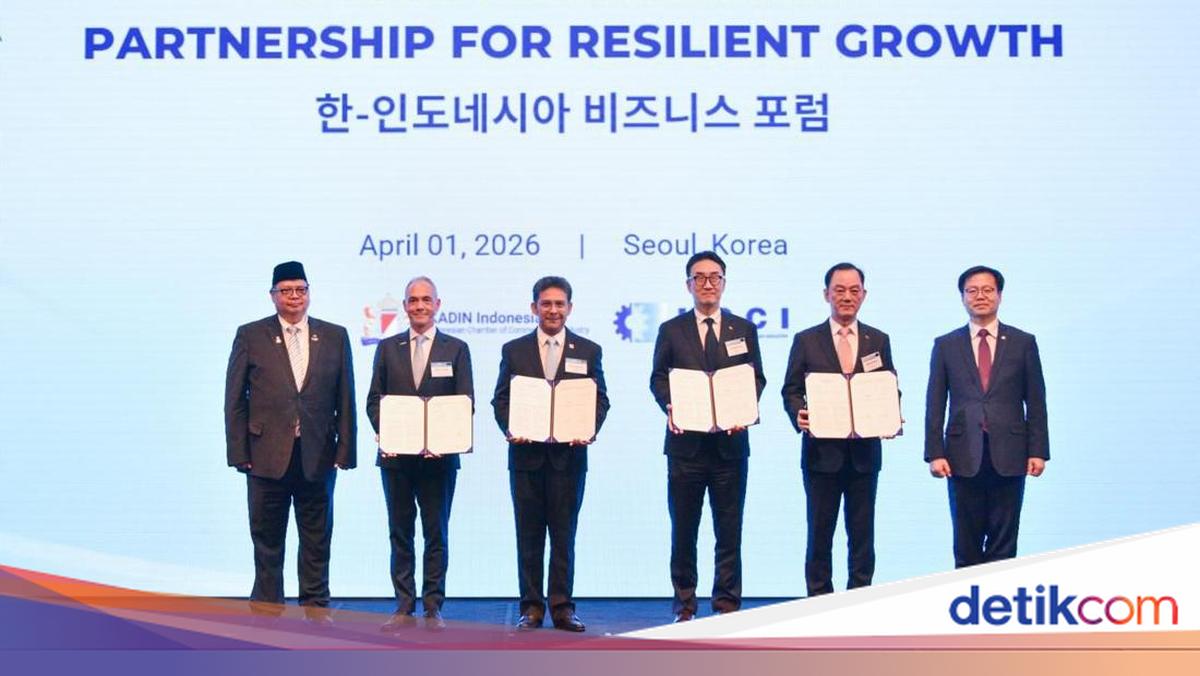
The Coordinating Ministry for Economic Affairs (Kemenko Perekonomian) states that President Prabowo Subianto’s working visit to Japan and South Korea has resulted in investment commitments worth up to Rp 574 trillion. This value of commitments reflects high investor confidence and opens significant opportunities for the development of strategic sectors and national economic growth in the future.
President Prabowo Subianto’s working visit to South Korea marks a new chapter in strengthening economic relations between the two countries, with a primary focus on increasing investment. As part of the agenda, concrete agreements were reached through the signing of various memoranda of understanding (MoUs) between business actors with a total value of USD 10.2 billion, equivalent to Rp 173 trillion.
Representing President Prabowo Subianto at the Indonesia-Korea Partnership for Resilient Growth forum in Seoul on Wednesday (1/4), Coordinating Minister for Economic Affairs Airlangga Hartarto stated that the investment achievements with South Korea complement the results of President Prabowo Subianto’s previous visit to Japan, which yielded investment commitments of USD 23.6 billion or approximately Rp 401 trillion.
“This is a very significant figure because Indonesia, in this uncertain geopolitical situation, remains attractive to investors from both Japan and Korea. Japan itself ranks third in investments and trade, Korea ranks seventh, and going forward, both hope that with Indonesia having a sovereign wealth fund, Indonesia can also become a co-investor,” said Airlangga in a written statement on Thursday (2/4/2026).
The investment cooperation established with South Korea covers various sectors, including the energy and green transition sector, solar power development, carbon capture and storage (CCS) technology, and renewable energy.
In addition, collaboration is expanded to the industrial and manufacturing sectors, including the development of the steel industry, batteries, and environmentally friendly transportation. This cooperation also includes the digital economy sector and the development of Artificial Intelligence (AI) as part of efforts to strengthen national industrial competitiveness in the digital transformation era.
On the other hand, the investment with South Korea also covers the property and infrastructure sectors, including the development of the Bumi Serpong Damai area, as well as strengthening business partnerships through cooperation between the Indonesian Chamber of Commerce and Industry (Kadin Indonesia) and the Korea Chamber of Commerce and Industry. This collaboration is aimed at encouraging the realisation of business commitments, particularly in strengthening the battery supply chain and technology-based manufacturing investments.
In this context, the sustainability of investments from POSCO and investment interest from Lotte, which opens opportunities for collaboration with Danantara as an investment partner, also becomes an important part in deepening cooperation between the two countries.
Furthermore, investment cooperation with Japan covers several sectors, including energy and energy transition, such as the development of oil and gas with a focus on the Masela Project, as well as strengthening the industrial sector and downstreaming to increase domestic added value.
In addition, collaboration is directed towards the financial sector and financial inclusion through synergy between Sumitomo Mitsui Banking Corporation and Pegadaian, and is strengthened through institutional investments involving the Japan External Trade Organization (JETRO) and Kadin Indonesia in promoting business partnerships. The creative industry and manufacturing sectors also become a focus for development as part of efforts to expand sources of economic growth and increase national competitiveness.
“This means that President Prabowo’s visit to Japan and South Korea has resulted in investment commitments of Rp 574 trillion,” Airlangga explained.
Furthermore, Airlangga also emphasised the government’s seriousness in creating an increasingly conducive investment climate through various steps to accelerate the resolution of obstacles (debottlenecking) faced by business actors. These efforts are carried out systematically to ensure that every investment obstacle can be handled effectively, so that the project realisation process can run more optimally and provide certainty for investors.