
President's Meeting with Regional Heads a Momentum to Uncover Roots of Corruption
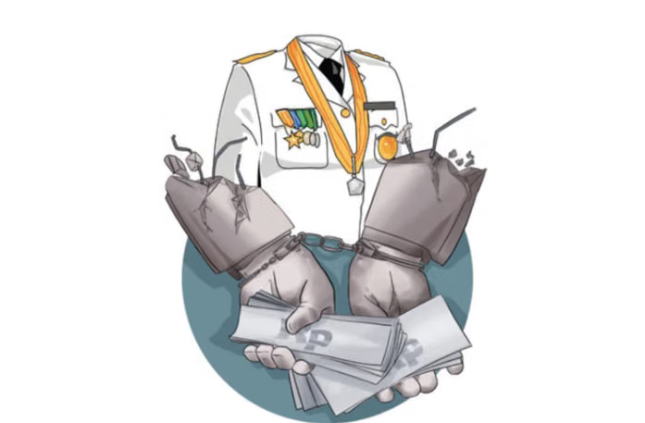
The spate of sting operations (OTT) against regional heads will not cease if the government merely relies on guidance and directives. Therefore, the planned meeting between President Prabowo Subianto and regional heads in the near future is being urged to become a momentum to uncover the root causes of corruption in the regions, rather than just a ceremonial agenda.
IPDN Professor of Governance Djohermansyah Djohan assessed that the forum must be utilised by Prabowo to hear first-hand the problems faced by regional heads before formulating policies. He argued that the one-way communication pattern practised so far has proven unable to break the chain of corruption.
“If the meeting is only filled with one-way directives, the result will not be much different from before. The President needs to open a two-way dialogue so that regional heads can directly convey the root problems they face,” said Djohermansyah on Tuesday (4/8).
He suggested that Prabowo should first absorb the views of governors, regents, and mayors regarding the reasons for the still-high number of KPK sting operations targeting regional heads. From this dialogue, the government is expected to formulate concrete improvement measures accompanied by clear implementation targets.
According to Djohermansyah, there are at least three fundamental issues that need to be the main agenda of the discussion.
The first issue is the high political cost of organising regional elections (Pilkada). He believes the enormous expense of political contests remains the main cause driving some regional heads to seek a return on their investment after being elected.
“If the root of the problem is political costs, then the solution is to improve the Pilkada system to make it simpler, cheaper, and to close the practices of political dowries and money politics,” he said.
He therefore proposed a comprehensive evaluation of the Pilkada system, the candidacy mechanism, and the governance of political parties to ensure a healthier competitive process.
The second issue relates to the administration of regional governance. He noted that regional heads are required to improve the quality of public services, reduce poverty rates, improve the Human Development Index (HDI), and lower stunting prevalence. However, at the same time, the fiscal capacity of regions continues to shrink due to reduced transfers from the central government.
“Regional heads must come with data. They should not just voice complaints, but present facts so the President can make the right policies,” he said.
Beyond fiscal issues, Djohermansyah also believes the internal oversight system in the regions needs to be fixed. He argued that inspectorates have been unable to perform their supervisory function independently because they are under the authority of the regional heads they are supposed to oversee.
“If the regional head is problematic, it is difficult to expect the inspectorate to act independently. That is why a new, stronger, and bolder oversight design is needed,” he said.
He also stressed the importance of strengthening the deterrent effect against perpetrators of corruption. According to him, prison sentences alone are insufficient, and must be accompanied by sanctions that impoverish corruptors.
“Prison sentences alone are not enough. Corruptors must also be impoverished to truly create a deterrent effect,” he said.
Meanwhile, regarding the proposal to increase the salaries of regional heads as a way to prevent corruption, Djohermansyah believes the government must consider the state’s fiscal condition. As long as the state budget remains constrained, such a policy is not yet a priority.
“If the state’s fiscal condition is still in deficit, the President should ask regional heads to be patient. Prioritise the people’s interests. The problem of corruption cannot be solved merely by raising salaries,” he said.
He also suggested that Prabowo should not stop at dialogue with regional heads. The government should subsequently invite political party leaders, because reform of regional governance cannot proceed without improving the political recruitment process.
“Political parties are the main gateway for the birth of regional heads. Therefore, a commitment to eliminate political dowries and improve candidate recruitment must be part of the reform agenda,” he said.
According to Djohermansyah, the spate of OTTs against regional heads is a symptom of a systemic problem. Consequently, the solution cannot rely solely on moral guidance or retreats, but must address the root causes through reform of the Pilkada system, strengthening oversight, improving political party governance, and law enforcement that provides a deterrent effect.
“If the President’s meeting with regional heads can produce that reform package, then the forum will be remembered as a turning point for saving regional autonomy, not just a routine meeting that passes without change,” he concluded.