
President's Daughter Launches 'Love the Rupiah' Movement During 1998 Crisis
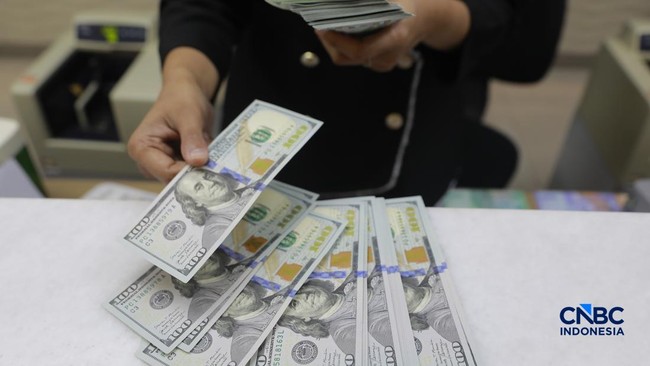
The daughter of the Indonesian president took direct action to rescue the economy during the depreciation of the rupiah against the US dollar. She is Siti Hardijanti Rukmana, also known as Tutut Soeharto, the eldest daughter of Indonesia’s 2nd President, Soeharto.
In early 1998, Tutut initiated a special movement to strengthen the rupiah amidst the monetary crisis. At that time, Indonesia was indeed in a difficult situation. According to Jan Luiten van Zanden’s records in ‘Ekonomi Indonesia 1800-2010’ (2012), the rupiah exchange rate fell drastically from a stable level of around Rp2,000 per US dollar to approximately Rp10,000-12,000 per US dollar. This condition was triggered by the turmoil of the Thai baht in mid-1997, which subsequently spread to various Asian countries, including Indonesia.
Amidst this situation, Tutut Soeharto initiated the ‘Gerakan Cinta Rupiah’ (Getar) in January 1998. Its objective was simple: to encourage the public to release their US dollar savings to help strengthen the rupiah while restoring confidence in the national economy. The Bali Post newspaper reported that the movement spearheaded by Tutut was truly resonant.
Tutut herself set a direct example. She was recorded as releasing US$50,000 of her personal funds to be exchanged for rupiah. According to her, this step was taken not only to help strengthen the rupiah but also to increase love for Indonesia. Shortly after Tutut’s initiation, several state officials followed suit. The Bali Post reported that several members of the People’s Consultative Assembly (MPR) visited banks to exchange their US dollars for rupiah. One of the figures who participated in this action was the 6th President of Indonesia, Susilo Bambang Yudhoyono, who was then a member of the MPR from the Armed Forces faction. Susilo Bambang Yudhoyono exchanged US$1,300.
Besides members of parliament, a number of economic officials also released their US dollar holdings. Finance Minister Mar’ie Muhammad, Bank Indonesia Governor Soedradjad Djiwandono, and other figures were mentioned as participants. From this action, the funds collected at the Bank Indonesia building reached approximately US$650,000. Business circles also took part. According to Berita Yudha, businessmen Aburizal Bakrie, The Ning King, and Imam Taufik were each recorded as releasing US$100,000, making them the largest individual sellers of US dollars in Indonesia. Businessman Sukamdani Sahid Gitosardjono was in the next position, releasing US$50,100 and surrendering 1 kg of his gold to the government.
As time went on, the Love the Rupiah Movement expanded and was followed by people from various professions. During the campaign, Tutut was also known to have increased her contribution by handing over 2 kilograms of her gold to the government. However, the movement began to be criticised just a few weeks later. Several observers assessed that the Love the Rupiah Movement would not be strong enough to withstand market pressures, as the funds collected were said to be no more than US$5 million, far from Indonesia’s needs to face a crisis that reached billions of US dollars. Businessman Fahmi Idris stated it would not solve the problem.
This criticism was subsequently proven correct. The rupiah exchange rate continued to weaken in the following months, causing the prices of basic necessities to soar. In May 1998, the economic crisis turned into a social and political crisis that triggered major riots in various regions. Shortly thereafter, precisely on 21 May 1998, Soeharto officially resigned after more than 32 years in power.