
Presidential Staff Office pushes for integration of critical rare earth mineral ecosystem
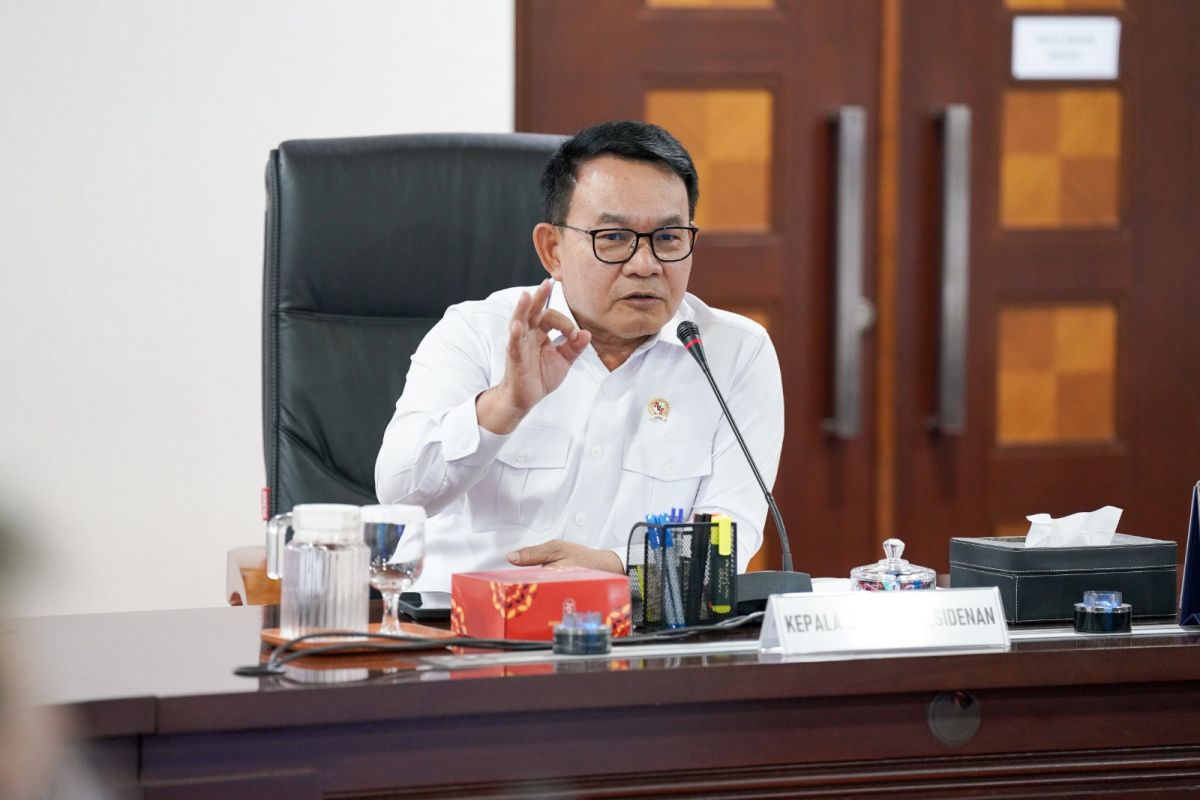
Jakarta (ANTARA) — Dudung Abdurachman, Head of the Presidential Staff Office (KSP), is pushing for the integration of the rare earth elements (REE) critical minerals ecosystem to strengthen national resilience and the downstreaming of Indonesia’s mineral resources.
“Rare earth metals must be understood as building a national industrial value chain, not merely as mining activity,” Dudung said in a written statement received in Jakarta on Monday.
At a coordination meeting on the governance of rare earth critical mineral exports held at the Bina Graha building in Jakarta, Dudung said that mastery of the REE supply chain is a crucial factor in determining Indonesia’s global competitiveness, economic resilience, and national defence.
He noted that Indonesia holds potential reserves of around 350,000 tonnes of REO (rare earth oxides), but this potential has yet to deliver optimal added value to the national economy.
According to him, rare earth elements are the key raw material for various strategic industries of the future, including semiconductors, electric vehicles, batteries, renewable energy, and advanced defence technology.
Dudung said the greatest added value from rare earth elements is actually created after the separation and refining process, culminating in permanent magnets and high-tech industrial components.
He said the KSP is overseeing the downstreaming policy for rare earth elements to ensure it rests on a solid legal foundation and provides business certainty, with reference to Law Number 3 of 2020 on Minerals and Coal, Government Regulation Number 96 of 2021 and its amendments, and Minister of Energy and Mineral Resources Regulation Number 18 of 2025.
On the other hand, domestic management of rare earth elements still faces a number of challenges, including limited extraction and refining technology, suboptimal regulatory standards and oversight, weak supply chain traceability, and the risk of resource leakage through exports that do not yet deliver maximum added value.
“Downstreaming is no longer just about building processing facilities; it must be able to shape a national industrial ecosystem that produces high value-added products, strengthens mastery of technology, creates quality jobs, and enhances Indonesia’s competitiveness at the global level,” Dudung said.
To address these challenges, the KSP is promoting a national strategy for rare earth development built on five pillars: strengthening regulation and governance, developing the industrial ecosystem and processing technology, reinforcing environmental and sustainability aspects, building national human resource capacity, and strengthening global economic diplomacy.
Dudung affirmed that the KSP acts as the President’s delivery unit to ensure cross-sector coordination runs smoothly, identify obstacles, facilitate problem-solving, and accelerate decision-making in the national downstreaming agenda.
“The KSP’s role is not to take over the authority of ministries and agencies, but to ensure cross-sector coordination runs well, identify obstacles, facilitate problem-solving, and accelerate decision-making so that national downstreaming targets are achieved,” he said.
Source: jawawa.id (https://jawawa.id/newsitem/presidential-staff-office-pushes-for-integration-of-critical-rare-earth-mineral-ecosystem-1785149703)
Originally published by Antara (Indonesian) (https://www.antaranews.com/berita/5667761/ksp-dorong-integrasi-ekosistem-mineral-kritis-logam-tanah-jarang), translated from Indonesian