
Presidential Sacrificial Cow for Residents of Indonesia's Outer Islands
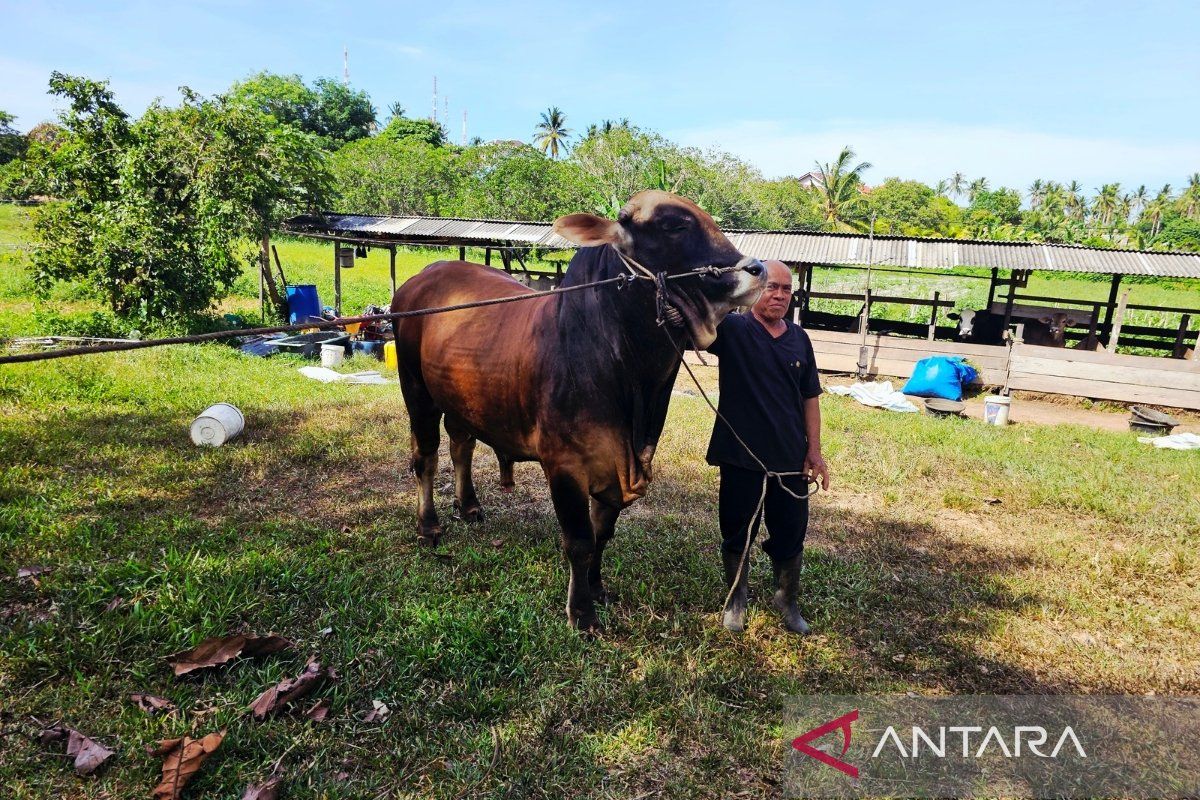
That cow is not merely a sacrificial animal, but a sign that the state still remembers them. Natuna (ANTARA) - On Wednesday (20/5) morning, the Natuna sea was not fully calm when a Limousin cow weighing almost 900 kilograms stood on a pompong wooden boat at Teluk Buton harbour. Small waves repeatedly struck the hull, while officers stood by around the large animal. In the distance, the sky appeared clear. Yet for those at the harbour, the journey to Pulau Laut still held trepidation. “Don’t get too close,” said Wan Syazali, head of the Natuna Food Security and Agriculture Service (DKPP Natuna), to residents and passengers who began to gather. The instruction sounded simple, but important. A moment of panic could cause the cow to bolt. If that happened on the narrow wooden jetty, the risk would be not only stress for the animal but also the possibility of it tumbling into the sea. Thus began that morning in Natuna. The day when a presidential sacrificial cow aid from the President of the Republic of Indonesia, Prabowo Subianto, was dispatched to Pulau Laut, a small island at the northern tip of Indonesia long associated with quiet, waves and distance from the centre of power. For some in big-city life, the president’s sacrificial cow news might be merely annual ceremonial. But for the people of Pulau Laut, the cow’s arrival carries a far deeper meaning. That cow is not merely a sacrificial animal but a sign that the state still remembers them. News of the president’s cow aid had already spread by word of mouth. From coffee stalls to residents’ porches, people began discussing the same thing: Pulau Laut had finally received the president’s sacrificial cow for the first time. On a border island such as this, small news can become a big event. The cow was bought from a local breeder in Bunguran Timur District named Mondosia. In his modest yard, located quite far from the settlement, he cared for his cows in a way that had hardly changed over the years. In the morning the cow was released into an open area. In the afternoon it was returned to the enclosure. According to Mondosia, cows have moods too. “Cows kept too long in the yard become easily stressed,” he said while observing his stock. That is why he lets his livestock roam freely from morning to evening. That simple method evidently made his stock grow healthy and heavy. His male cows are even often borrowed by other breeders to sire their cows. “I have prepared their mating place,” he said, pointing to a small shed beside the main farm area. Few would have guessed that from that simple Natuna shed, a cow would be born that would then undertake the long journey to Indonesia’s outermost island. As departure approached, the harbour atmosphere gradually grew tense. Officials began arranging the positions of the crowd, ensuring the cow transfer route remained safe. When the big animal finally moved onto the pompong, all eyes were fixed in one direction. Some held their breath. The wooden hull creaked softly under the 879-kilogram weight. Small waves caused the boat to rock before it slowly moved away from the dock.