
Presidential Right-Hand Man Disliked for Summoning and Reprimanding Ministers
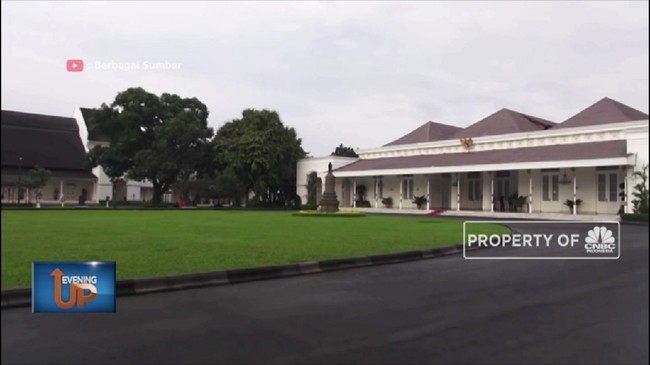
In the early 1970s, there was an official who had the habit of summoning ministers to his office. He held meetings, coordinated government affairs on behalf of the President, and even reprimanded other officials if they were deemed to have made mistakes. All of this made him unpopular.
That official was Soemitro. At that time, Soemit/tro was one of the few people deeply trusted by President Soeharto (1968-1998). So much so that he attained the rank of full four-star General very quickly, which was considered a record-breaking achievement.
“In 1970, my rank rose to full General, four stars. I was 43 years old at the time. This event perhaps records that I was considered the youngest full General in the Army at that time,” Soemitro stated in his biography, Soemitro: From Commander Mulawarwarman to Pangkopkamtib (1994).
Subsequently, he was entrusted to serve as Pangkopkamtib (Commander of the Command for the Restoration of Security and Order). His duty was to maintain national security and order.
It was this position that gave Soemitro extremely broad and strategic authority. His influence extended beyond the security sector into the government itself. Jusuf Wanandi, in his memoir Menyibak Tabir Orde Baru (2015), revealed that Soemitro once summoned the Minister of Justice to discuss the Marriage Bill.
He also once summoned the economic team under Widjojo Nitisastro. Furthermore, Soemitro was said to have reprimanded and scolded other officials or ministers if they were deemed to have committed errors. This habit made Soemitro appear as though he were running the day-to-day operations of the government.
“In the early 1970s, he acted like Soeharto’s confidant in running the wheels of government and frequently summoned ministers to his office,” said Jusuf Wanandi.
Jusuf even assessed that Soemitro’s actions resembled the role of a head of government.
“Clearly, Soemitro was attempting to play the role of a Prime Minister, which was actually President Soeharto’s duty as the executive leader,” wrote Jusuf.
On the other hand, Soemitro claimed his actions were known to Soeharto or had been previously cleared with the President. However, there was no confirmation from the President as to whether he always approved the General’s actions.
The extent of Soemitro’s influence eventually led to dislike and culminated in a clash with another powerful figure close to Soeharto, namely Major General Ali Moertopo, the Presidential Personal Assistant and controller of Special Operations (Opsus).
Ali suspected that Soemitro intended to rival Soertaho. At the time, documents circulated claiming to reveal Soemitro’s desire to become President. Conversely, Soemitro also harboured suspicions towards Ali and warned him not to build a power base to overthrow Soeharto.
The conflict between the two eventually forced Soeharto to intervene. In late 1973, Soeharto brought together Soemitro and Ali Moertopo. In that forum, Ali questioned various of Soemitro’s steps, including his actions which were perceived as usurping part of the President’s power.
“Mr. Ali repeated the question he had previously presented to Soeharto: […] And what is Soemitro’s intention in taking over part of the President’s power, acting as a Prime Minister […]” recounted Jusuf Wanandi in Menyibak Tabir Orde Baru (2015).
Soemitro denied the allegations. He insisted he was merely carrying out the President’s duties. According to David Jenkins in Soeharto & Barisan Jenderal Orba: Rezim Militer Indonesia 1975-1983 (2010), this occurred because the President believed Soemitro could cooperate effectively.
However, the dispute entered its final chapter after the Malari riots broke out on 15 January 1974. As Pangkopkamtib, Soemitro was in a difficult position as he was responsible for security and order.
According to Ken Conboy in Intel: Inside Indonesia’s Intelligence Service (2008), the riots tarnished Soeharto’s image, and Soemitro was held responsible. He subsequently resigned on 6 March 1974.
“On 6 March 1974, I submitted a written request to President Soeharto to resign from my position,” Soemitro recalled.
He claimed that the resignation took place without pressure.
“People say that at that time I was the most powerful person. How could anyone pressure me?” Soemitro remarked.
Following this, Soemitro, who only a few years prior was so powerful that he could summon ministers to his office, eventually had to leave the stage of power. He completely withdrew from public and political life until his death in 1998.
Source: jawawa.id (https://jawawa.id/newsitem/presidential-right-hand-man-disliked-for-summoning-and-reprimanding-ministers-1789707208)
Originally published by CNBC Indonesia (https://www.cnbcindonesia.com/entrepreneur/20260918080049-25-768898/tangan-kanan-presiden-ri-tak-disukai-karena-suka-panggil-tegur-menteri), translated from Indonesian