
Presidential Regulation on Online Transport Must Benefit All Parties
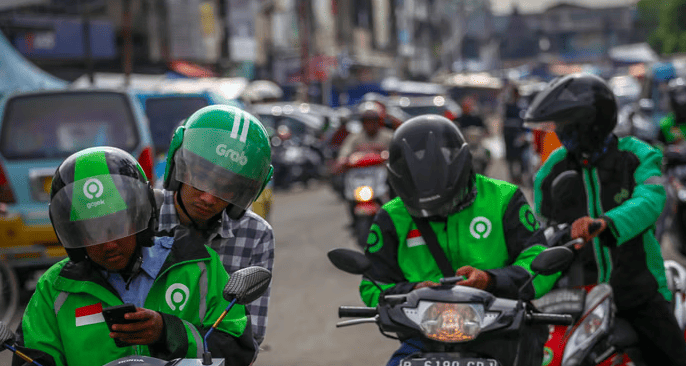
House of Representatives Commission V member Sudjatmiko has stated that the implementation of Presidential Regulation No. 27 of 2026 on the Protection of Online Transport Workers must become a momentum to build an online transport ecosystem that provides benefits and convenience for all parties, including drivers as partners, app companies, and the public as passengers.
According to Sudjatmiko, online transport has become an important part of people’s lives. Millions of people use it for daily mobility, while work as a driver has become a source of income for many families. Therefore, the regulation of online transport must not only examine the relationship between drivers and app operators, but must ensure that the entire ecosystem functions healthily.
“Let us not view this issue only from the perspective of drivers or app operators. Drivers must receive better income and protection, app companies must have certainty to continue growing, while passengers receive services that are safe, comfortable, easy and affordable. Everyone must gain benefits and convenience,” said Sudjatmiko in his statement on Thursday (13/8).
He assessed that one of the important breakthroughs in Presidential Regulation 27/2026 is the regulation of revenue sharing that provides a minimum portion of 92 percent to drivers and a maximum of 8 percent to app operators. This policy is expected to increase the income received directly by driver partners.
“The provision of 8 percent for app operators and a minimum of 92 percent for drivers must truly be felt by partners. It must not merely be a figure on paper. But we must also ensure that app companies still have healthy business space to develop technology, improve services and run their businesses sustainably,” said Sudjatmiko.
According to him, the implementation of the 8 percent scheme must also be monitored so that it does not create new problems. The reduction in app operator commissions, he said, must not be replaced with other fees that burden drivers or passengers.
“The spirit is to provide benefits and convenience. Do not let the app operator’s cut decrease, but other fees emerge that ultimately reduce driver income or make passenger fares more expensive. The government must view the ecosystem as a whole,” he said.
Sudjatmiko also urged the government not to stop at creating regulations, but to also prepare facilities and infrastructure that support online transport. Central and regional governments, according to him, need to provide shelters or special points for online transport at various government facilities.
“At government offices, hospitals, terminals, stations, public service centres and other strategic facilities, clear passenger pick-up and drop-off points need to be considered. This will make things easier for drivers, easier for passengers, and at the same time help the government manage traffic,” he said.
According to Sudjatmiko, the existence of shelters can also reduce the problem of drivers having to stop or wait on road shoulders, in front of buildings, or other locations that have the potential to disrupt traffic.
“If we want to place online transport as part of the national transport system, then its infrastructure must also be prepared. Do not only regulate the application, but fail to provide the physical space,” he said.
In addition to facilities and infrastructure, Sudjatmiko emphasised the importance of adequate health insurance and accident protection for drivers. He reminded that online transport drivers face high risks because most of their working time is spent on the road.
“Health and accident insurance must be proper. Not merely having membership or a card, but when a driver has an accident, the protection can truly be used and the process is not difficult,” he stressed.
He also called for a clear mechanism regarding the suspension or deletion of driver accounts. According to him, the status of drivers as partners must not allow app companies to have unilateral authority to cut off someone’s access to their source of income.
“Drivers must of course comply with platform rules. But if a violation occurs, there must be a clear process. An account must not suddenly be deleted without explanation, without an opportunity for clarification and without an objection mechanism,” said Sudjatmiko.
Therefore, he encouraged the government to strengthen its oversight function over online transport app companies. The government, according to him, needs to have a position as supervisor within the online transport app ecosystem in Indonesia so that the relationship between app operators and partners runs fairly and transparently.
“The government must be present as a supervisor. Not to take over the app operators’ business, but to ensure that the rules of the game are fair. From revenue sharing, order allocation, algorithms, incentives, fares, suspension, account deletion to dispute resolution mechanisms, there must be oversight,” he said.
According to Sudjatmiko, the government also needs to consider establishing a supervisory mechanism involving government elements and relevant stakeholders so that oversight of the online transport app industry can be carried out sustainably.
On the other hand, Sudjatmiko asked the government to strengthen regulations regarding the establishment and investment of online transport companies in Indonesia. According to him, app companies can no longer be viewed merely as technology companies because their activities now involve public interest and community mobility.
“Investment is still needed. But the establishment of online transport companies must have strong rules. There must be clarity regarding capital, ownership, investment, operational capability, consumer protection and responsibility towards partners,” he said.
He encouraged stricter regulation of investment in the online transport sector while still opening space for investment and healthy competition.
“This does not mean we are anti-investment. On the contrary, we want incoming investment to have long-term commitment. Indonesia must not merely become a large market, while when problems arise with drivers or passengers, the responsibility is unclear,” said Sudjatmiko.
He stressed that such regulation must safeguard national interests while providing certainty to investors and companies wishing to run online transport businesses in Indonesia.
Sudjatmiko also reminded that drivers and app companies should not be positioned as two parties that must always be in opposition. According to him, their relationship is mutually dependent.
“Drivers need the app to get passengers. App operators need drivers to run services. Passengers need both. Therefore, it must not be framed as if drivers must win and app operators must lose, or vice versa,” he said.
According to Sudjatmiko, the success of Presidential Regulation 27/2026 must ultimately be measured by its impact on the entire ecosystem. “Drivers receive better income and protection, app operators receive certainty and convenience to run their businesses, while passengers receive services that are increasingly safe, comfortable, easy and affordable. If everyone feels the benefits, then this policy is running according to its purpose,” concluded Sudjatmiko.