
Presidential Palace Embraces Homeless Media as Government Partners
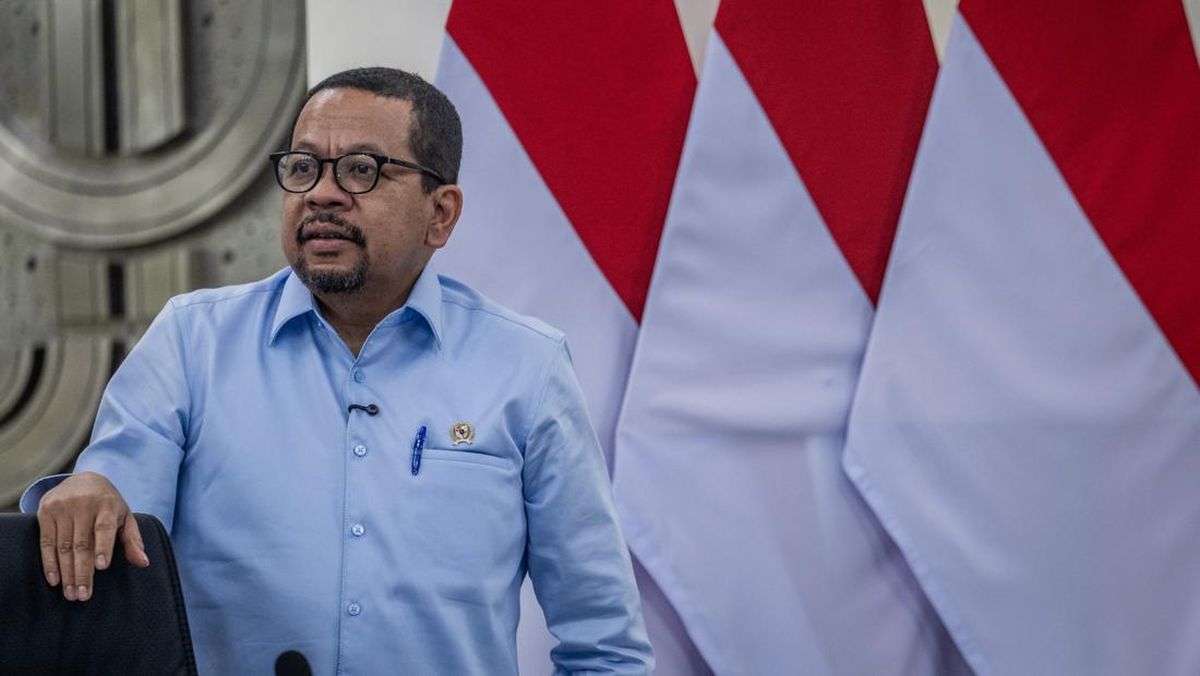
The Indonesian Government’s Communication Agency (Bakom) has embraced the New Media Forum as a partner in the digital media ecosystem to broaden the reach of public communication in Indonesia.
The New Media Forum serves as a gathering platform for practitioners of new media, commonly known as “homeless media,” which has recently gained prominence.
Head of Bakom, Muhammad Qodari, stated that the presence of New Media actors reflects the government’s efforts to reach the public more broadly, not only through conventional media but also through digital channels that have developed alongside technological and societal changes.
“The presence of our New Media friends reflects Bakom’s efforts to reach the public as widely as possible, not only through conventional media but also through digital channels that today have become the reality of media or digital communication reality as a form of technological and societal development,” said Qodari during a press conference in Jakarta on Wednesday (6/5).
Qodari explained that the New Media Forum is a collaborative platform for several digital media actors who were previously known as homeless media and are now transforming into new media entities.
Several platforms joined in the forum include Folkative, Indozone, Dagelan, Indomusikgram, Infipop, USS Feeds, Bapak-bapak ID, Menjadi Manusia, GNFI, Creativox, Kok Bisa, Taubatters, Pandemictalks, Kawan Hawa, Volix, Ngomongin Uang, Big Alpha, Goodstats, Hai Dudu, Proud Project, Kumpul Leaders, CXO Media, The Mapple Media, Melodi Alam, Mahasiswa dan Jakarta, and Mature Indonesia.
Qodari added that the existence of New Media as a digital communication reality has a vast reach, with follower counts reaching tens to hundreds of millions and total monthly views up to billions.
Nevertheless, he noted that there are still several issues that need to be addressed by New Media, both in their relations with conventional media and institutions like the Press Council.
One aspect of concern is the application of the principle of information balance or covering both sides.
Qodari said that this mechanism remains a challenge in New Media, so alternatives such as strengthening verification methods are needed if the practice of balance cannot yet be fully implemented.
From Bakom’s perspective, the approach is not to distance New Media but to embrace them so that the quality and standards of the products produced can improve to approach conventional media practices.
“However, our view is that New Media must be embraced to improve quality and standards so that New Media products become increasingly high-quality like conventional media,” said Qodari.
“So, if they are distanced, it will be hard for us to communicate, right? First, tabayyun (verification), build relationships, that’s how it is. With relationships, points of input and suggestions can be conveyed well,” he added.
Qodari continued that some institutional elements in New Media have already formed, such as the existence of companies, editorial structures, and clear addresses, which distinguish them from ordinary anonymous social media accounts.
With that condition, his side assesses that involving and strengthening collaboration with New Media is a step to encourage improvements in content quality while expanding the effectiveness of government public communication.
“With the reality that New Media already has a sufficiently large number of followers, possibly up to 100 million with views that can reach billions, 4 to 6 billion in one month, in our opinion, the best is for us to engage so that the quality of New Media improves further,” he explained.