
Presidential Palace clarifies President's 1,098 sacrificial cattle as government assistance to citizens
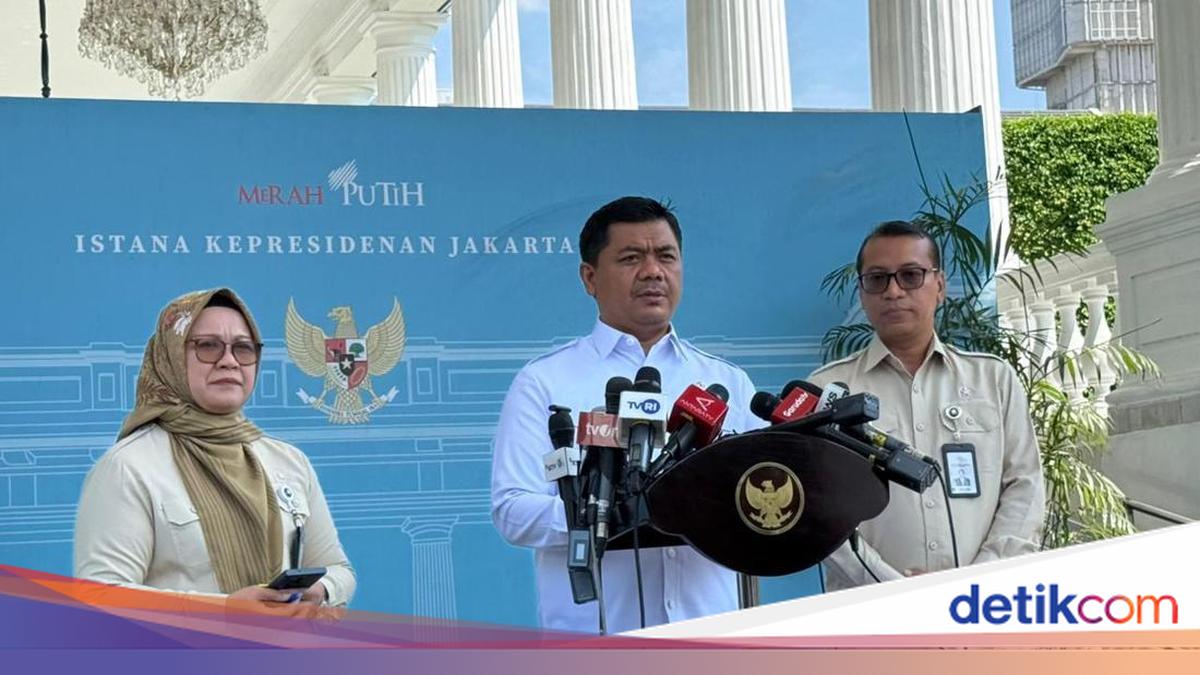
Deputy Minister of State Secretariat (Wamensesneg) Juri Ardiantoro explained that the distribution of sacrificial cattle from President Prabowo Subianto for this year’s Eid al-Adha is part of the President’s social assistance programme (banpres). The assistance distribution has been ongoing for years.
Juri provided this explanation in response to public questions regarding the use of the national budget (APBN) in procuring Prabowo’s sacrificial cattle. He stated that the cattle are government assistance to the public, enabling citizens, particularly those in need, to celebrate Eid al-Adha and partake in the sacrificial meat.
‘The President’s sacrificial cattle constitute government assistance to the public, aiming to enable those in need to celebrate Eid al-Adha by slaughtering sacrificial animals together,’ Juri said in a statement on Wednesday, 27 May.
This year, 1,098 cattle were distributed by Prabowo across Indonesia. As government assistance, the use of the banpres budget allocation is considered standard practice and has been a longstanding government tradition.
Juri emphasised that the sacrificial cattle assistance is not for Prabowo’s personal interests but is entirely directed to communities nationwide. The government aims for citizens to directly feel the state’s presence, especially during religious occasions with high social value like Eid al-Adha.
Juri also added that personally, Prabowo still fulfils his own sacrificial duty using personal funds. His personal sacrificial animal is also slaughtered and distributed to the public.
Meanwhile, the Indonesian Ulema Council (MUI) stated that the national leader purchasing sacrificial animals using state funds (APBN) is not problematic under Islamic law. MUI’s Fatwa Commission Chairman Kiai Haji Asrorun Niam Sholeh explained that this procurement model has strong fiqh foundations in Islamic history.
According to Niam, citing a Hadith from Imam Bukhari, a leader or imam is encouraged to purchase sacrificial animals through baitul mal or state funds. In modern contexts, the national budget (APBN) can be understood as a modern baitul mal managed for public benefit.
‘In today’s governance context, the national budget acts as a modern baitul mal. Thus, state-sponsored sacrifices are purely for the welfare of the wider community. There is no religious issue,’ Niam said.
The mechanism, according to Niam, is logically sound from a bureaucratic perspective, similar to other social assistance programmes provided by the government. The difference is that this assistance is manifested as sacrificial cattle distributed to various regions.
‘Like the banpres budget allocated for basic necessities distributed to the public, the logic is the same: the sacrificial cattle are not consumed personally by the President but directly distributed to regions,’ Niam added.