
Presidential Advisory Council Sets Three Strategic Areas, Bamsoet Outlines Responsibilities
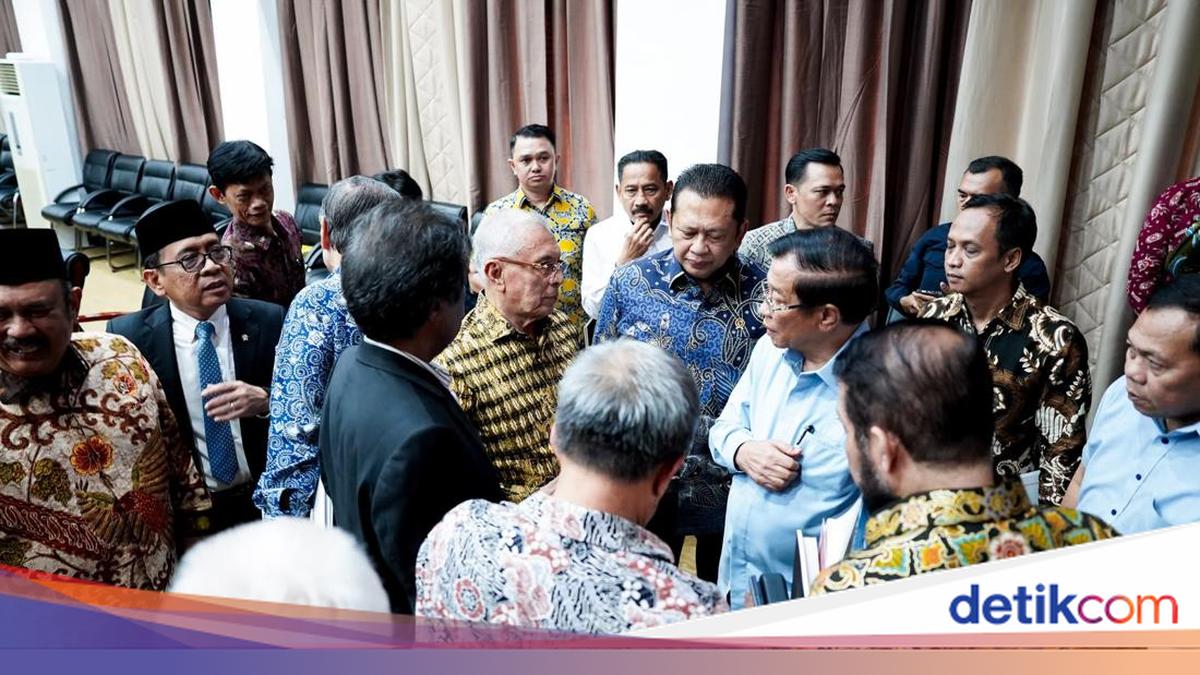
The Presidential Advisory Council (Wantimpres) held its second plenary meeting and agreed to divide its work into three strategic areas, aiming to strengthen the effectiveness of its advice to President Prabowo Subianto.
The areas are Politics, Law and Security, chaired by Agum Gumelar; Social Welfare, chaired by Pratikno; and Economy and Finance, chaired by Chairul Tanjung. The three-part structure is expected to strengthen cross-sector coordination and produce recommendations that are more focused, timely and well-targeted.
“Reducing the structure to three areas is intended to improve the quality of Wantimpres’s work. President Prabowo needs objective, incisive, data-based input that offers practical solutions. National challenges are becoming more complex, ranging from geopolitics, security and law enforcement to global economic pressures, poverty and unemployment. Wantimpres must be able to anticipate problems, identify their root causes and offer policy options the President can implement promptly,” Wantimpres member Bambang Soesatyo (Bamsoet) said after the council’s second plenary meeting at the State Secretariat office in Jakarta on Thursday (15 October 2026).
Politics, Law and Security
Bamsoet is part of the Politics, Law and Security area. The former MPR speaker said the area, chaired by Agum Gumelar, has nine members: himself, Budi Gunawan, Rocky Gerung, Anwar Usman, Margarito Kamis, Mohammad Hatta, Ida Bagus Purwalaksana and Yahya Cholil Staquf.
The area works with the coordinating ministries for Political and Security Affairs and for Law, Human Rights, Immigration and Corrections. Its remit covers the ministries responsible for home affairs, foreign affairs, defence, communications and digital affairs, law, human rights, and immigration and corrections, as well as the Attorney General’s Office, the Indonesian National Armed Forces (TNI) and the National Police (Polri). Its priorities include strengthening political stability, the rule of law, human rights protection, national defence and security, and countering cyber threats and transnational crime.
“Political and security stability is the foundation of national development. Today’s threats are increasingly complex, from geopolitical conflicts and cyberattacks to disinformation, misuse of artificial intelligence and transnational crime. Wantimpres must provide early warnings and strategic recommendations before problems develop into crises. Fair law enforcement, legal certainty, professionalism among officials and public trust in the state must be key priorities,” Bamsoet said.
Social Welfare
The Social Welfare area, chaired by Pratikno, has ten members, including Dato’ Sri Tahir, Sinta Nuriyah Wahid, Muhammad Quraish Shihab, Anwar Iskandar, Salim Segaf Al-Jufri, Said Aqil Siroj, Philip Kuntjoro Wijaya, Budi Santoso Tanuwibowo and Jacky Manuputty.
It works with the coordinating ministries for Human Development and Culture and for Community Empowerment. Its partners include ministries responsible for religious affairs and the hajj, education, culture, health, women and children, population and family affairs, youth and sport, social affairs, migrant workers, village development, cooperatives, micro, small and medium-sized enterprises (MSMEs), and the creative economy. The area will assess the effectiveness of social protection, improvements in human resources, poverty reduction, equitable access to basic services and community economic empowerment, so that people benefit more widely from development.
“Development must be judged by changes in people’s lives: whether poverty falls, jobs increase, education and healthcare become more accessible, and farmers, fishers, workers and MSMEs become more prosperous. The Free Nutritious Meals programme, social protection, cooperatives and village empowerment must be properly targeted. Large sums must not be spent while people’s fundamental problems remain unresolved. Wantimpres must help the President identify obstacles to programme implementation and find ways to overcome them,” Bamsoet said.
Economy and Finance
The Economy and Finance area, chaired by Chairul Tanjung, has seven members, including Muhammad Hatta Rajasa, Jusuf Hamka, Soekarwo, Muhammad Qodari, Ignasius Jonan and Jusuf Wanandi.
It has the broadest range of partners, including the coordinating ministries for Economic Affairs, Infrastructure and Regional Development, and Food Affairs, as well as bodies coordinating downstreaming and the energy transition. Its partners include ministries responsible for investment, industry, trade, employment, tourism, energy, public works, housing, land affairs, transmigration, transport, agriculture, forestry, marine affairs and fisheries, and the environment, alongside the National Food Agency and National Nutrition Agency.
Other strategic partners are the Finance Ministry, the National Development Planning Agency (Bappenas), Bank Indonesia and the Financial Services Authority (OJK). The area is expected to align fiscal and monetary policy with investment, downstreaming, infrastructure, food and energy security, and job creation.
“Achieving the 8 per cent economic growth target requires major breakthroughs. Investment must create productive industries and quality jobs; downstreaming must increase domestic value added; and food and energy security must reduce dependence on imports. Wantimpres needs to analyse why investment is not yet optimal, logistics costs remain high and industries face pressure, and how fiscal, monetary and real-sector policies can be better aligned to accelerate economic growth,” Bamsoet said.
Bamsoet, chair of the advisory board of the Padjadjaran University Alumni Association of Doctoral Law Graduates, said the success of the new structure would depend on the three areas’ ability to work together. Fuel shortages, for example, are linked to energy security, distribution, food prices, inflation and social stability.
Unemployment is similarly connected to investment, education, industry and workforce quality. Wantimpres therefore needs to strengthen coordination among ministries, draw on data from Statistics Indonesia (BPS) and Bappenas, and prepare measurable cross-sector recommendations.
“Wantimpres must be willing to present the President with objective views, including when a policy needs to be improved. Recommendations must explain the root cause of a problem, its effects, the steps needed to resolve it, and which ministry or agency is responsible. With the three areas working in synergy, Wantimpres can better help President Prabowo make swift, sound decisions that serve the national interest and people’s welfare,” Bamsoet said.
Source: jawawa.id (https://jawawa.id/newsitem/presidential-advisory-council-sets-three-strategic-areas-bamsoet-outlines-responsibilities-1792079465)
Originally published by detikcom (https://news.detik.com/berita/d-8709182/wantimpres-tetapkan-3-bidang-strategis-bamsoet-ungkap-pembagian-tugasnya), translated from Indonesian