
Presidential Adviser Said Iqbal Proposes Abolishing Tax on Old-Age Security Payouts for All Recipients
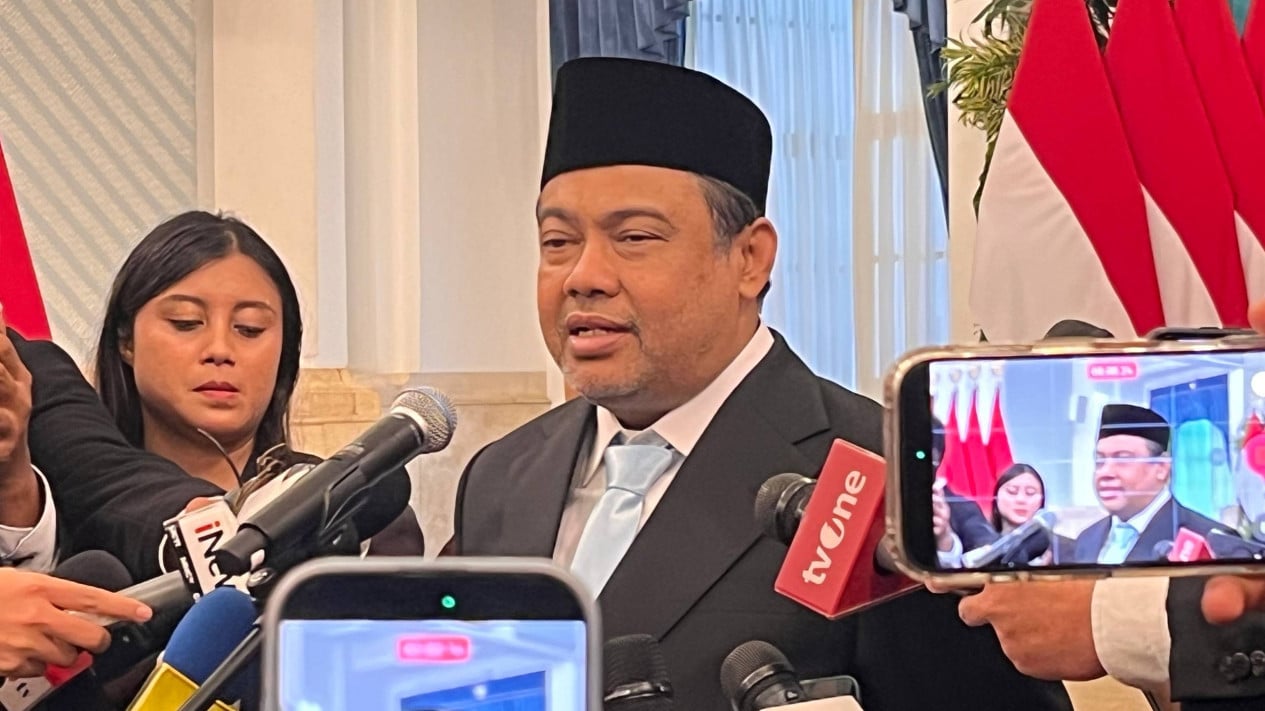
Presidential Adviser for Employment and Worker Welfare, Said Iqbal, has called for a review of the taxation policy on Old-Age Security (JHT) payouts from BPJS Ketenagakerjaan. Said Iqbal, who also serves as President of the Confederation of Indonesian Trade Unions (KSPI) and the Labour Party, explained that the goal is to ensure the policy on JHT disbursement better reflects the principles of justice and worker protection.
According to him, if the majority of participants have already received a tax exemption on JHT payouts, the possibility of extending this policy to all JHT participants should be considered as a refinement of the social protection system. "JHT is a social security instrument designed to provide workers with a sense of security after they are no longer employed," Said Iqbal stated on Friday, 3 July 2026. "Because the more complete the benefits workers receive, the stronger the social protection function that is intended to be realised."
For this reason, Said Iqbal requested that the taxation policy on JHT disbursement be studied further, so that in the future all beneficiaries can receive equal treatment. BPJS Ketenagakerjaan data recorded that 95.45 per cent of participants with balances below Rp 50 million were granted a zero per cent tax incentive for JHT claims paid during the January–May 2026 period. This amounted to 1,645,469 claims out of a total of 1,723,910 claims paid. Consequently, Said Iqbal is pushing for the taxation policy on JHT disbursement to be examined more closely.
"If the majority of participants have already obtained a tax exemption, the possibility of extending this policy to all JHT participants should be considered as a refinement of the social protection system," Said Iqbal said. Given that only a small fraction of JHT beneficiaries are subject to tax, he believes there is room to conduct a joint study on the fiscal impact and social benefits if a comprehensive tax exemption were implemented. Moreover, the government has consistently provided various tax incentives to boost economic growth and investment. In the same spirit, he argued, refining the taxation policy on JHT can be seen as a form of strengthening the state’s partiality towards workers.
"I believe the government shares the same commitment to continuously improving worker welfare. Therefore, I hope the proposal for a JHT tax exemption can become part of the policy refinement process that considers aspects of justice, the state’s fiscal capacity, and the sustainability of the social security system," he concluded.