
President Xi's Visit to Egypt and Prabowo's Visit to Russia: Balancing Diplomacy?
The Arab Republic of Egypt, the Republic of Indonesia, and the People’s Republic of China (PRC) share a very strong political and emotional bond. These three nations are part of the G-77 (Global South) plus China group, which plays a significant role in driving cooperation among developing nations in the fields of economy, science, technology, and sustainable development.
From an economic perspective, China undoubtedly holds a vital role in the global economy. Politically, however, it consistently positions itself as an inseparable part of the critical voice of the Global South in the balance of global diplomacy. Similarly, Russia has, on several occasions, adopted a stance that does not oppose the interests of the G-77 group, particularly when facing the economic and political dominance of developed Western nations.
The Group of 77, or G-77, is the largest coalition of developing nations within the United Nations, aiming to advance shared economic interests and strengthen the collective negotiating capacity of its members. Established on 15 June 1964 through the ‘Declaration of the Co-operation of the Seventy-Seven Developing Countries’ at the UN Conference on Trade and Development (UNCTAD) in Geneva, Switzerland, the organisation has grown to include approximately 134 to 135 developing nations across Asia, Africa, Latin America, and the Caribbean.
In various international forums, this group works alongside China, hence the designation ‘G-77 plus China’. Although China is not a full official member, its stance consistently aligns with the Southern nations within the UN forum. This raises the question: what is the correlation between Chinese President Xi Jinping’s visit to Cairo, Egypt, and President Prabowo’s visit to Russia in early September 2026? Are these visits by two Global South leaders politically part of a ‘balancing diplomacy’?
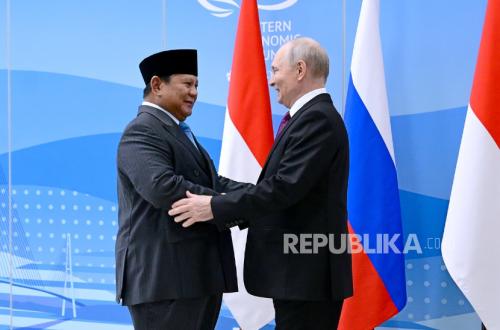
President Xi Jinping’s visit to Cairo coincides with President Prabowo Subianto’s visit to Russia, together painting a broader geopolitical picture. This reflects the steps taken by Global South nations towards strengthening balanced partnerships with major powers within a multipolar international system.
Furthermore, this visit by the Chinese President—the first in a decade—marks the pinnacle of a comprehensive strategic partnership and commemorates 70 years of diplomatic relations between Egypt and China. Foreign media reports suggest the visit aims to strengthen bilateral relations across political, economic, and developmental sectors. Discussions also focused on industrial localisation, cooperation in local currencies, and the rejection of foreign interference in Middle Eastern affairs.
This visit appears to be part of the concept of a ‘great power race to control the Arab world’s frontline’. This can be summarised as intense strategic competition among global powers, such as the United States, China, and Russia, to exert influence over vital geopolitical gateways and borders that serve as the frontline of the Arab world.
In a geopolitical context, the ‘frontline’ refers to maritime straits, waterways, and coastal logistics hubs that oversee global trade routes and energy supplies. Within the context of the Arab Geopolitical Archetype, this refers to strategic geographical areas that serve as meeting points or clash zones for great empires and local tribes competing for control over trade, political influence, and territorial supremacy.
Major powers, including China, are focusing their attention on critical points representing the gateways of the Arab world, such as the Bab el-Mandeb Strait and the Horn of Africa—geographical routes connecting the Red Sea to the Indian Ocean. Furthermore, the Suez Canal remains the fastest and most important trade route, where major powers seek to increase investment in its economic zones to ensure the smooth flow of goods and trade.
Additionally, the Strait of Hormuz serves as the primary gateway for exporting oil and gas from Gulf nations to global markets, making it a constant flashpoint for protecting global energy security. Coastal ports in the Mediterranean Sea act as gateways to North Africa and the Levant, providing a direct link to the European continent and strategic depth in naval and military calculations.
Great powers are using various methods to establish their foothold in these vital locations through massive investments in port development and large-scale logistics projects, such as China’s Belt and Road Initiative.
Source: jawawa.id (https://jawawa.id/newsitem/president-xis-visit-to-egypt-and-prabowos-visit-to-russia-balancing-diplomacy-1789293364)
Originally published by Republika (https://analisis.republika.co.id/berita/tlals8282/kunjungan-presiden-xi-ke-mesir-dan-prabowo-ke-rusia-diplomasi-penyeimbang), translated from Indonesian