
President Who Has Ruled Since 1984 Suddenly 'Vanishes' Without Trace
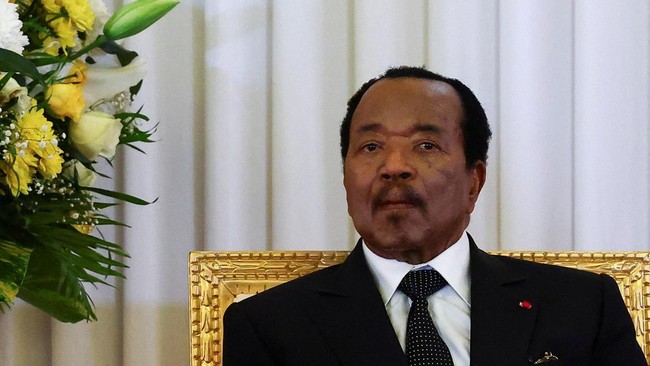
Cameroon’s President Paul Biya has led his country since winning the presidential election in 1984. Now aged 93, he still serves as head of state, but his whereabouts over the past two months have raised major questions at home.
CNN reported that Biya left Cameroon on 7 June 2026 for what his office described as a ‘short private visit to Europe’. He has yet to return. His absence is the longest uninterrupted period away from the Central African country in recent years.
Last week, government spokesman René Emmanuel Sadi told French radio RFI that Biya was in Geneva, Switzerland, and was not being treated in hospital. He did not, however, provide details on the president’s exact location or activities.
The situation has revived questions about Biya’s health and who is actually running the government while he is abroad.
Biya is Cameroon’s second president since the country gained independence in 1960 and is one of the world’s longest-serving leaders. He first came to power in 1982 after taking over when the incumbent president resigned. Two years later, he won his first presidential election under a one-party system.
Since the introduction of a multiparty system, Biya has won six subsequent elections. Last year, he won an eighth term that was disputed by his political opponents. That victory could keep him in power until he approaches 100 years of age.
‘The best is yet to come,’ Biya said before the election, which his opponents described as riddled with fraud and marked by deadly clashes between demonstrators and police.
Rumours about Biya’s health and whereabouts are nothing new in Cameroon. He is known for rarely appearing in public, which has fuelled recurring speculation about his condition.
The government has repeatedly denied reports that Biya is seriously ill or has died. In 2024, the government even banned the media from discussing the president’s health on national security grounds.
For millions of Cameroonians, Biya is the only president they have ever known.
Abit Riassai Acha, a 26-year-old doctoral student at the University of Yaoundé II, said his generation grew up without ever knowing another president.
‘Since childhood, President Biya is the only president I have known, so his leadership has become part of my entire experience of Cameroon,’ he said, as quoted by CNN on Saturday (15/8/2026).
According to Acha, people have become accustomed to Biya’s long absences, but that does not mean they should stop questioning how the country is being run.
‘Because this has happened repeatedly over the years, many Cameroonians have become used to it. But being used to something does not mean people should stop asking how this country is governed,’ he said.
Despite being abroad, Biya has continued to make a number of important decisions. Earlier this month, the government announced a major reshuffle of the military that was approved by the president.
Sadi dismissed concerns about a power vacuum. He told RFI that ‘President Paul Biya is alive’ and ‘will return soon’.
However, calls to question Biya’s presidential status have begun to emerge. Samuel Hiram Iyodi, a young opposition candidate who ran in last year’s election, has asked parliament to petition the Constitutional Council to assess whether Biya’s absence could be considered a vacancy in the presidency.
Such a move is considered unlikely to succeed because of the dominance of the ruling Cameroon People’s Democratic Movement.
Political analyst Collins Molua Ikome, a Cameroonian now living in Germany, said he witnessed the country’s problems first-hand during a visit in April.
‘The roads in Cameroon are very bad. I even witnessed an accident that killed someone,’ he told CNN.
Ikome also highlighted frequent power cuts, corruption, and a lack of jobs for young people.
Wilson Tamfuh, a professor of public and international law at the University of Dschang, said state institutions can continue to function when the president delegates authority to the prime minister, the secretary-general of the presidency, and ministers.
But the main issue, he said, is whether the government can resolve long-standing fundamental problems.
‘The people want the crisis in the English-speaking regions resolved, living standards improved, better roads built, the number of educated unemployed reduced, and much more,’ he told CNN.
In addition to the separatist conflict in the English-speaking regions, Cameroon also faces attacks by Boko Haram in the north and deep economic frustration among young people.
Ikome added that access to quality healthcare remains a luxury for many citizens.
‘Life expectancy in this country is still below 70 years. Yet Biya has far exceeded that figure because he has access to healthcare abroad, something ordinary Cameroonians cannot enjoy because of poverty,’ he said.