
President Requests Further Reduction in Hajj Queue, Here Are Solutions from Hajj Observers
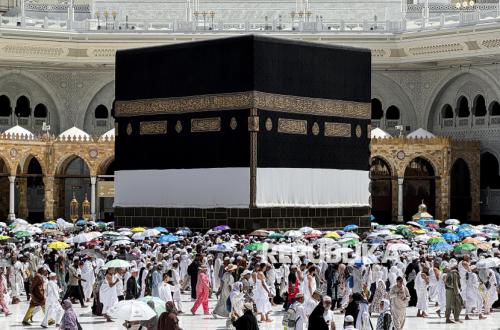
The desire of Indonesian President Prabowo Subianto to reduce the Hajj waiting period to less than the current average of 26 years is considered a major challenge for the Ministry of Hajj and Umrah (Kemenhaj). In the short term, the government is deemed to need to lobby the Saudi Arabian government to provide an additional Hajj quota for Indonesia. Hajj observer from Komnas Haji, Mustolih Siradj, stated that Kemenhaj’s policy of equalising the waiting period to an average of 26 years is already an improvement compared to before, when several regions had queues of more than 40 years. “With this new city distribution method implemented by Kemenhaj, making it an average of 26 years, it has actually significantly reduced the previously quite long queue. However, the President considers that it still needs to be cut further. This is actually a reflection of the public’s long-standing hope, as the queue is still considered long,” he said when contacted on Friday (26/6/2026). According to him, this challenge is increasingly heavy because the number of prospective Indonesian Hajj pilgrims continues to rise. Currently, Mustolih said, the number of Hajj registrants has reached around 5.5 million people. Nevertheless, he assesses that the room to reduce the waiting period in the near term is still limited. This is because the addition of the Hajj quota depends entirely on the policy of the Saudi Arabian government, which is also facing capacity constraints in organising the Hajj pilgrimage, especially in the areas of Arafah, Muzdalifah, and Mina (Armuzna). “By calculation, with the current conditions in Saudi Arabia, I think a quota addition is still not possible as long as there are no new policies from the Saudi Arabian government itself,” he said. Therefore, Mustolih considers the most realistic short-term step is to request a special additional Hajj quota from the Saudi Arabian government, as Indonesia once received in 2024. “In the short term, perhaps what the Ministry of Hajj can do is to specifically request the Saudi government to provide an additional quota like the one received in 2024 amounting to 20,000. With the note that it is managed properly according to our regulations so as not to cause controversy,” he said. He reminded that in 2025 there was actually an opportunity for an additional quota, but it was not utilised after a polemic arose in the management of the additional quota during the previous Hajj season. Meanwhile, for the 2026 Hajj season, Kemenhaj also has not submitted a request for an additional quota. For the long term, Mustolih assesses that the hope of shortening the queue will be more open if Saudi Arabia succeeds in realising the capacity increase project for the Armuzna area, which is part of Saudi Vision 2030. The Saudi government plans to build vertical facilities in the area to increase the capacity of Hajj pilgrims to around five million people per season. “I think if this is realised, the impact is that Indonesian Hajj pilgrims will also be given an additional quota. If it goes up by five million, for example, but I think this still requires time,” he explained. Because, he continued, when monitoring directly during the 2026 Hajj season, he had not seen signs that the project would be completed in the near future. Besides waiting for an additional quota, Mustolih assesses that the government also needs to optimise the existing quota so that no departure slots are wasted due to various administrative obstacles or the condition of the pilgrims. Therefore, according to him, a strategy is needed so that the available quota is truly absorbed maximally. “Usually, in every Hajj season, there are always obstacles and challenges to maximising the quota. There are quotas that are not absorbed due to health issues, pilgrims passing away, being pregnant, old age, and so on,” he said. Mustolih added that another option that can be pursued is to conduct diplomacy with countries that are unable to fully absorb their Hajj quotas. However, this step is not easy because besides requiring an agreement with the quota-owning country, it must also obtain approval from the Saudi Arabian government. “Of course, this requires a diplomatic path that is not simple, but we are waiting for what the Ministry of Hajj will do regarding the attention requested by the President. I think this will be a very serious concern and will be responded to in some way,” said Mustolih.