
President Refuses to be Controlled by USA and China, Speaks Out
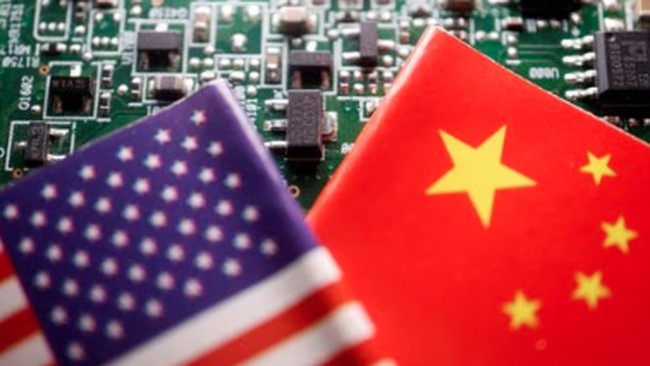
The world’s most powerful nations are currently racing to dominate Artificial Intelligence (AI) technology and the advanced chips that support it. Amidst the fierce competition between the United States and China, and Europe’s ambition for technological sovereignty, Taiwan holds a crucial role as a global supply chain hub through TSMC, the world’s largest contract chip manufacturer.
On the other hand, Taiwan’s position lies in the centre of a complex geopolitical conflict, clashing with China, which claims the territory, while simultaneously facing pressure from the US, which demands the diversification of chip production.
Geopolitical Tensions and US Pressure
Taiwan is caught between the interests of the world’s great powers, amidst repeated sovereignty claims by China, which insists the island is part of its territory. Meanwhile, the US, a major supporter and arms provider, is also urging Taiwan to reduce the concentration of chip manufacturing that is overly centralised on the island.
US President Donald Trump even levelled harsh criticism, accusing Taiwan of “stealing” the US semiconductor business. This view is considered unfair by Taipei. Nevertheless, as a response to these global dynamics, TSMC continues to pour massive investments of US$265 billion to build factories in Arizona, USA.
The President’s Firm Stance
Responding to various pressures and global dynamics, Taiwanese President Lai Ching-te firmly asserted his country’s independence during the SEMICON trade exhibition in Taipei on Tuesday (1/9/2026).
In front of executives from tech giants such as Microsoft and Google, he stated that Taiwan’s semiconductor advantage is built upon a foundation of democracy and the rule of law, making it a trusted international partner that consistently fulfils its promises.
For decades, Taiwan has built a complete semiconductor cluster with production capacity that is rapid, flexible, and highly efficient. Through the forum, Lai emphasised that Taiwan is committed to working with various nations to face natural disasters, pandemics, and geopolitical shifts in order to diversify risks and build resilient supply chains.
The Washington Perspective: Reassessing Supply Chain Vulnerabilities
From the US perspective, the Under Secretary of State for Economic Affairs, Jacob Helberg, highlighted the strategic importance of semiconductors for the global future in a video message at the same event.
According to him, chips will determine AI leadership, the evolution of defence, and the rules of the next generation of the global economy. He also emphasised that the world has learned through bitter experience that “concentration without resilience is a vulnerability”. This statement underpins the importance of expanding Taiwanese manufacturing into the US.
Ultimately, amidst the tug-of-war of global interests, Taiwan seeks to stand tall without being dictated to by any nation, while remaining committed to being a stable, reliable, and open partner for the technology industry worldwide.
Source: jawawa.id (https://jawawa.id/newsitem/president-refuses-to-be-controlled-by-usa-and-china-speaks-out-1788245840)
Originally published by CNBC Indonesia (https://www.cnbcindonesia.com/tech/20260901113818-37-763939/presiden-tak-mau-disetir-amerika-dan-china-blak-blakan-bilang-begini), translated from Indonesian